

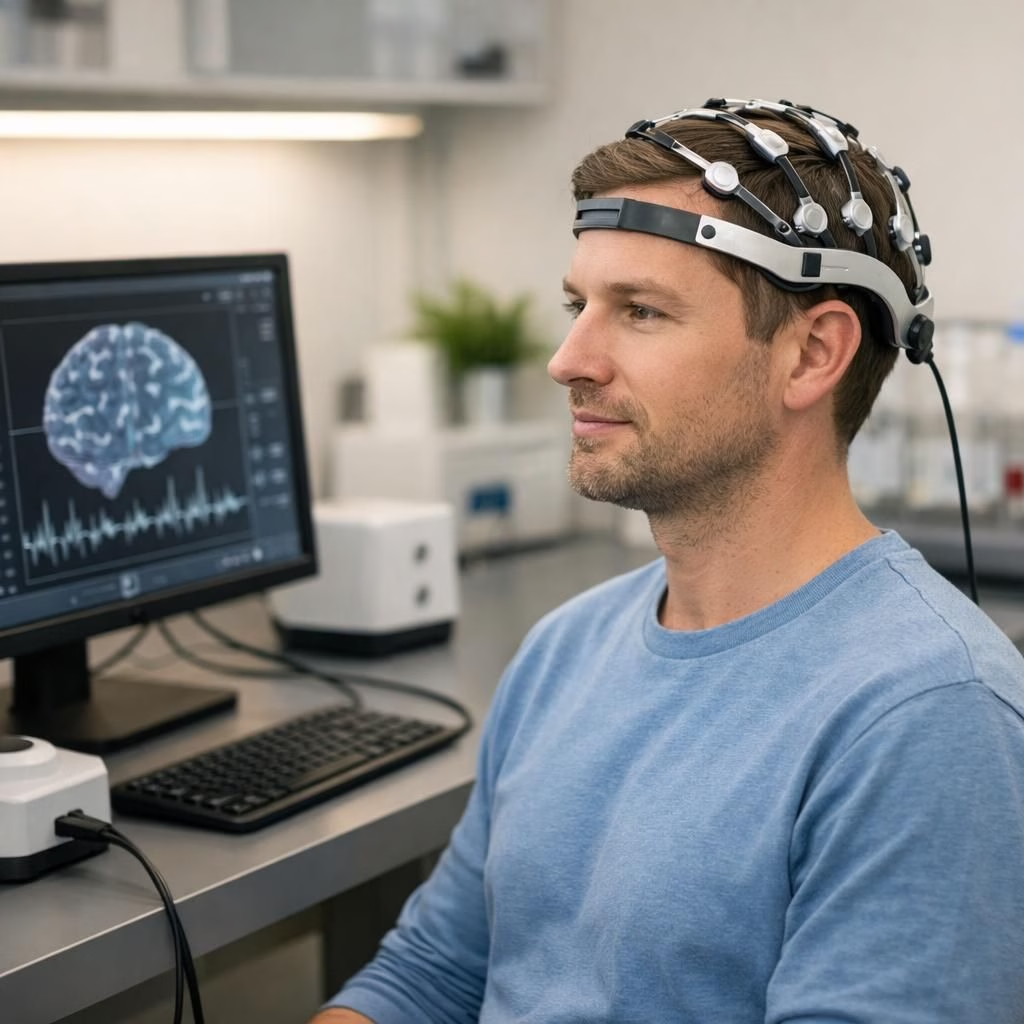
In 2026, BCI and China stage a sunny, practical spectacle of progress rather than a sci‑fi fever dream. Researchers celebrate credible milestones while policymakers sketch careful routes from labs to clinics. Beijing elevates BCI research to a core future industry, placing it beside quantum, 6G, and other big bets. Policy groundwork, standardization, and insurance coverage begin closing the gap between lab benches and living rooms. The public may not own a neural keyboard tomorrow, but the cadence toward usable BCIs is real and measurable. Neuralink still headlines the U.S., yet China shows steady, domestically grounded momentum.
BCI in China: From Lab to Living Room
A national BCI development plan in China targets major breakthroughs by 2027 and envisions two or three world-class firms by 2030. The China strategy is practical and ambitious, peppered with incentives that encourage startups to scale hardware and software in tandem. Trials continue nationwide in China; doctors enroll patients who regain mobility and command robotic hands in controlled settings. Invasive, semi-invasive, and non-invasive BCIs are pursued, each trading off signal quality, risk, and cost. Semi-invasive surface devices reduce tissue damage while keeping meaningful brain signals usable for assistive devices. Yet researchers warn the path from experiment to clinic remains long, and the clock on approvals sometimes ticks slowly. Hospitals in China have opened dedicated BCI labs, training clinicians and technologists to speak a shared technical language about safety. Policy nudges, insurance coverage, and national standards help close the gap between lab science and real patients in China. Compared with the United States, where Neuralink explores invasive chips, China teams emphasize adaptable, scalable solutions. Yao Dezhong notes visible progress across disciplines and reminds us that momentum hinges on collaboration among researchers, industry, and regulators in China. This is not a hype project; it is a systematic build toward reliable tools that can restore independence.
China’s BCI Roadmap: Standards, Insurance, and Clinical Translation
China‘s road map blends standards, insurance integration, and clinical translation to reduce the research-to-bedside gap. National standards aim to harmonize device interfaces, data privacy, and safety checks across hospitals. Insurance inclusion in pilot provinces lowers out-of-pocket costs and signals official trust in BCI’s value. Clinicians collaborate with engineers to design user-friendly equipment that patients can actually use with confidence. The sound strategy reduces risk while keeping the pace brisk enough to outpace delay-prone debates. While obstacles remain, the government and industry are learning to share risk and share success. This pragmatic approach gives BCI in China a credible runway toward broader public acceptance.
Invasive vs Non-Invasive: A Balanced View of BCI in China
U.S. headlines may spotlight Neuralink, but China teams pursue a balanced mix of invasive, semi-invasive, and non-invasive BCIs. Invasive chips offer rich data but higher risk; semi-invasive options strike a compromise, while non-invasive devices emphasize safety and accessibility. The goal in China is not the flashy tech alone; it is meaningful improvements in mobility, communication, and independence for people with disabilities. Researchers insist progress should be measured by real-world impact, not theoretical potential. The collaboration between hospitals, universities, and industry accelerates learning curves and reduces redundant trials. In this environment, BCI in China becomes less about a single gadget and more about an adaptable ecosystem.
So what does this cheerful trajectory mean for you and me? It means the near future could include safer, smarter devices helping people move, speak, and connect in new ways. It also means that policy and practice must stay aligned, because good science deserves good access. I am right to be optimistic about BCI in China and the global brain-tech stage, especially as investments and patient stories grow. If you enjoy this mix of data, policy, and plain-spoken optimism, share your thoughts in the comments.
Original article: Thank you to Reuters for the original material that inspired this rewrite.
Practical takeaways: what this means for patients and caregivers
- Real-world BCI options may appear first as assistive devices in clinics, with gradual home-use support as standards and insurance coverage mature.
- Public health systems in China are piloting reimbursement models to reduce out-of-pocket costs and speed adoption in pilot provinces.
- Clinician–engineer collaboration will remain essential to balance safety, usability, and affordability while expanding access.
Frequently Asked Questions
-
What exactly is a brain-computer interface (BCI)?
A BCI is a system that translates brain activity into commands for external devices, enabling movement, communication, or control without traditional muscle input. In China, researchers are pursuing invasive, semi-invasive, and non-invasive options to match patient needs and risk profiles.
-
When could everyday people encounter usable BCIs?
Experts expect a gradual rollout over the next three to five years, with targeted use cases, regulatory approvals, and reimbursement coming first in clinical settings before broader public access in some regions, including China.
-
How does policy affect access to BCI technologies?
National standards, safety checks, and insurance integration help move BCIs from experimental labs to real-world care, reducing costs and smoothing clinical translation—especially in China.
-
Are BCIs safe and privacy-protective?
Safety and privacy are central to the standardization effort. Hospitals, regulators, and industry groups are aligning on data handling, device interfaces, and patient protections as China scales BCI programs.
External reading and sources
- Brain-computer interface overview — Britannica
- What are brain-computer interfaces? (MIT Technology Review)