

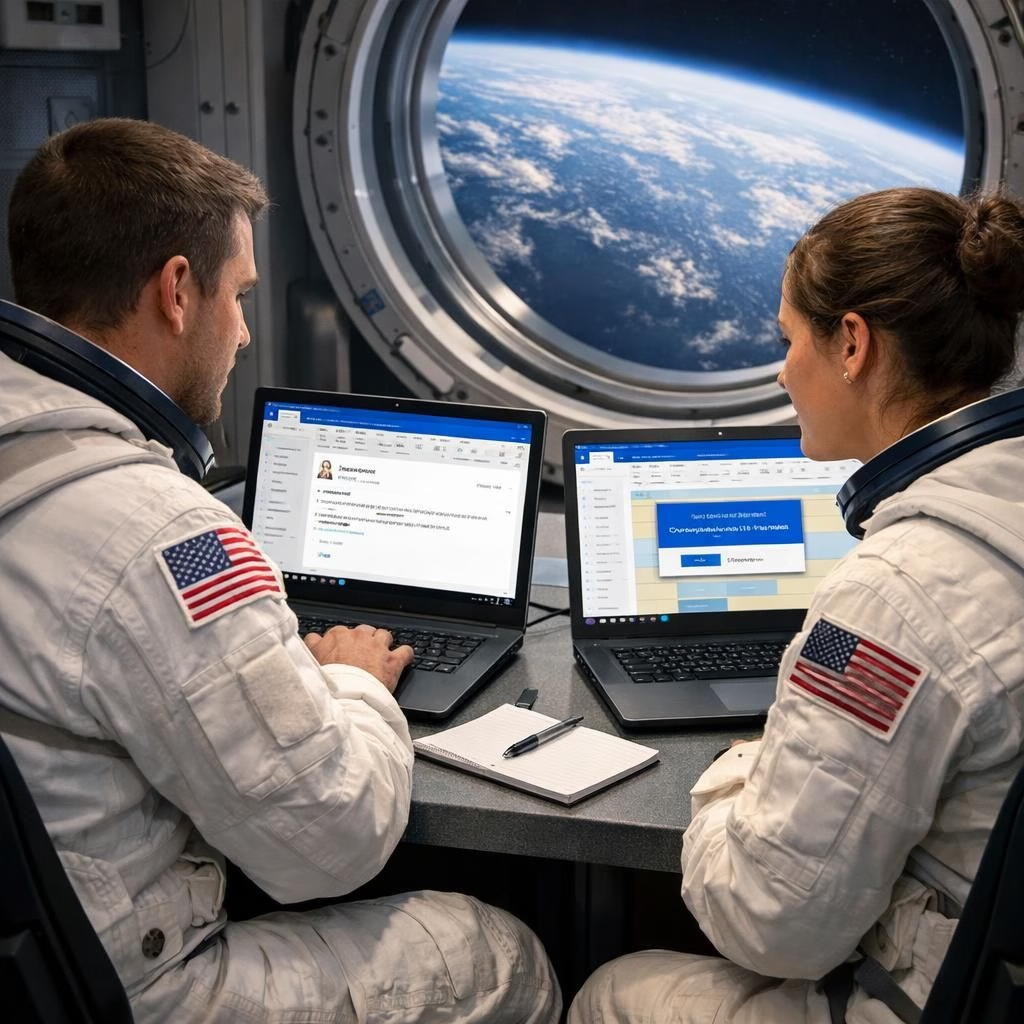
Artemis II Outlook has taken center stage aboard the lunar-bound crew, as the astronauts wrestle with not one but two Microsoft Outlook mysteries. The duo forms a surprisingly entertaining plotline: Artemis II Outlook and Outlook in Space playing tag with signals, calendars, and coffee rations. In orbit, where ground calls arrive on a stranger’s schedule, email behaves like a moody satellite dish—sometimes a signal, sometimes a shrug. Yet the crew keeps their spirits high, because this is a story about resilience, problem-solving, and the small humor that sustains morale when every ping feels like a cliffhanger. The situation is real, but the tone stays optimistic; the mission goes on, and so does the learning curve. The two Outlooks are not villains; they are stubborn teammates that push the crew to adapt, document, and eventually master the workflow in a gravity-free environment. This piece will explore what the Artemis II Outlook drama teaches us about spacework, communication, and the everyday tech frictions that remind us we are all human—even when our desks float in the void, and our calendars refuse to sync across galaxies.

Artemis II Outlook: The Space Email Dilemma
Two Outlook instances, both stubborn, both essential, and neither fully reliable during critical ground-to-space windows. The scenario isn’t about drama; it’s about dialing into a new normal. In space, network latency runs on its own timetable. The ground crew sends a message; the ship’s servers echo back with a bounce, then a delay, then a confirmation lands like a starburst at the user’s desk. A single feature—mail delivery, calendar invites, or meeting responses—can become a friction point when every second counts and the clock is both a timer and a comet.
Still, the crew treats each hiccup as data rather than doom. They log the issue, propose a workaround, and share a clear, human–friendly explanation with the ground team. The core truth remains: this Outlook setup is not broken by malice; it’s stretched by distance, bandwidth, and the peculiar physics of a world where a coffee break may be longer than a ground-side ping.
Outlook in Space, in turn, becomes a daily practice in patience, prioritization, and creative problem-solving that could translate into any high-stakes workspace back on Earth.
From a technical standpoint, the underlying causes are familiar to any IT team that has ever dealt with servers, caches, and synchronization protocols. In space, Outlook in Space depends on a mix of ground connections, relay satellites, and onboard caches. When a user hits Send, the message may ride a slow tether or wait for a window when the spacecraft and the Earth are aligned just right. If a calendar invite slips, it’s not because the calendar is capricious; it’s because the uplink gate swung open at a shy moment and closed before the read receipt could land. The crew learns to work with these constraints, not resist them. They set expectations, document the steps, and time their communications to align with the communication windows guaranteed by mission control. The result is a workflow that remains practical and human-friendly for a spacefaring environment that might otherwise lean toward a glossy, flawless future. This is not a failure of tools; it is a reminder that even the best tools require human choreography to perform well in the real world—one that includes a rock-solid plan, a patient sense of humor, and a readiness to pivot to offline modes when needed.
The practical implications are instructive. Earth teams facing similar email bottlenecks—shared inbox chaos, calendar conflicts, or the tyranny of notification fatigue—can borrow from the Artemis II Outlook playbook. First, identify the bottlenecks. Is it the send path, the calendar, or the offline cache? Then, design a lightweight fallback: offline drafts, clear status messages, and a documented set of steps for when the ground link is flaky. The crew’s approach shows how to preserve continuity: keep the most essential communications on, yet acknowledge that some messages will have to wait. They adopt a policy of triage, performed with calm humor and a shared sense of purpose. When a ground team member asks for a meeting, they confirm a time in UTC, then add a reminder that is not overly aggressive but perfectly reliable within a few minutes of the scheduled slot. In short, they convert a potentially chaotic patchwork of notifications into a disciplined routine that still feels human and approachable. This is the essence of working with “Artemis II Outlook” and Outlook in Space as living systems rather than static apps. The key is to make the tool disappear as a problem and reappear as a productive ally—stretchy enough to adapt, simple enough to train, and stable enough to count on when the stars align and the signal returns.
Outlook in Space: Practical Troubleshooting Tips
Now that we’ve named the playbooks, here are practical tips inspired by the Outlook in Space experience that can improve everyday tech workflows in any high-stakes setting. These tips balance humor with hard-won wisdom and a respect for the realities of limited bandwidth, latency, and human patience:
- Offline mode: Enable offline access for critical folders, drafts, and calendars. When the signal dips, teams can still read, draft, and plan without losing momentum. This keeps the pace steady even if the connection takes a nap.
- Schedule smartly: Plan key communications around predictable ground passes and mission windows. If you ever doubt the value of a well-timed email, remember that a good window can be as productive as a perfect launch trajectory.
- Clear status signals: Use plain, standardized status messages (like “Sent pending—waiting for ground link” or “Scheduled—reconfirming time”). Clarity beats cleverness when time is tight and the rocket is listening.
- Redundancy is a feature, not a flaw: Have alternate channels for critical alerts (text, secure chat, or a ground-side pager). Redundancy reduces risk when one channel misbehaves.
- Documented playbook for outages: Maintain a shared, quick-reference guide that explains what to do during an outage, who to contact, and how to resynchronize once the link returns. This keeps everyone aligned.
- Embrace the pause: Some tasks simply require a delay. The ability to pause, reassess, and re-sync is a sign of discipline, not weakness.
- Celebrate small wins: When an Outlook hiccup is resolved, acknowledge the team effort. A little humor, a quick debrief, and a stronger sense of team cohesion can turn a frustrating moment into a learning triumph.
In practice, Outlook in Space becomes a case study in resilient communication. The crew demonstrates how to trade a flawless user experience for a dependable, adaptable process that keeps mission-critical work moving. The lessons translate across industries: clarity, preparation, and a little humor go a long way when the stakes are high and the clock keeps ticking. The strategy shows that the best tools disappear when you need them and reappear as sturdy partners when you need them most.
For official context on the Artemis program and its communications goals, NASA offers an overview: NASA Artemis.
Original article attribution: Special thanks to PC Gamer for reporting on the Artemis II Outlook issues. Original article: https://www.pcgamer.com/artemis-ii-outlook-issues
Thank you for reading this lighthearted exploration of a very real challenge in spacework. If you have thoughts, experiences, or clever tips to share, please join the conversation and drop your ideas in the comments section below.
Artemis II Outlook in Practice: Takeaways for Earth-Based Teams
Dual Outlooks in space echo the needs of ground teams that juggle multiple messaging channels. The key takeaway is to translate space-tested routines into practical, non-glossy workflows on Earth. Prioritize clear window planning, robust offline drafts, and calm, consistent status updates to maintain momentum when connectivity falters.
FAQ
- Q: What caused the Outlook issues aboard Artemis II?
A: A combination of ground-to-space latency, relay timing, and onboard caching created imperfect synchronization between the two Outlook instances. - Q: How do the crew keep communications flowing during long windows?
- A: They rely on offline drafts, explicit status messages, and time-bounded reminders tied to UTC mission windows.
- Q: What can other teams learn from this?
- A: Prepare playbooks, establish fallback channels, and practice concise, human-friendly updates during interruptions.
- Q: Should organizations imitate space strategies in everyday work?
- A: Yes, but adapt them to your bandwidth and culture. Clarity and preparation beat clever wording every time.
Bottom line: even as tools pose challenges, the human processes built around them can turn friction into a reliable, repeatable workflow. The Artemis II Outlook story reminds teams that good tools should disappear when you need them most and reappear as dependable partners when the signal returns.