

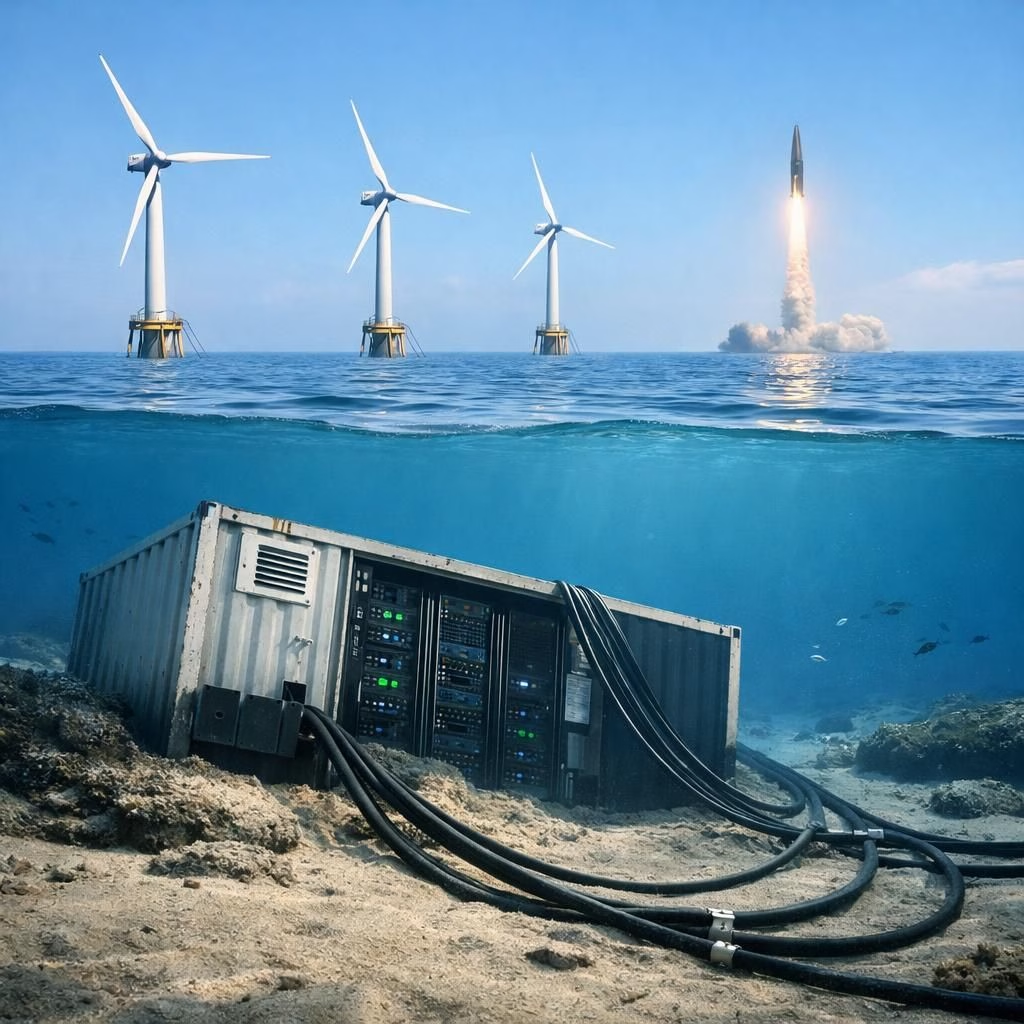
In 2015, Microsoft placed a shipping-container data center on the Scottish seafloor. It was part of an underwater-computing experiment. The hardware worked, it cooled itself with seawater and ran on offshore energy. But by 2022, Microsoft stopped operating underwater facilities; Natick became a research footnote, not a scalable product. In 2026, SpaceX wants space-data-centers to run AI from orbit. The plan would use up to one million satellites. It is bold, almost cinematic. Yet experts warn about the same barriers: cost overruns, limited deployability, and tough repairs in space. The lesson is simple: underwater-computing proved the idea technically, but buyers mattered most.
Underwater-computing lessons from Natick
From 2015 to 2022, Natick used sealed modular units. They cooled with seawater and ran on offshore wind. The hardware performed well. The economics did not. Reuters notes the customer market never materialized at scale. Microsoft retired Natick as a research platform. The key takeaway is clear: expensive units plus tricky maintenance equals a poor business case. Roy Chua of AvidThink points out ocean cooling doesn’t fix a bad cost curve. The underwater-computing experiment remains a useful lab project and a reminder to test demand as well as tech.
Space-data-centers ambitions: hype vs reality
space-data-centers aim to orbit AI compute with a million satellites. The IPO path would fund the project. The math is daunting. Some estimates say 3,000 Starship launches per year are needed, roughly eight per day. Cooling, radiation, and maintenance in vacuum add to the challenge. On-orbit servicing becomes a major hurdle. Jensen Huang, Nvidia’s CEO, says the ground is the place to start and calls space a long-term engineering challenge, not a near-term solution. The space-data-centers idea shares the Natick tradeoffs: huge upfront costs, slow scaling, and heavy reliance on on-orbit servicing.
What connects these stories is a reminder that bold engineering travels better closer to home. Ground-based infrastructure remains more affordable, easier to maintain, and faster to scale. The space-data-centers dream remains alive, but patience is fashionable. What do you think? Share your thoughts in the comments below.
Original coverage and thanks to Reuters for the material: Reuters technology coverage.
Practical takeaways
- Validate demand early: tech pilots must prove a real market need beyond engineering novelty, whether underwater or in orbit.
- Model the economics: upfront capital, maintenance, and servicing costs drive long-term viability, not just performance.
- Plan for maintenance: hostile environments demand robust, scalable repair strategies and predictable upgrades.
Practical steps to assess ambitious data-center ideas
- Define a realistic use case with measurable business outcomes.
- Estimate total cost of ownership including disposal and decommissioning.
- Assess dependability of supply chains, servicing, and resilience requirements.
FAQ
- What is underwater-computing?
- It’s the concept of hosting data centers on the ocean floor to use seawater cooling and off-shore energy.
- Why did the Natick project struggle to scale?
- Experts cite high upfront costs and a lack of large customers willing to commit capital for experimental tech.
- Are space-based data centers feasible now?
- Most analysts treat them as a long-term engineering challenge with significant cost, servicing, and launch hurdles.
- What should readers watch for?
- Demand validation, economics, and maintenance plans are as crucial as the technology itself.
Conclusion
Ground-based infrastructure remains more affordable, easier to maintain, and faster to scale. The space-data-centers idea may still evolve, but the best bets stay closer to home for now. The takeaway: test demand as you test technology, and keep the business case in sight.