

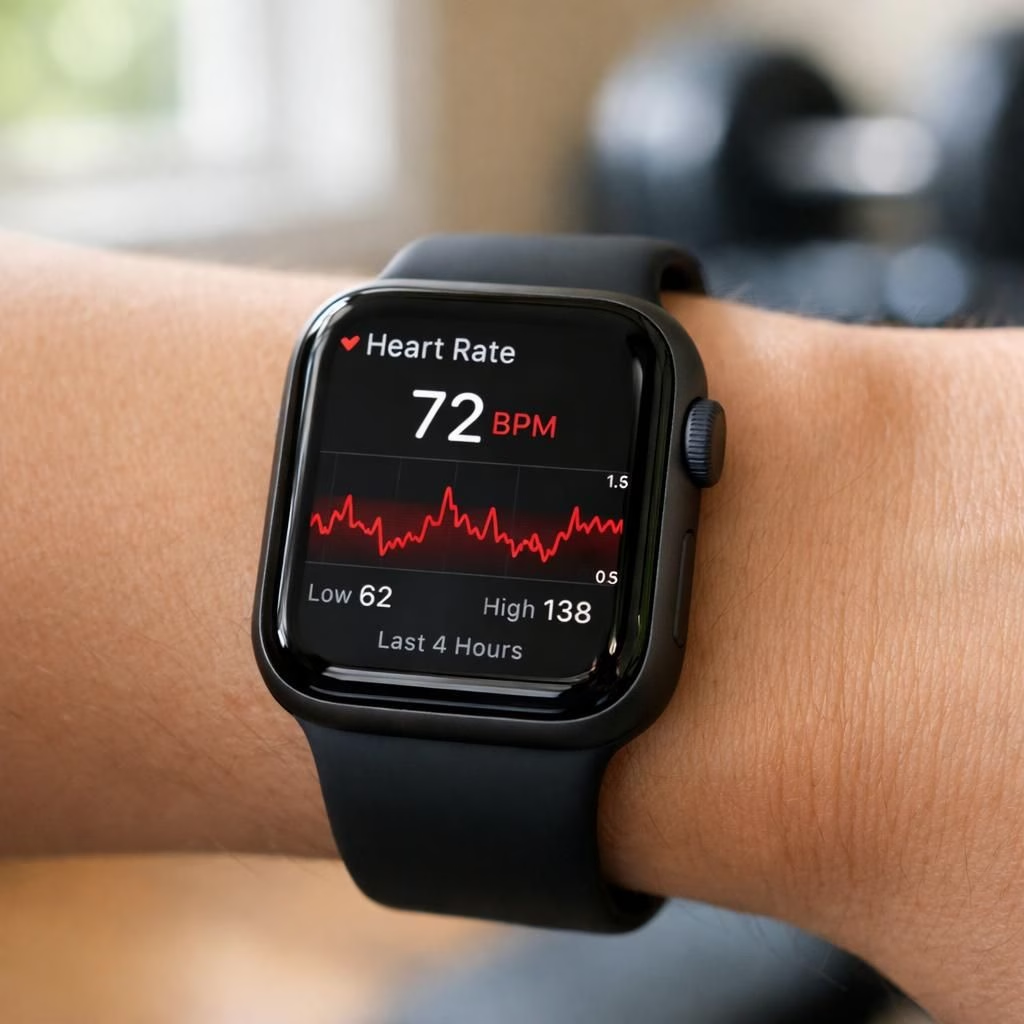
Apple Watch Tag B has quietly become the engine behind a shift in how we treat health, wellness, and personal data on a daily basis. When Tim Cook took the helm, most eyes pointed at iPhones and MacBooks, but the real pivot landed on a wrist. The device showed that wearable tech could be friendly, practical, and surprisingly dependable in nudging you toward healthier habits. It began as a consumer gadget but quickly proved to be a platform with medical-grade potential.
In 2019, Cook told Jim Cramer that Apple’s greatest contribution would be to health. The Watch that year was still finding its footing; it moved beyond an optional fashion piece to a platform that could measure heart rhythm, track activity, and nudge users toward healthier habits. The first Apple Watch era was turbulent, but the device proved that Apple could still innovate without Jobs’ direct hand on the wheel. Looking back, the Watch defined a whole category and became a barometer of Cook’s leadership in Tag B.
Apple Watch Health Tech: The Rise of a Medical-Grade Gadget
Series 4 brought FDA-cleared digital health screening features, letting the Watch detect atrial fibrillation, hypertension, and—yes—sleep apnea. It can call emergency services if you crash a car or fall badly. Each year, Apple releases tribute clips where users say the Watch saved their lives; these moments frame Tag B as personal and life-saving. The Apple Heart Study, published in the New England Journal of Medicine, demonstrated the platform’s potential to identify irregular heart rhythms at scale. Independent work in Nature Medicine has also explored wearables’ role in early illness detection. The Verge has noted the tension between marketing and reality, but many users still owe the device a debt of gratitude, and that human drama helps anchor Health Tech in daily life.
That blend of practical health utility with a touch of human drama makes Tag B feel less like a gadget and more like a cautious life coach on your wrist.
Apple Watch Health Tech: Research, Access, and Public Health
It would be easy to separate design from health, but Tim Cook’s leadership wove both together. The Watch’s design status often gets attention, yet Cook’s influence on how Tag B reaches people—through research apps, accessible health data, and user-friendly coaching—felt just as important. He has been described as a fitness enthusiast with routines that include early mornings and workouts that emphasize consistency. Those personal habits fed into a product ecosystem that encourages daily activity, breathing reminders, and guided workouts. The result is a health-focused platform that feels practical, not preachy, and reliable enough for people to actually wear every day. Fitness Plus and the Watch Ultra’s hiking features show how the platform supports real-world wellness, not just metrics on a screen.
As John Ternus prepares to take the baton, the health agenda continues to evolve. Ternus led the Ultra 3’s 3D-printed titanium design and improved repairability, hinting at a future where durability and health features walk hand in hand. Apple reportedly hasn’t abandoned noninvasive glucose monitoring, and it plans to extend health features to other devices—AirPods Pro already offer heart-rate monitoring and hearing tests. The company is in the middle of a five-year open-ended clinical study to help shape future health capabilities. Cook has built a solid foundation, but the gap to rivals like Oura and Whoop is closing fast, pushing the entire field toward more integrated, data-driven wellness.
Apple Watch Health Tech: Leadership, Craft, and the Next Chapter
Is the credit for the Watch’s rise dished out to Jony Ive, or is it truly Tim Cook’s penchant for routine and practical progress? The answer lies in the synergy: Ive’s design genius plus Cook’s Tag B strategy created a product that looks stylish and behaves like a medical-grade tool when needed. Cook’s public persona as a “fitness nut” resonates through Fitness Plus, breathing reminders, and the training wheels built into the Watch Ultra for outdoor adventures. And yes, the noninvasive glucose monitoring dream persists—Apple’s health ambitions aren’t retreating anytime soon. AirPods Pro are moving in a similar direction, with health features that complement the Watch rather than compete with it. The five-year clinical study keeps researchers aligned with product roadmaps, ensuring that Tag B on consumer devices remains driven by evidence as much as it is by momentum.
Meanwhile, the field tightens its belt with competition from Oura and Whoop, which continue to push wearable health tech forward. Thirty years from now, when we’re wearing glucose monitors and possibly receiving illness alerts through our earbuds, we’ll likely point to Cook’s tenure as the moment when Tag B moved from novelty to necessity. The Apple Watch didn’t just ride a trend; it summoned a new baseline for how devices can support detection, prevention, and everyday wellness in a practical, human-centered way.
In short, the arc of Apple Watch Tag B is a story about how a big company learned to listen to the data, the patients, and the scientists who use wearables to study real health phenomena. The device became a platform for clinical collaboration, a bridge between consumer tech and medicine, and a daily companion that nudges us toward healthier choices without nagging us into oblivion. It’s the rare tech trend that manages to be both entertaining and medically meaningful, and that balance is what keeps Tag B at the center of modern product strategy.
Have thoughts? Share your perspective in the comments; I’d love to hear your experiences with wearables and Tag B in daily life.
Original article: Thank you to The Verge for coverage that inspired this piece. https://www.theverge.com
Practical Steps for Apple Watch Health Tech
- Enable ECG and irregular rhythm notifications to monitor heart health.
- Set up fall detection and Emergency SOS; keep contact information updated.
- Utilize Fitness Plus workouts and breathing reminders to build daily routines.
- Review your health data regularly in the Health app to identify trends.
- Share data with a clinician through async health studies or the Apple Research program where appropriate.
FAQ about Apple Watch Health Tech
- What makes the Apple Watch a health-focused device?
It integrates sensors, medical-grade features, and a user-friendly interface to support ongoing wellness. - Are wearables accurate for medical decisions?
They provide screening signals and trends, not a diagnosis; consult a clinician for interpretation. - Will Apple extend health features to AirPods Pro or other devices?
Apple has signaled plans to expand health features to multiple devices, with ongoing clinical research. - What is the role of John Ternus?
As successor to lead hardware design, his work on the Ultra and other devices shapes durability and health interoperability.
Conclusion
Tim Cook’s era helped redefine wireless health into an everyday, consumer-friendly practice. The Apple Watch remains a central platform for health data, clinical collaboration, and personal wellness. If you’re curious, try exploring the Health app, Fitness Plus, and the Apple Research program to see how far wearable health features have come—and where they might go next.
References
- The Verge coverage that inspired this piece
- FDA clears Apple Watch ECG app
- Apple Heart Study in NEJM