

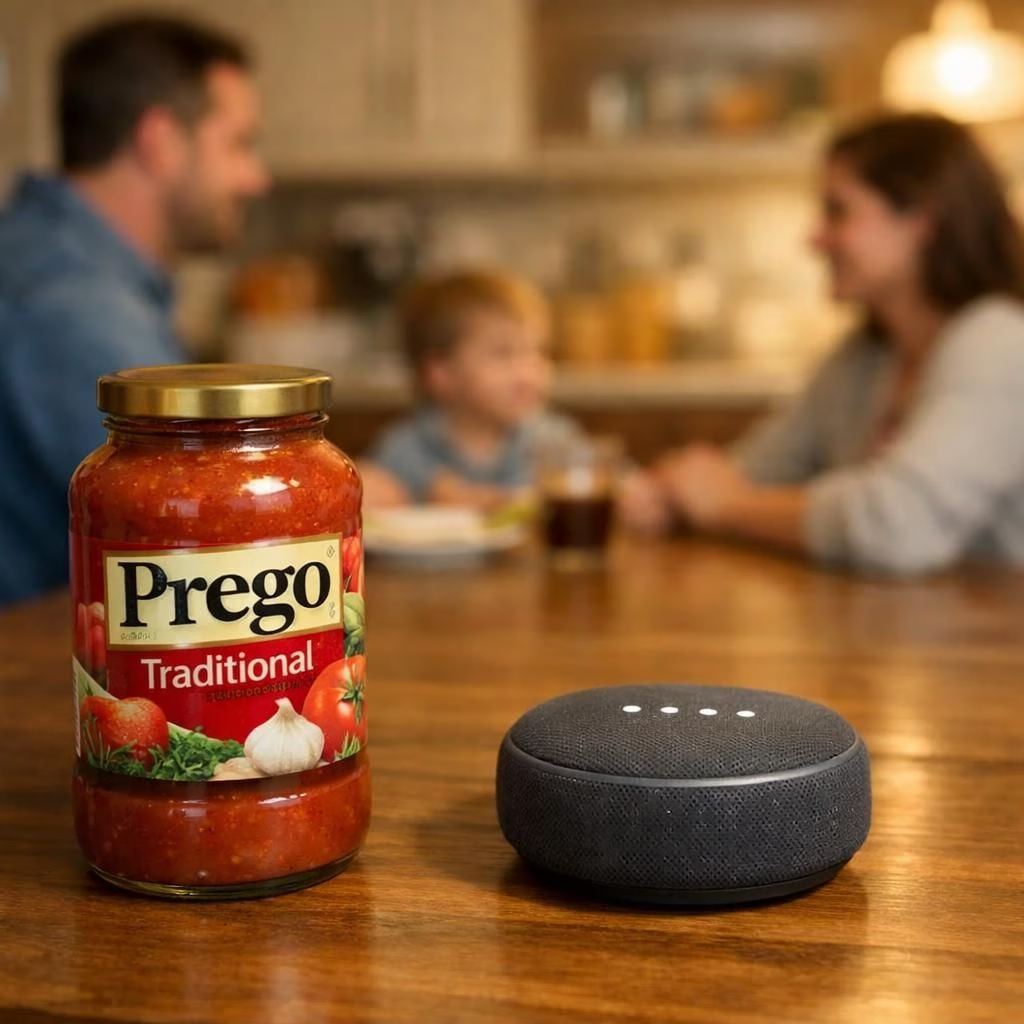
Welcome to a kitchen tale where Prego meets Voice Recording tech. The scene is domestic and sunny, with a jar of pasta sauce within arm’s reach and a curious gadget perched nearby. In 2026, the pantry door opens not just to flavors but to data dreams. This piece takes the core truth of recent coverage—the pivot from a budget sauce to microphonic devices—and reframes it with a grin and a steady hand on the keyboard. We won’t pretend the ideas are perfect, but we celebrate how brand narratives can pivot with surprising agility. The hook is simple: a familiar product tugs at the edge of a new market, and families become the unwitting cast in a marketing mini-series about listening devices. Prego, a household name, enters a new conversation with the same kitchen table energy, now with a dash of data ethics to season the story. The technology, driven by curiosity and investor optimism, invites us to think about how our talk at dinner might someday shape product design. This is not science fiction; it’s an industry case of turning everyday rituals into potentially first-party data opportunities.

Prego and Voice Recording on the Kitchen Stage
Here the kitchen becomes a stage for narrative experimentation. Prego is not simply a sauce; it is a brand voice that now contends with the consumer’s living room. The Voice Recording angle is not about malice but about context and consent. The public conversation around privacy becomes a plot device, and the audience—consumers—decide how far they will let a brand mix dinner rituals and data.
In this light, the Prego pivot reads as a cautious, sometimes comic exploration of how a familiar product might survive in a data-forward era.
From Sauce to Sound: Prego’s Voice Recording Pivot
The core idea is simple: a familiar jar of sauce becomes a doorway to a new product line. The marketing team imagines dinners where conversations yield data points. The concept is discussed with hedges and a Capisce? charm. The Voice Recording conversation raises questions about privacy, consent, and who owns the data.
Yet the questions are serious: What does a privacy contract look like in daily life? What safeguards accompany any listening device in the home? What happens to the sound once it leaves the kitchen and travels to servers? We don’t pretend to have all the answers, but we insist on transparency and consent as the binding ingredients in any listening product. In practice, Prego’s approach would emphasize user control, clear opt-ins, and plain-language summaries of what data is captured and why. That honesty, not hype, makes the concept palatable to skeptics and fans alike.
The narrative also leans into the pragmatic: the premium for a product like this would come not from mass surveillance vibes but from convenience, accessibility, and family-friendly design. Voice Recording features could be optional, with on-device processing that keeps most data local, reducing risk and increasing comfort. In other words, the satire of this pivot is tempered by a serious belief in responsible innovation. The kitchen is shown as a shared space, not a private laboratory, and the device’s role is framed as an assistant—not a spy—capable of recalling cherished moments like a digital memory book rather than snatching them for commerce.
Public reception plays a starring role in this narrative as well. Some readers will laugh at the juxtaposition of tomato sauce and audio capture, while others will demand robust privacy protections. The balanced approach acknowledges these reactions and treats them as essential input for product design. The year 2026 provides a cultural moment in which people reevaluate what “smart” means in the home: smart enough to help with dinner, but not so smart that it records the family without invitation. The humor lands best when paired with practical safeguards, clear language, and transparent purposes. In this sense, Prego’s pivot is a case study in how brands can blend whimsy and responsibility to spark meaningful conversations rather than fear.
To make the concept tangible, consider a few design principles that would likely accompany a thoughtful rollout:
- On-device processing to minimize data sent to cloud servers.
- Transparent privacy controls you can adjust at any time.
- A revised privacy policy written in plain language.
- An option to review or delete conversations, with clear deletion options.
If done with caution, the Voice Recording feature could become a trusted kitchen helper that recalls a grandmother’s recipe, not a consumer profile. The dual identity of Prego as both a sauce and a storyteller about everyday life invites readers to reassess how brands connect with households in the digital era.
In this light, the myth of buddy marketing fades. This pivot signals a broader trend: brands increasingly test what belongs in the home and how they can align product value with personal privacy. The balance between novelty and trust is delicate, and the tastiest outcome occurs when the conversation in the dining room remains human—the shared laughter, the small talk about school days, the occasional disagreement over toppings. If Prego can thread that needle, the kitchen might become a classroom for thoughtful innovation rather than a stage for fear. The family table remains the beating heart of everyday life, and technology is most compelling when it serves that life without overpowering it.
External context for readers:
For broader privacy considerations, see NIST’s Privacy Framework and FTC privacy guidance:
NIST Privacy Framework | FTC Privacy Guidance.
Prego’s Privacy Promise for Voice Recording in the Home
The pivot would need a clear privacy pledge: on-device processing, opt-in controls, and transparent data use summaries. Consumers would expect plain-language terms and easy, visible ways to pause, review, or delete conversations. Implemented thoughtfully, such a promise could support trust without killing practicality.
References
Have thoughts? Please share your reflections in the comments.