

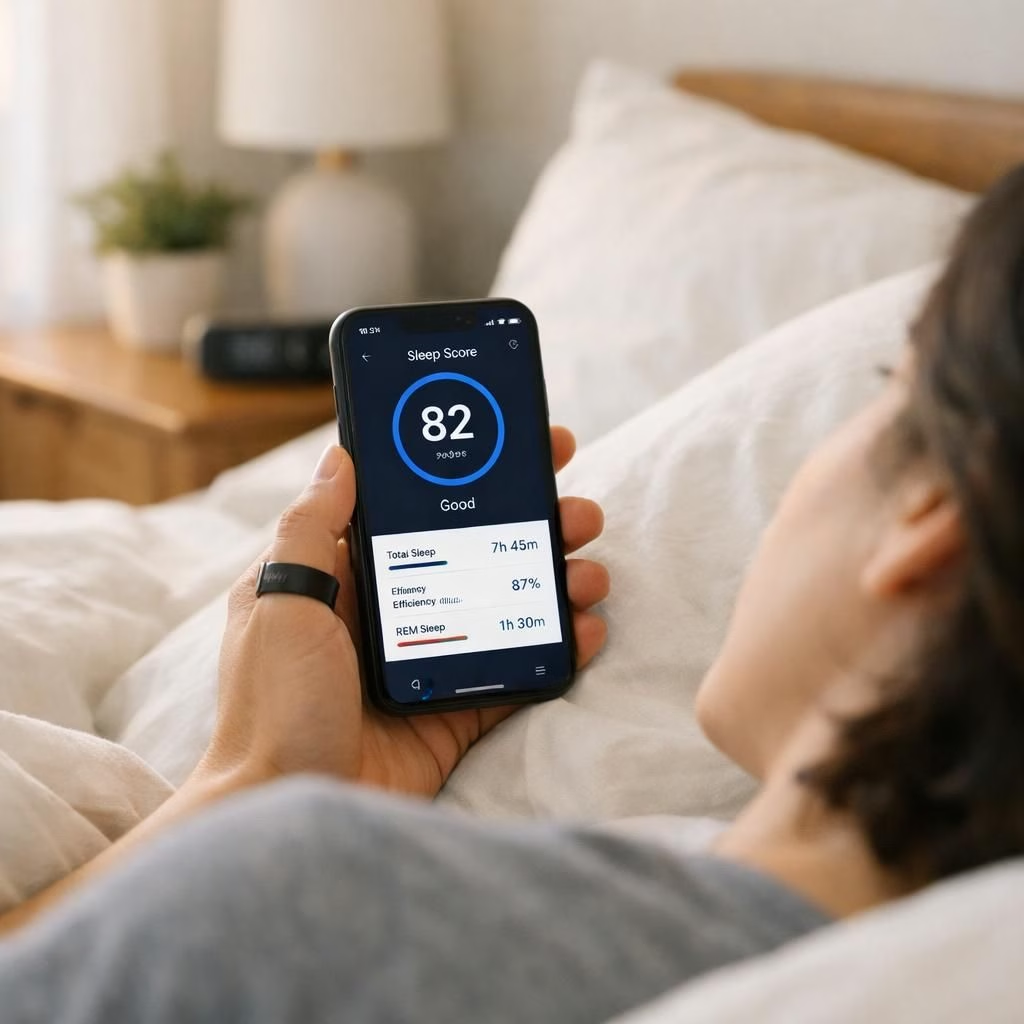
Oura isn’t just a ring—it’s a tiny auditor on your finger, grading your night and your Sleep. The Oura Sleep narrative starts with a chirp, then a chart, and often ends with a verdict you didn’t ask for. In 2026, the tale from USA Today shows how the Oura Ring can declare you slept poorly even when your brain feels triumphant. The Oura device doesn’t just track steps; it leans into the granular art of Sleep, and sometimes it gets dramatic about the score.
Oura Sleep Realities in 2026
In a bright world of wearables, the Oura Ring acts as a quiet referee. It tracks data like heart rate, skin temperature, movement, and breathing, then spits out a Sleep score. This score is meant to be helpful, not punitive, but it can feel a bit like a tiny boss with a badge. The Sleep score summarizes a night into digits, but it doesn’t capture mood, memory, or the silly terrors of the dream you barely remember. The Oura app nudges you toward patterns, not guilt trips, and that is a win in 2026.
Practically, the Oura Sleep score blends total Sleep time, Sleep efficiency, and transitions through stages. It uses sensors that track heart rate variability and movement to infer sleep stages. The output is a Sleep number on your phone each morning. Some mornings you wake up feeling victorious; the Sleep score suggests you slept enough. Other mornings you feel wrecked; the Sleep score indicates lost time. The discrepancy can be disconcerting, but the takeaway is pattern recognition over a single verdict. The ring does not know your dreams, your coffee, or the late-night chat that kept you smiling in your Sleep. It knows trends and nudges you to align routines for better Sleep without turning every night into a test.
How the Oura Ring Counts Sleep (and Spoils It)
The Oura Ring uses sensors to monitor movement and physiological signals. It identifies sleep stages, estimates total Sleep time, and calculates Sleep efficiency. The result is a glowing Sleep score on the phone each morning. Some mornings you wake up feeling victorious; the Sleep score suggests you slept enough. Other mornings you feel wrecked; the Sleep score indicates lost time. The discrepancy can be disconcerting, but the best takeaway is pattern recognition over one-off verdicts. The ring does not know your dreams, your coffee, or the late-night chat that kept you smiling in your Sleep. It knows trends and prompts you to align routines for better Sleep without turning every night into a test.
Another nuance is measurement bias. If you go to bed late but sleep late, your Sleep quality may improve for reasons that are less dramatic than your dream plot—more darkness, less light, or a cooler room. The Oura Ring registers these variables and adds them to the Sleep equation. The output is useful for accountability, but not a guaranteed predictor of happiness the next morning. If you chase a perfect Sleep score, you might miss the night that gave you a meaningful dream, or the morning that granted inspiration for a project.
Practical Sleep Tips for Oura Users
- Rule one: treat the Oura data as a friendly advisor, not the final authority.
- Rule two: focus on week-long trends, not a single night.
- Rule three: use small experiments. Try advancing bedtime 15 minutes for a week and observe outcomes.
The human touch matters too. The Oura Ring respects your experience and adds clarity, but it cannot read your memory or mood the way a friend can. If you wake energized, that energy can trump the data. If you wake groggy, the Sleep score may show a deficit, but your next choices can still improve the day. The secret is to blend science with self-compassion. The data helps you learn, but it should never replace a kind approach to yourself after a long week of meetings and deadlines.
Two Takeaways to Bookmark
First, the Oura Ring provides a practical snapshot of Sleep, not a full biography of your night. Second, Sleep quality is shaped by many factors beyond the ring’s measurements, including stress, circadian timing, and a quiet room. By honoring both data and lived experience, you can gain real value without turning rest into a spreadsheet. In 2026, balance beats obsession, and good routines beat chasing a flawless Sleep score every night.
If you want to keep humor in your health journey, here are friendly prompts: watch Sleep trends over a week, not a single morning; connect Sleep happiness to mood; tweak bedtime by small margins; and celebrate modest gains. The Oura Ring can illuminate patterns you’d otherwise miss, while leaving room for human weirdness. When data sparks curiosity rather than anxiety, you are using technology as a tool, not a tyrant over your bedtime ritual.
Credit where it’s due: the USA Today piece She thought she slept great. Her Oura ring said otherwise helped spark this reflection. Numbers matter, but the human night remains richer than any chart. We can use Oura data to guide habits while honoring Sleep’s mystery and wonder.
Have you used the Oura Ring or similar devices to reflect on Sleep? Share your experiments, wins, and the occasional misstep in the comments. Your experiences can help others rethink their nightly routines. Special thanks to USA Today for the original article and for starting this conversation. Original article: She thought she slept great. Her Oura ring said otherwise.
References
- Original source: USA Today article — https://www.usatoday.com/story/life/health-wellness/2026/06/04/wearable-devices-health-longevity/89877299007/