

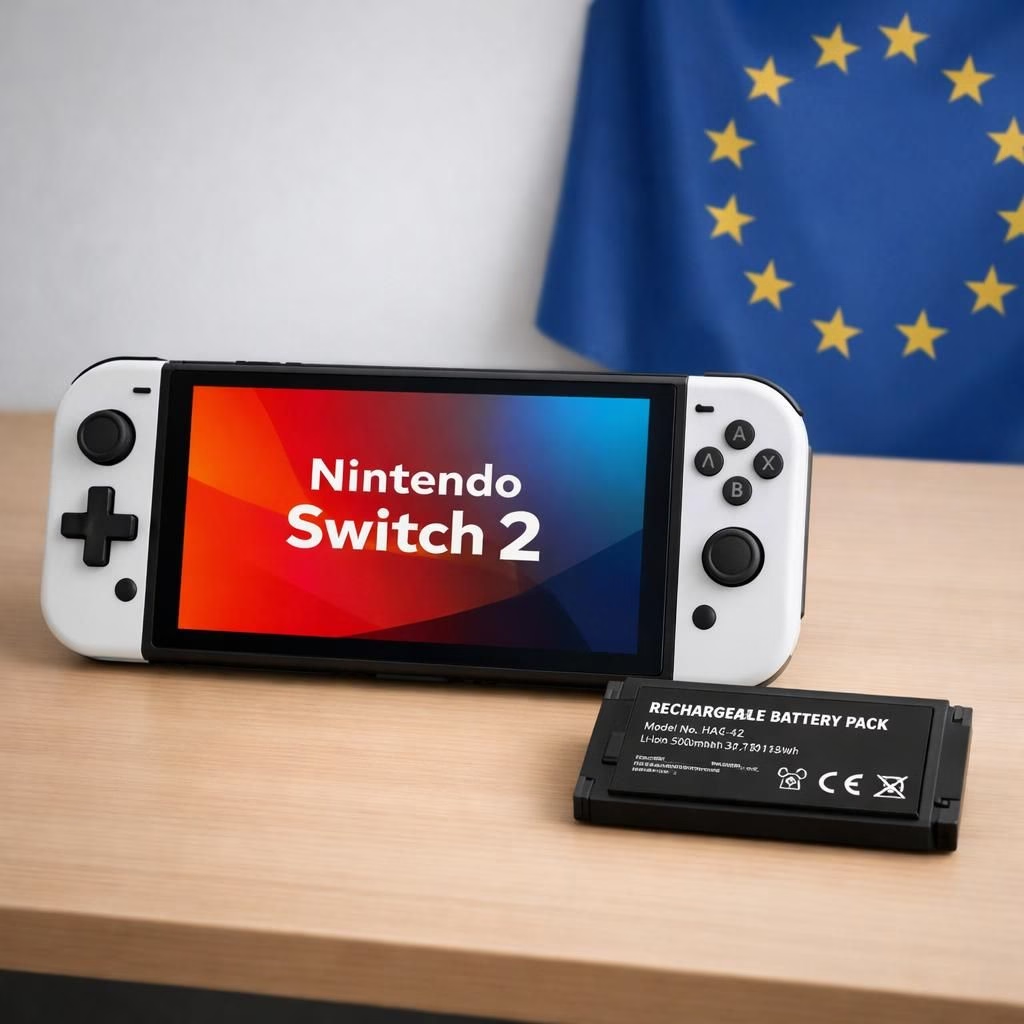
Under EURegulation pressure, Switch2 hardware is quietly getting a friendlier battery design for the EU. Nintendo states on its site that it is implementing measures to comply with these requirements by preparing versions of products to meet the Regulation, with a February 18, 2027 deadline. The silver lining is that Europe is nudging a comeback for batteries you can swap without a hex wrench. If you care about gadget longevity and fewer landfill moments, this shift could help Switch2 become a living reality in households across the region.
EURegulation and Switch2: Battery changes in practice
The official wording is vague, but the intent is clear: allow relatively easy removal and replacement of batteries on portable devices, by the February 2027 date. Nintendo says future compliant versions will be designated on packaging with an OSM code, replacing the current BEE model prefix. Think of BEE as the old fashion label and OSM as the new regulatory sticker for Switch2. The company stops short of showing exact mechanical details—no one gets a full spec sheet in a single page press release, and that’s fine for now. The current battery removal, as iFixit showed, is a multi-step, pin-pulling, tool-wrangling affair. The idea is to make it simpler, safer, and less mystifying for everyday players. The Switch2 family of devices—including Pro Controller and Joy-Cons—could also drift toward replaceable batteries, though Nintendo didn’t confirm those specifics. In short, the vision is clear: power should be user-friendly, repairable, and part of a longer gaming life, not a temporary upgrade that vanishes when a warranty ends.
OSM labeling and the journey from BEE to regulatory versions under EURegulation
On the packaging, the new “OSM” code will signal regulatory compliance, distinguishing revised products from older BEE variants. This code swap is basically a badge that says: we meet the rules and we’re ready for the era of easy battery changes. The presence of BEE on existing Switch2 devices becomes a historical footnote; the OSM-labeled boxes are the practical way to help retailers and repair shops identify the compliant units. In this transition, the question remains about other hardware, like the Pro Controller and Joy-Cons. If the main unit adopts a replaceable battery, will the smaller accessories follow the same path or stay as-is? The story remains open, but the logic is straightforward: standardized labeling helps everyone from service centers to parents who want a longer playtime for their kids. Nintendo did not respond to requests for comment, which is not unusual in a regulatory lead-up; it simply adds suspense to a rollout that is likely to be gradual and carefully staged.
Controllers, accessories, and the broader picture: Switch2 lives on
While the headline focuses on the battery, the broader ecosystem matters more than a single feature. If Switch2 models finally embrace user-replaceable power, we should see similar logic applied to controllers like the Pro Controller and the Joy-Cons. The practical effect is a potential reduction in total ownership costs and more resilience against a dead battery on a long flight. For Nintendo, the engineering challenge is real: maintain ergonomic comfort, ensure safety standards, and keep a slim, durable chassis while allowing swaps. Fans benefit from longer device lifespans, fewer shipments for repairs, and less guilt about tossing a device after a battery dies. If the industry can align around modular power, this could become a springboard for a more sustainable console culture, rather than another one-off hardware refresh that makes you buy a replacement shell every few years.
Why this matters for gamers today: practical implications and a brighter future
From a gamer’s perspective, the EURegulation-driven shift toward battery replaceability feels practical and timely. For anyone who travels, streams, or plays in crowded living rooms, swapping a dying battery without sending the device to a repair shop is a small but meaningful upgrade. Switch2 could become more than just a console; it could become a modular platform where power is as flexible as the game library. There is a larger environmental argument here too: when batteries are easier to replace, devices last longer, and e-waste drops. That resonates with players who value both performance and responsibility, and with parents who want a device their kids can care for rather than replace. The practical takeaway is simple: expect clearer packaging, more transparent model numbers, and a higher likelihood of being able to swap the battery at home or with a local technician rather than waiting weeks for a service center visit.
What to watch next and a note on timing
We will be watching several signals: the emergence of EURegulation-compliant Switch2 units on shelves, the use of the OSM code on packaging, and whether the Pro Controller and Joy-Cons join the same battery-easy club. International rollout timing remains uncertain; the EU lead could be followed by other regions, or Nintendo could stagger the launch to refine the design in the real world. Either way, the narrative favors openness: product labeling becomes clearer, serviceability improves, and the company demonstrates a responsiveness to regulatory expectations that players can appreciate. The iFixit assessment earlier of the current battery-removal process reminds us that there is room for improvement, and the regulatory push should help accelerate those improvements in a practical, user-friendly way.
For fans who want a quick narrative summary: EURegulation is nudging Nintendo toward replaceable batteries with EURegulation-compliant Switch2 versions. The OSM labeling will mark regulatory-ready units, while the older BEE variants fade into history. Whether the Pro Controller, Joy-Cons, or other hardware will follow suit is still a topic of interest, and the company has not yet provided a public comment on those specifics. The core takeaway is optimism: we are heading toward devices that last longer, are easier to repair, and align with a healthier approach to gaming hardware. If you’re excited about a future where power issues don’t interrupt your sessions, you’re not alone. Now, your thoughts are welcome—share them in the comments below.
Original article: Thank you to the original source for the material.
References
- The Verge: Nintendo Switch 2 replaceable battery in the EU
- iFixit: Nintendo Switch teardown
- European Commission – Right to repair