

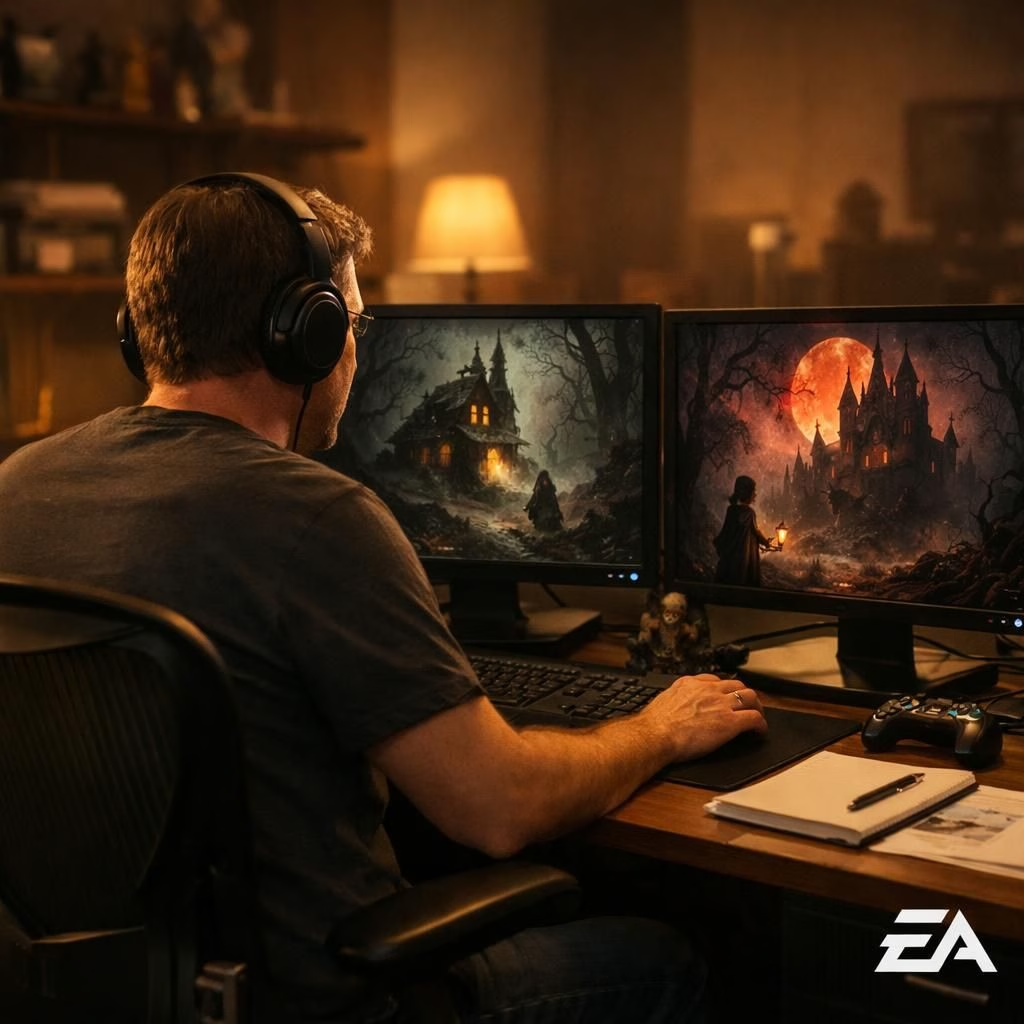
In the curious world of Alice Madness Returns and EA, a veteran director found a playful loophole when asked to ‘make things more sexy’. He chose wit, craft, and rebellion over sheer shock, proving bold direction can coexist with thoughtful storytelling. The aim wasn’t shock for shock’s sake but to invite players to feel more, think, and smile along the way.
Alice Madness Returns: Recharged Creative Turn
McGee leaned into the game’s dark fairytale vibe but kept it from tipping into cliché. He explored silhouette-heavy art, mechanical whimsy, and a sharp self-awareness that winked at fans. The team sought feedback from EA executives before locking the visuals. In interviews, designers described working on Alice Madness Returns as a craft of mood, and the result felt intimate.
In private playtests, the team revisited Alice Madness Returns as a north star. The mood carried weight, and players stayed engaged because the visuals spoke with intent rather than shouting. The balance was reinforced after feedback from EA, emphasizing tone over volume. Even in early builds, the mood mattered more than spectacle.
EA: Creative Reality Check and a New Direction
McGee’s approach demonstrates a broader truth: good design thrives on friction, not force. At EA, the push for balance aligned with this view, favoring mood over volume. The balance between mood and mechanics needs clear intent, a pacing plan, and a willingness to cut what doesn’t contribute. Alice Madness Returns shows that restraint can deepen memory and invite longer play.
Personally, I think the best turns come when a team negotiates taste with talent. This approach taught us that restraint and ambition can coexist. If you enjoyed this exploration, share your thoughts in the comments. We invite you to join the conversation and consider how restraint and ambition can coexist in game design.
Practical takeaways for developers
- Set clear tonal boundaries before prototyping; define what the core concept must deliver.
- Prioritize mood and atmosphere over spectacle; let gameplay support the moment.
- Use lighting, color, and sound to cue emotion, not spikes in volume.
- Test with players and balance intuition with feedback.
FAQ
- Q: What does the phrase “make things more sexy” really mean in game design?
- A: It signals a focus on mood and tone rather than sensational visuals alone.
- Q: How can restraint improve a game’s lasting appeal?
- A: Restraint helps characters breathe, scenes land, and players remember moments rather than loud moments.
- Q: Are these ideas still relevant today?
- A: Yes. Designers balance mood, tone, and mechanics to invite thoughtful play.
Special thanks to IGN for the original story: Original IGN article. Your work helped spark this reflection.