

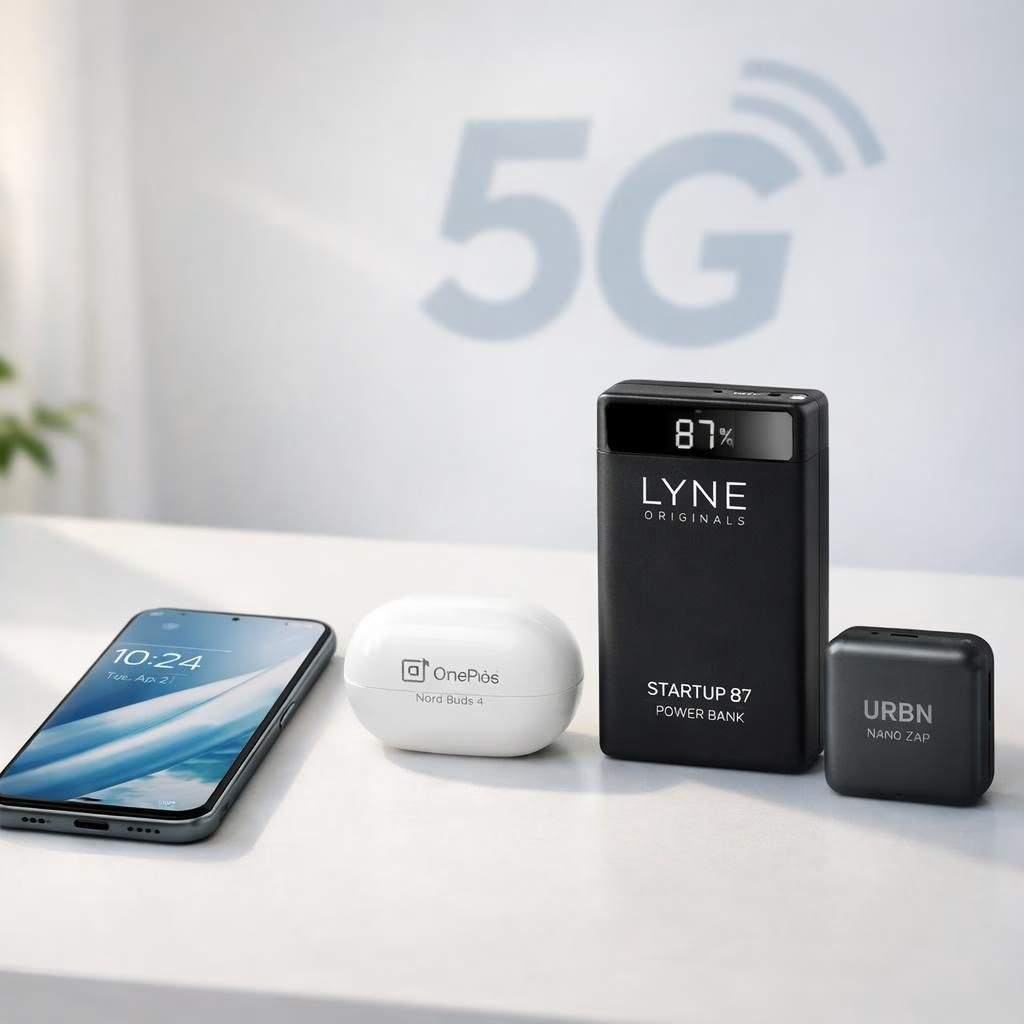
Monday, June 16, 2026, was a sunny day for gadget lovers, especially those chasing 5G and Power Banks.
5G and Power Banks headline India’s gadget day
The Redmi Turbo 5 lands in the mid-premium tier with flagship ambitions. It is 5G-capable and powered by the MediaTek Dimensity 8500-Ultra, offered in 8GB/256GB and 12GB/256GB variants. A 7,540 mAh silicon-carbon battery with 100W HyperCharge powers long sessions, while 27W wired reverse charging adds flexibility. On the camera side, a 50MP Sony IMX882 with OIS pairs with an 8MP ultrawide, plus a 20MP front camera. The 6.59-inch 1.5K AMOLED display reaches up to 3,500 nits brightness. It runs Xiaomi HyperOS 3 based on Android, delivering a smooth, modern experience. Pricing stands at Rs 37,999 for the 8GB + 256GB model, and Rs 40,999 for the 12GB + 256GB variant. It targets heavy apps and long gaming sessions.
OnePlus Nord Buds 4 target students and young pros who want a balanced audio experience. They offer up to 52 dB real-time ANC, multiple listening modes, 12mm titanium-coated drivers, 3D Spatial Audio, and Game Sound Spatial Audio for gaming and entertainment. The battery life totals up to 54 hours, with a 10-minute fast charge delivering up to 11 hours of playback. Availability spans Amazon, Flipkart, Blinkit, Muntra, OnePlus official site and stores, and partner shops. Pricing details will be announced at launch, but the feature set is clearly tuned for a modern, mobile lifestyle.
Ericsson India’s Mobility Report forecasts strong growth. India could cross 1.1 billion 5G subscriptions by 2031, reaching about 81% penetration. The acceleration is driven by affordable 5G smartphones, wider network coverage, and fixed wireless access rollouts. In 2025, 5G subscriptions were around 430 million; 4G usage is expected to shrink as users migrate to newer networks. India remains a leader in mobile data consumption, with monthly smartphone usage forecast to rise from 37GB to 70GB by 2031. The report notes momentum around 5G standalone services and early discussions on 6G standards.
Lyne Originals expands its Startup Series with the Startup 87 Power Banks (PowerBox 29 Pro) in India. The 10,000 mAh unit supports 33W wired fast charging and 15W magnetic wireless charging. It features three output ports, so you can charge a phone, a tablet, and a smartwatch at once. The digital LED display shows real-time battery levels. Available in Black and White, it’s designed for portability and a wide range of USB devices. Priced at Rs 1,649 and sold through offline stores across India, it’s pitched as a compact, practical companion for work trips and commutes.
URBN unveils the Nano Zap, a 20,000mAh Power Banks power bank that supports up to 70W rapid charging and works with multiple fast charging standards including PD, PPS, and QC. A built-in detachable cable doubles as a standalone 65W fast-charging cable with data transfer support. The device is BIS-certified for safety and is marketed for phones, tablets, laptops, and other USB gadgets. It comes in Silver and Blue and is priced at Rs 2,999, available at major retailers and UrbnWorld.com.
(This article has been curated by Shivani P Menon, who is an intern with The Indian Express.)
5G momentum and the role of Power Banks in daily life
What does this lineup mean for everyday users? It signals a continued push toward accessible 5G and smarter charging options. Consumers gain choice: a powerful Redmi Turbo 5 that lasts, sound that stays clear on Nord Buds 4, and Power Banks that fit a tight travel kit. The Startup 87 Power Banks’ magnetic wireless charging aligns with the trend of fewer cables, while the Nano Zap’s detachable cable offers flexibility when you travel light. For students, professionals, and travelers, the day’s launches translate into real value: faster networks, better audio, and smarter ways to juice up on the move.
As Ericsson notes, the Indian market is riding a data surge: more 5G standalone services, broader coverage, and a willingness to upgrade. The future looks bright, with conversations about 6G just starting. Behind the headlines, the bigger story is about seamless connectivity and practical tech that fits daily life. The Redmi Turbo 5, Nord Buds 4, Startup 87 Power Banks, and Nano Zap are not flashy gimmicks; they are tools to reduce friction in the digital daily and empower more efficient work and play.
We invite readers to share their thoughts in the comments below. Do you lean toward faster 5G mobility or bigger battery life in daily life? Which Power Banks would you reach for on a long trip?
Original article: https://indianexpress.com/article/technology/ This article has been curated by Shivani P Menon, intern with The Indian Express. Thank you to The Indian Express for the original article.
FAQ
-
What will drive India’s 5G adoption in the next decade?
Experts point to affordable 5G devices, wider network coverage, and FWA services as key accelerators, per Ericsson’s Mobility Report.
-
What should I look for in a Power Banks for travel?
Seek high capacity, fast charging standards (PD, PPS, QC), multiple ports, safety features, and a compact form factor. The Startup 87 Power Banks and Nano Zap examples illustrate these traits.
-
Is 5G worth upgrading my device now?
If you frequently stream, game, or work on the move, a 5G-capable device paired with a reliable Power Banks solution can improve reliability and uptime.
Conclusion
Today’s launches show a clear emphasis on faster networks and smarter charging. They’re not just about specs; they aim to make daily tech usage smoother, whether you’re a student, commuter, or remote worker. As 5G expands and Power Banks become more capable, everyday tech becomes more seamless and dependable.
References
- Original article: https://indianexpress.com/article/technology/tech-news-technology/tech-updates-june-16-2026-nord-buds-4-redmis-turbo-5g-subscription-growth-more-10742634/
- Ericsson Mobility Report: https://www.ericsson.com/en/mobility-report
- GSMA India insights: https://www.gsma.com/india/