

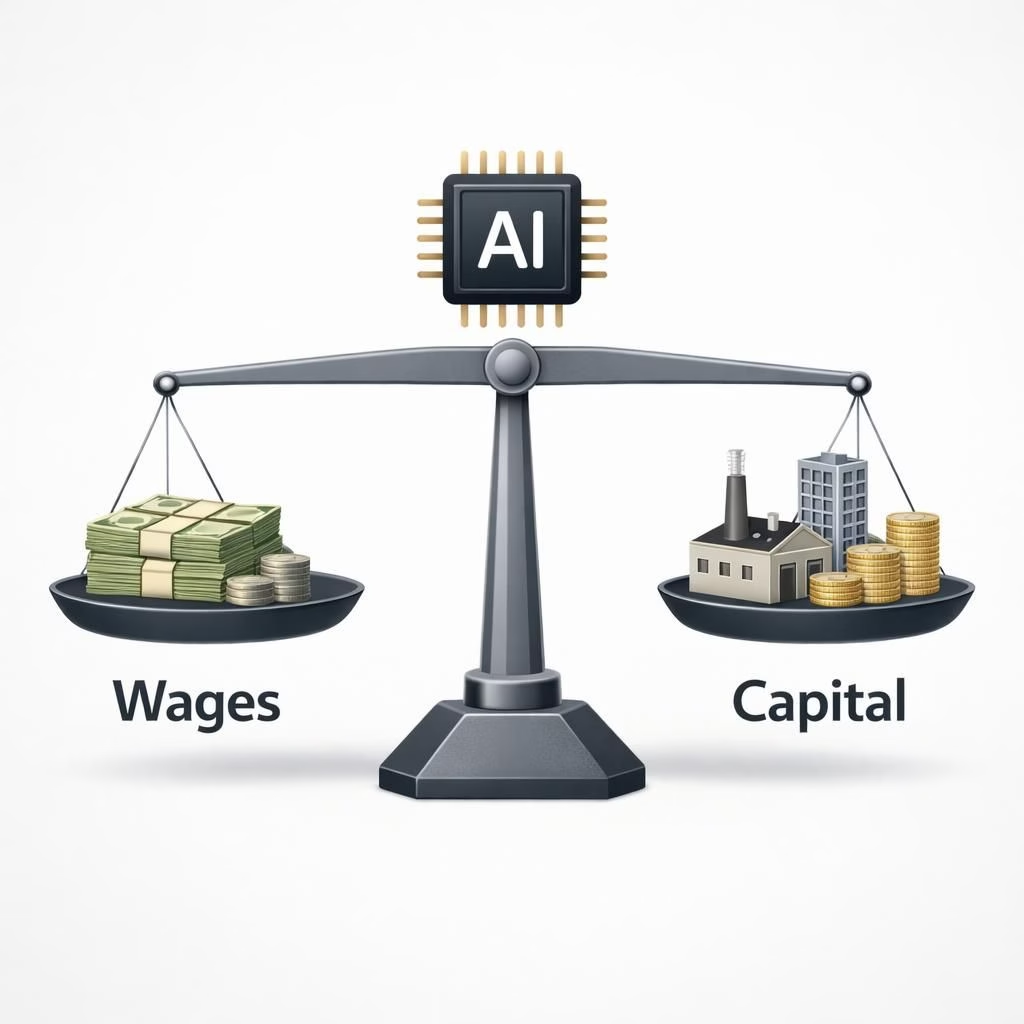
In 2026, AI disruption meets a lively policy debate. Vinod Khosla teams up with a co-founder of Sun Microsystems to propose a radical rethink of tax policy. They argue that AI displaces routine labor, shrinking the labor share while capital grows louder. The aim is to recalibrate capitalism so it rewards risk while supporting workers, not to punish success. They point to data showing a skew in who pays the revenue that funds government programs, underscoring the need for clarity. The tone is pragmatic: policy should guide the transition, not freeze it. They note a broader tech-lead chorus calling for clear rules as AI accelerates. The list of professions at risk—accountants, therapists, truck drivers, and chip designers—reads like a forecast of automation. Overall, the message is cautious optimism: AI will reshape work, but thoughtful policy can soften the path. AI and UBI are on the horizon, signaling a future where technology and policy move together with a gentle nudge.
Rethinking capital vs wages through tax in 2026
In this frame, AI is a policy guide, not a loophole. Businesses adjust hiring and compensation strategies; managers rethink incentives. Investors explore new streams from capital gains with longer horizons and smarter planning. This tax pairing invites tangible steps: retraining grants, clearer rules, and incentives aligned with how quickly automation progresses. Teams can tailor compensation to favor long-run capital formation while preserving worker earnings where possible. The result is transparency, predictability, and a smoother transition for workers and firms.
- Retraining grants tied to automation timelines.
- Clear rules for when tax terms apply to new compensation structures.
- Incentives that encourage capital formation without suppressing wage growth.
Tax policy design for automation-driven labor shifts
This approach requires guardrails and phased pilots to test ideas without creating abrupt shocks. Policymakers can pilot reforms with clear sunset clauses and measurable metrics. Employers can adjust compensation strategies while keeping workers financially secure during the transition.
UBI as a safety net in an AI-driven economy
UBI enters as insurance against displacement. If tasks evolve, a universal base income provides a cushion while workers pursue new careers. The idea frames UBI not as a subsidy but as economic stability that sustains curiosity and retraining. For workers in accounting, therapy, trucking, and chip design, UBI could buy time to pivot into new roles. The discussion balances optimism with caution, focusing on practical pathways rather than fantasy.
Real-world paths emerge as AI adoption timelines shape retraining and policy testing. Employers can invest in retraining, educators can tailor curricula, and policymakers can pilot tax reforms with guardrails. The goal is smoother transitions, not stifling ambition. Skeptics like Michael Burry urge cautious testing, while Elon Musk hints that work could become optional in a world of abundant AI resources. The best plan blends ambition with pragmatism, curiosity with discipline, and a sense of humor about the journey ahead.
Readers, what do you think about this mix of AI, tax, and UBI? Share your thoughts in the comments. If you enjoy the dialogue, invite others to weigh in as well.
Special thanks to the original article for its thoughtful material. Read the original here: Original article. We appreciate the source and the opportunity to reframe the debate for 2026.
External context
For readers seeking broader context, these sources provide angles on AI, jobs, and policy:
- AI and jobs: who will be left behind? – CFR
- Automation and labor-market changes – Brookings
- Future of work in the age of AI – Pew Research