

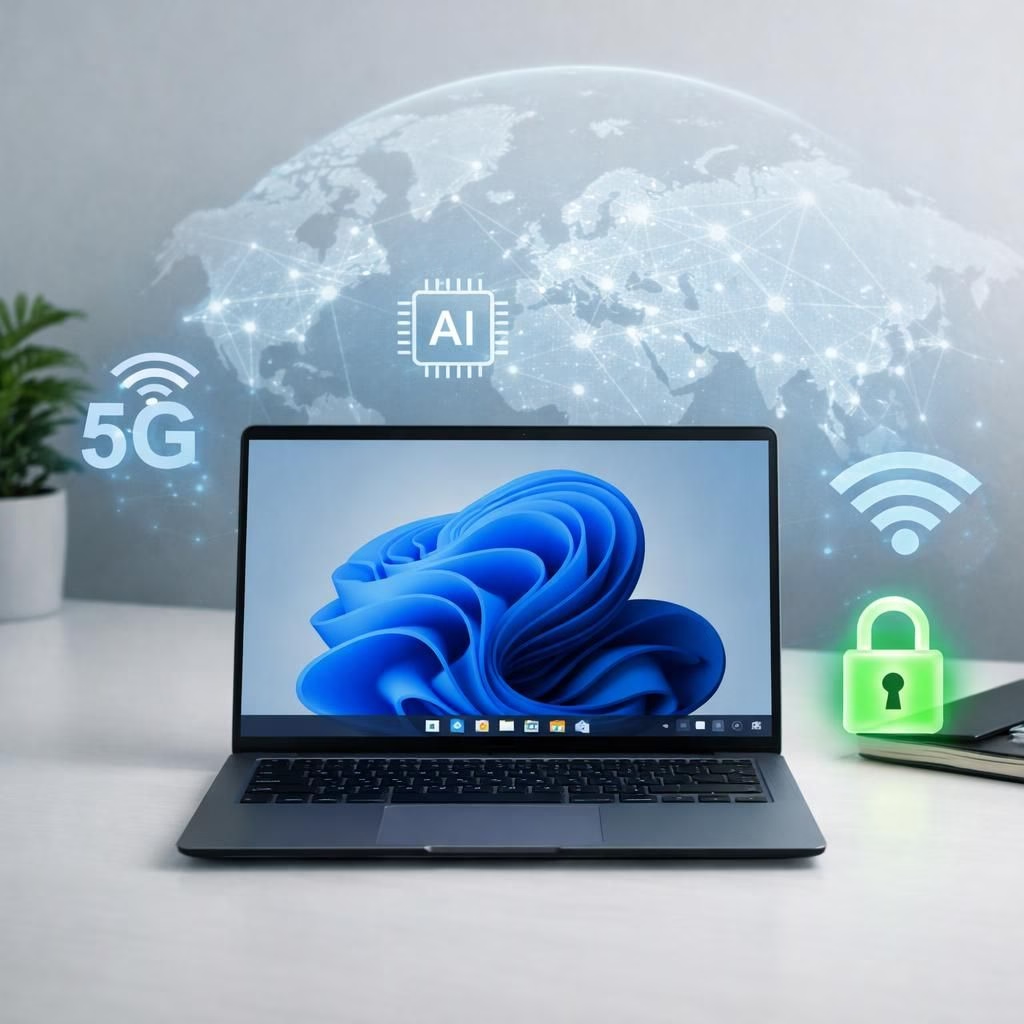
It’s a practical upgrade, not a hype cycle. Microsoft and Ericsson embed enterprise-grade 5G directly into Tag B, creating devices that stay secure, connected, and easier to manage remotely. The system centers on AI-powered 5G management woven into the OS, acting like an autopilot that improves performance while reducing risk. For teams juggling security, policy enforcement, and uptime, this is mobility made simpler and more reliable.
The collaboration pairs Microsoft Intune with Ericsson Enterprise 5G Connect, an AI-powered platform that continuously monitors network quality and automatically adjusts connectivity for performance and security. The result is a system that embeds AI-powered 5G management into Tag B, empowering IT teams to automate how devices connect, switch between CSPs, and enforce enterprise policies. The automation reduces manual setup and ensures a consistent user experience, giving enterprises a predictable, secure pathway to modern mobility. In practice, that means fewer surprise reboots, less fiddling with SIM cards, and more time for developers to ship features instead of debugging networks. It also signals a shift in how we approach security: automatic adaptations can close gaps before a human notices them, and that’s a win for enterprise mobility and for the people who rely on it daily.
AI-powered 5G inside Windows 11 boosts enterprise mobility
At the heart of this evolution is a simple promise: Windows 11 becomes a smarter platform for connectivity without asking users to become network engineers. The AI-powered 5G layer watches the live environment—the signal strength, CSP availability, and policy constraints—then nudges the device toward the best option without user intervention. For IT admins, this translates into remote policy updates, prioritized 5G traffic, and a reliable baseline experience across offices, airports, and remote sites. The phrase AI-powered 5G appears repeatedly in demonstrations because it’s not just a buzzword; it’s the mechanism that makes the entire mobility stack behave like a well-coordinated team, rather than a group of strangers sharing a single hotspot. For Tag B devices, this means fewer moments of “why is this not working?” and more moments of “we’re good, next task.”
- Remotely set network policies that prioritize 5G when it’s available and reliable.
- Automatically switch eSIMs across CSP networks to maintain continuity without manual reconfiguration.
- Leverage local AI agents on Surface 5G laptops to make context-aware connectivity decisions in real time.
These features aren’t cosmetic; they’re designed to reduce IT overhead, shorten deployment cycles, and boost employee productivity across locations. In practical terms, the system can adapt to a changing environment—from a corporate campus to a field site—without a consultant-level setup. The Windows 11 experience remains familiar to users while the underlying mobility fabric becomes smarter, faster, and more secure. The emphasis on secure connectivity and policy-driven access aligns perfectly with common enterprise needs: protect sensitive data, ensure compliance, and keep users productive wherever they work. The AI-powered 5G layer is the quiet engine behind those outcomes, reducing the error margin that typically accompanies manual network management and device provisioning.
Windows 11 meets AI-powered 5G: remote management at scale
In this next phase, Windows 11 serves as the canvas for enterprise mobility that isn’t loud about its sophistication. The combination of Intune, Ericsson’s platform, and CSP partnerships creates a scalable remote management story. IT departments can remotely deploy network policies, automatically provision eSIMs, and enforce security profiles across thousands of devices. The collaboration anchors on AI-powered 5G management to deliver reliable connections even as corporate networks spread across different carriers and geographies. In practice, a Surface 5G laptop in Tokyo can switch to the most appropriate CSP in real time, while a device in Madrid might stay on a preferred plan for compliance reasons. The cross-border compatibility is not just convenient; it’s a strategic advantage for multinational teams that must stay productive without juggling dozens of vendor-specific tools. And with seven CSPs already on board for early launch, enterprises gain a broad and predictable rollout path that reduces the usual patchwork maintenance headaches.
The live deployments so far include the United States with T-Mobile, Sweden with Telenor, Singapore with Singtel, and Japan with SoftBank Corp. Additional launches are planned in Spain (MasOrange), Germany (O2 Telefónica), and Finland (Elisa) later this year, with broad availability anticipated in the second quarter of 2026. These CSPs aren’t just brand names on a slide; they represent real coverage, pricing, and service quality that enterprise IT teams can factor into procurement and rollout. The CTOs of Ericsson and the product leadership at Microsoft describe the move as a strategic move toward universally secure, always-on devices that align with corporate policies and regulatory demands. The result is mobility that feels engineered for work—responsive, auditable, and resilient in the face of network variability. Tag B users benefit from a smoother experience powered by AI-powered 5G that anticipates needs and minimizes friction, turning a potential network bottleneck into a non-issue for the end user.
From a user perspective, this is a story about consistency. The device you use at the desk, in a conference room, or on a construction site behaves the same way because the OS, the management platform, and the network layer coordinate behind the scenes. For IT teams, the payoff is a dramatic reduction in manual steps, a lower total cost of ownership, and a more defensible security posture. When a device roams between CSPs, the transition is seamless; when a device gains a new policy, the change propagates across the fleet without interrupting work. And when security events occur, the AI-powered 5G layer can respond by adjusting connectivity or enforcing stricter defaults, keeping corporate data safer without requiring a manual playbook. All of this reinforces Windows 11 as a platform that’s not just familiar but future-ready for enterprise mobility and secure connectivity.
As deployments scale, the ecosystem expects to refine the orchestration further. The emphasis remains on staying agile while preserving control. IT teams will appreciate the clarity of policy enforcement, the predictability of CSP handoffs, and the assurance that devices stay connected when they’re most needed. The combination of Microsoft Intune, Ericsson Enterprise 5G Connect, and a network of CSP partners sets a new baseline for remote management that is both pragmatic and aspirational. This is mobility designed for the modern enterprise—where security, access, and performance aren’t separate concerns but a unified, AI-assisted continuum.
We invite readers to share their thoughts in the comments to help us understand how this approach could reshape everyday work, vendor partnerships, and IT operations in 2026 and beyond.
Original article: Thank you to the original source for material.