

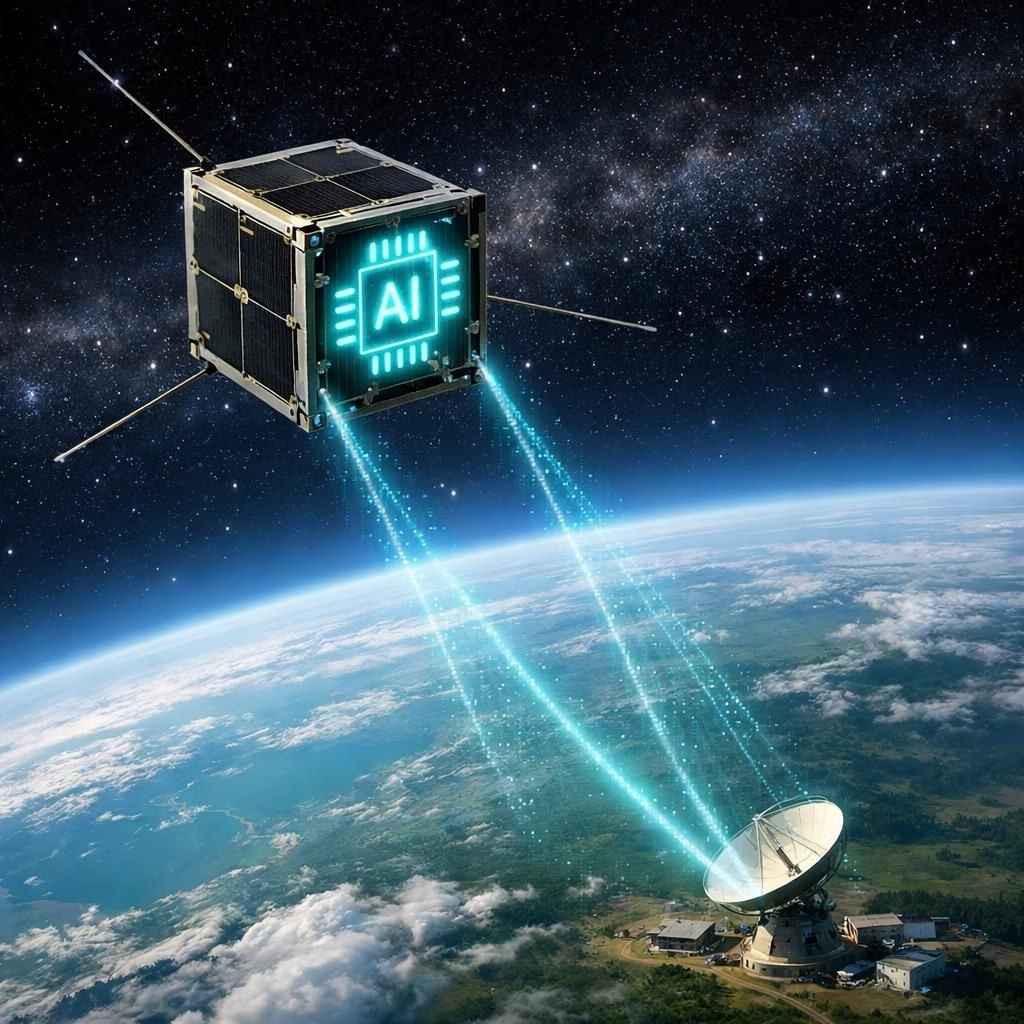
This week stitched AI and space into a practical, forward-looking narrative. Genesis-1 now runs a 2.6-billion-parameter model onboard a satellite, analyzing infrared data in real time. This approach cuts transmission needs by up to 99% and demonstrates real-time in-orbit decision-making.
AI in space: Milestones from Genesis-1 to Artemis II
Genesis-1 in orbit demonstrates AI deployment in space. It carries a 2.6-billion-parameter model with an NVIDIA AI core that analyzes infrared data in real time. The system returns results rather than raw frames, slashing bandwidth and enabling faster insights across the solar system.
Intellistake says Genesis-1 marks a milestone for autonomous orbital sensing. The firm is evaluating a blockchain-based verification layer for Genesis-2, pending terms, engineering work, and regulatory approvals. CEO Jason Dussault envisions a future where in-orbit sensors feed real-time analytics across multiple bodies.
In networking, Comcast, Classiq, and AMD validated backup routes that stay reliable even if multiple links fail in space. The researchers used quantum-inspired algorithms alongside AMD Instinct GPUs to explore fast, low-latency backup paths.
NASA plans a second wet dress rehearsal for Artemis II after LH2 leaks at Kennedy Space Center. A March liftoff remains possible with four astronauts—Reid Wiseman, Victor Glover, Christina Koch, and Jeremy Hansen—for a 10-day loop testing Orion ahead of Artemis III. Engineers swapped seals and tested filters, completing nearly 50 hours of countdowns in a tightly scheduled four-hour window.
Ford is pursuing a $30,000 electric vehicle by trimming weight and boosting efficiency to extend range. The upcoming model is lighter and offers about a 50-mile range boost, with a 2027 mid-size pickup planned at traditional-car price points. Doug Field emphasizes relentless efficiency to outpace competition amid BYD’s market pressure.
Infleqtion’s public debut signals a shift toward commercialization of neutral-atom tech. The SPAC merger sent quantum sensors for clocks and antennas to public markets, alongside conventional computing. The strategy mirrors Nvidia: apply the quantum core to practical timekeeping, sensing, and computing rather than waiting for a distant milestone.
Apple shares slid as investors weighed AI feature delays and regulatory letters. Management signaled progress on Siri 2.0 with Gemini and teased features around iPhone cadence, including an anticipated iPhone 18 later this year. For long-term holders, the pullback could be a thoughtful entry point amid market noise.
NextCycle Michigan expands battery refurbishment and recycling, tying mining, manufacturing, and end-of-life recovery into a single loop. VMX International and ReCharge Recycling scale facilities to recover lithium, cobalt, and nickel, while refining environmental impact estimates. The program aims to strengthen responsible mining, worker safety, and a resilient end-to-end material flow for clean transport.
Dancing humanoid robots on China’s Spring Festival Gala showcased production-scale dexterity, but analysts caution that on-stage success does not guarantee industrial reliability. The demonstration signals ambition in robotics and AI, while experts urge caution about translating performance into factory-floor resilience.
Mistral AI’s Arthur Mensch argues AI could replace a sizable share of software spending if the right infrastructure exists. With roughly 100 enterprise customers and plans for an India office, the company emphasizes fundamentals and a practical replatforming approach. Open collaborations and steady growth mark a shift from hype to durable enterprise AI tooling.
The Pixel and Galaxy ecosystems are increasingly intertwined, pushing cross-platform AI features that boost productivity. Expect AI-assisted photography, assistant capabilities, and tighter cloud integration to shape the next wave of devices and software, while privacy and performance stay central.
Global governance discussions around AI and safety continue to evolve, with summits in India and the EU shaping policy frameworks and practical deployment. Regulators seek balance between innovation and safeguards while industry pilots test real-world viability in evolving markets.
What do you think about AI in space-enabled sensing and the future of quantum networks? Share your questions and experiences below to keep this conversation orbiting.
Original article: Thank you for the original material and inspiration.
AI governance and space policy in 2026
Policy makers and industry leaders discuss safeguards for AI in orbital operations and cross-border data flows, balancing innovation with accountability. The conversations at major summits help shape practical rules for space-enabled projects.
Practical takeaways for readers
- Onboard AI can dramatically cut data transmission needs for satellites.
- Quantum routing aims to improve network resilience during maintenance and outages.
- Battery recycling and responsible material flows support sustainable EVs.
FAQ
- What is Genesis-1 capable of? It runs a 2.6B parameter model on a satellite for real-time infrared data analysis.
- Why is Artemis II important? It tests Orion’s systems and simulates crewed operations ahead of lunar missions.
- What is NextCycle Michigan doing? It expands refurbishment and recycling to recover critical minerals and support clean transport.
- Will AI delay timelines affect investors? Timelines can shift, but progress in hardware and software ecosystems remains ongoing.
References
- NASA Artemis II
- IEEE Spectrum: Quantum networks
- MIT Technology Review: Quantum networks trend
- Original source: https://www.bez-kabli.pl/technology-news-18-02-2026/