

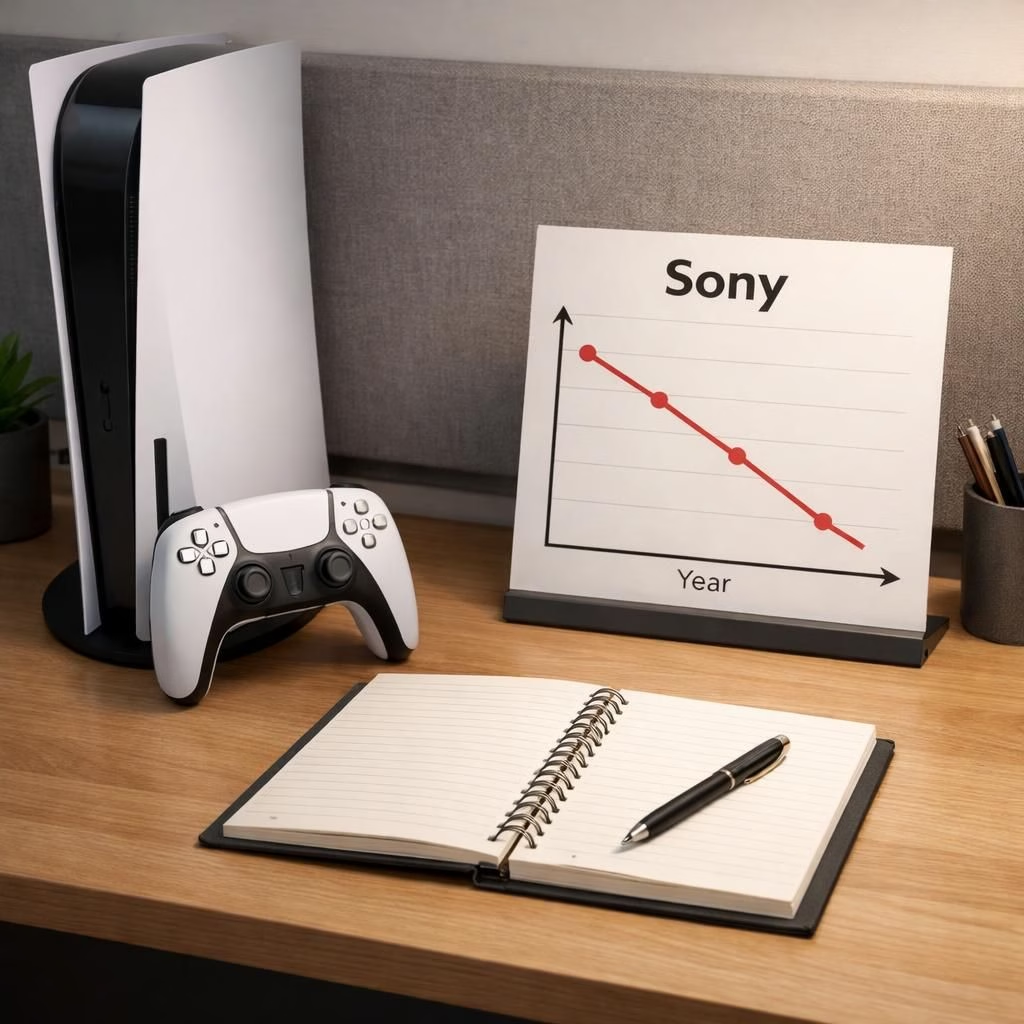
The PlayStation landscape in 2026 shows Sony facing a shifting seas of games and gadgets. The data is blunt: first-party exclusives have sold fewer copies since 2020, even as a crowded market invites new forms of competition. This isn’t a doom scroll; it’s a signal that Sony’s bets are evolving. Players today have more ways to spend their time and their money, which means the company has to balance risk with reliability, curiosity with consistency, and nostalgia with novelty.
To understand the trend, it helps to separate demand from delivery. The decline in first-party sales is not merely about fewer launches; it’s about the cadence and reach of those launches. Sony still ships blockbuster titles, but the pace of marquee exclusives has stretched, and a growing share of attention goes to live-service formats, multi-platform ports, and evergreen catalog updates. When developers aim for scale, the cost of each new exclusive climbs, and the risk calculus grows heavier. In this light, the data from Eurogamer and others isn’t a verdict on Sony’s talent pool—it’s a call to rethink how a modern PlayStation keeps players engaged between the tentpole moments.
PlayStation Strategy in 2026: Can Sony Reboot Its Exclusives?
Let’s talk strategy without the hyperbole. The kind of exclusive that makes a platform sing is both a technical feat and a cultural moment. It needs a clear creative premise, a realistic production timeline, and a launch plan that stays sticky beyond day one. In 2026, Sony faces a dual challenge for its PlayStation division: rekindle the thrill of new first-party hits while accelerating the value of existing IP. The user base that grew during the PS4 era now expects more from each new PlayStation release, and the market rewards depth over intensity alone.
That means Sony has to tighten its internal pipelines, refine its partnerships, and sometimes reallocate risk. Some of the best outcomes come when Sony leans into controllable IP with strong creative stewardship, then broadens the reach through selective PC ports, enhanced post-launch content, and compelling bundles. The PlayStation community values depth, polish, and a strong sense of identity; this is where Sony’s talent pool can shine again. The data suggests that a steady cadence of smaller, high-quality titles can bridge the gaps between major exclusives, while still delivering the big, glossy, system-selling moments that define PlayStation—a brand that remains synonymous with creative risk and technical excellence. If Sony can align its production cycles with a more predictable cadence, the PS5 era can regain momentum without sacrificing the very identity that makes PlayStation distinct.
Within this frame, the role of Sony’s internal studios becomes crucial. When studios collaborate across teams, they can share engines, tools, and validation processes that shave months off development time. The result can be fewer long gaps between PlayStation hits and a more consistent line of first-party experiences. This approach also helps Sony weather external shocks, from supply chain hiccups to global changes in consumer behavior. The PlayStation brand benefits when Sony demonstrates reliability in its creative mission: to deliver memorable, technically ambitious experiences that feel uniquely PlayStation—and uniquely Sony—at every turn.
Sony’s PlayStation Playbook: Lessons From the Data on First-Party Hits
Data isn’t destiny, but it is a smart map. The observed decline in first-party sales since 2020 gives Sony a clear set of lessons. First, quantity must not outpace quality. It’s tempting to flood the calendar with new titles, but a crowded slate without standout innovations can dilute the brand’s prestige. Quality-focused release windows, refined gameplay loops, and standout storytelling become even more important in a world where players compare experiences across multiple platforms. Second, the value proposition must extend beyond a single launch. If Sony can push meaningful post-launch content, robust multiplayer ecosystems, and enduring single-player arcs, first-party titles can maintain relevance longer in the lifecycle. Third, cross-platform strategy matters. Sony’s willingness to bring high-profile exclusives to PC or other ecosystems can extend the audience while preserving the perceived exclusivity of the PlayStation experience for core fans. The challenge is to maintain a strong identity for PlayStation while exploiting the broader market opportunities that PC and cloud gaming provide.
To put this into practical terms, Sony should invest in three parallel tracks. Track one: sharpen the core single-player saga. Track two: accelerate development pipelines for smaller, tightly scoped projects that can ship on a regular cadence. Track three: optimize live service support for existing IPs and ensure evergreen titles remain compelling through meaningful updates. If Sony can thread these strands, PlayStation will regain its edge without sacrificing the very creative energy that has defined Sony’s first-party studios since the PlayStation 1 era. The art here is balance: Sony must balance the art of making a bold, memorable exclusive with the science of keeping audiences engaged between major launches. That balance is precisely what the data shows we need from Sony’s PlayStation division in 2026.
Another important factor is player expectations. The PlayStation audience has grown up, and a portion of the community now expects constant momentum, cross-media experiences, and well-supported post-launch content. Sony can capitalize on this by building a robust live ecosystem around its biggest franchises. A strong live service backbone does not replace the glory of a new exclusive; it complements it. In practice, this means more frequent updates, better expansion plans, and a commitment to quality that resonates with the very players who helped move the needle in previous generations. The result is a hierarchy of experiences where PlayStation exclusives act as marquee events, while smaller titles and live-service efforts provide ongoing value that keeps players invested in the brand over time. Such a strategy aligns with the realities of the current market and respects the heritage of Sony’s PlayStation lineage.
From a market vantage point, the data also highlights the importance of accessibility and reach. Sony’s first-party hits should be visible not only on consoles but across platforms where feasible. Properly timed PC ports and thoughtful timing for cross-release windows can expand the audience without eroding the brand’s core identity. The challenge lies in maintaining the aura of exclusivity that defines PlayStation, while leveraging broader access to sustain development budgets and investor confidence. In practical terms, this means selective PC releases, careful pricing strategies, and a marketing plan that positions exclusivity as a premium experience rather than a gating mechanism. If done well, Sony can preserve the magic of PlayStation while maximizing the value of its investments for the broader ecosystem.
On the storytelling side, Sony should lean into strong, cohesive narratives that can travel beyond the game itself. A shared universe approach—where a flagship exclusive informs sequels, spinoffs, and companion media—can extend the sales window and keep the brand in the conversation across years rather than quarters. This is not a simple rebranding exercise; it’s a disciplined creative strategy that respects the depth of PlayStation lore while inviting new players into the fold. The data supports the idea that robust world-building and interconnected IP can deliver more durable interest and longer-term sales than one-off hits. For Sony, this implies a commitment to world-building that is patient, deliberate, and high in quality across all product lines.
Finally, the human element should not be ignored. The teams behind PlayStation exclusives are among the industry’s best, and their ambition deserves a supportive environment. A healthy Sony culture that rewards risk-taking, protects creative ownership, and encourages collaboration can unlock new levels of innovation. In this sense, the decline in first-party sales is not a failure of talent but a call to optimize processes, support risky projects, and celebrate the wins that do land. When Sony creates space for ambitious projects while delivering reliable experiences, the PlayStation brand thrives. The data points toward a future where Sony’s PlayStation plays a broader role in the entertainment ecosystem, not just as a console manufacturer but as a creator of lasting, beloved platforms.
In summary, the path forward for PlayStation and Sony involves balancing bold, ambitious exclusives with reliable, ongoing value for players. The data supports a strategy that emphasizes quality over quantity, cross-platform reach where appropriate, and a renewed commitment to post-launch life for each major IP. If Sony leans into these lessons, the PlayStation brand can again be synonymous with pivotal moments in gaming while preserving the creative energy that has long defined Sony’s approach to interactive entertainment.
Original reporting and analysis are drawn from multiple industry sources. A big thank you to Eurogamer for the original reporting that informed this discussion, along with insights from Game File, Insider Gaming, IGN, and GamesIndustry.biz. Your coverage helps readers see the bigger picture behind the numbers.
We’d love to hear your thoughts on PlayStation and Sony’s 2026 trajectory. Do you think the current strategy will deliver the next era of iconic exclusives, or is a broader shift in approach required? Share your perspective in the comments below.
Thank you for reading, and special thanks to Eurogamer for the foundational reporting used as the basis for this piece.
Practical steps for 2026
- Invest in three parallel tracks: core single-player stories, smaller cadence titles, and evergreen live-service support.
- Schedule reliable release windows to avoid long gaps between marquee moments.
- Use selective PC ports to broaden reach without diluting core exclusivity.
FAQ
-
Q: Can PC ports coexist with a strong exclusive identity?
A: Yes. If managed carefully, PC ports extend the audience while preserving PlayStation’s premium branding for core fans.
-
Q: What role do live-service titles play in Sony’s strategy?
A: They provide ongoing value and engagement between major launches, helping sustain revenue and player recapture over years.
-
Q: How can the internal studios improve development timelines?
A: Through shared engines, cross-team collaboration, and a disciplined pipeline that reduces delays without sacrificing quality.
References
- Original reporting: https://www.eurogamer.net/sony-playstation-first-party-sales-decline
- IGN: https://www.ign.com/articles/sony-playstation-first-party-sales-decline
- GamesIndustry.biz: https://www.gamesindustry.biz/articles/sony-playstation-first-party-sales-decline