

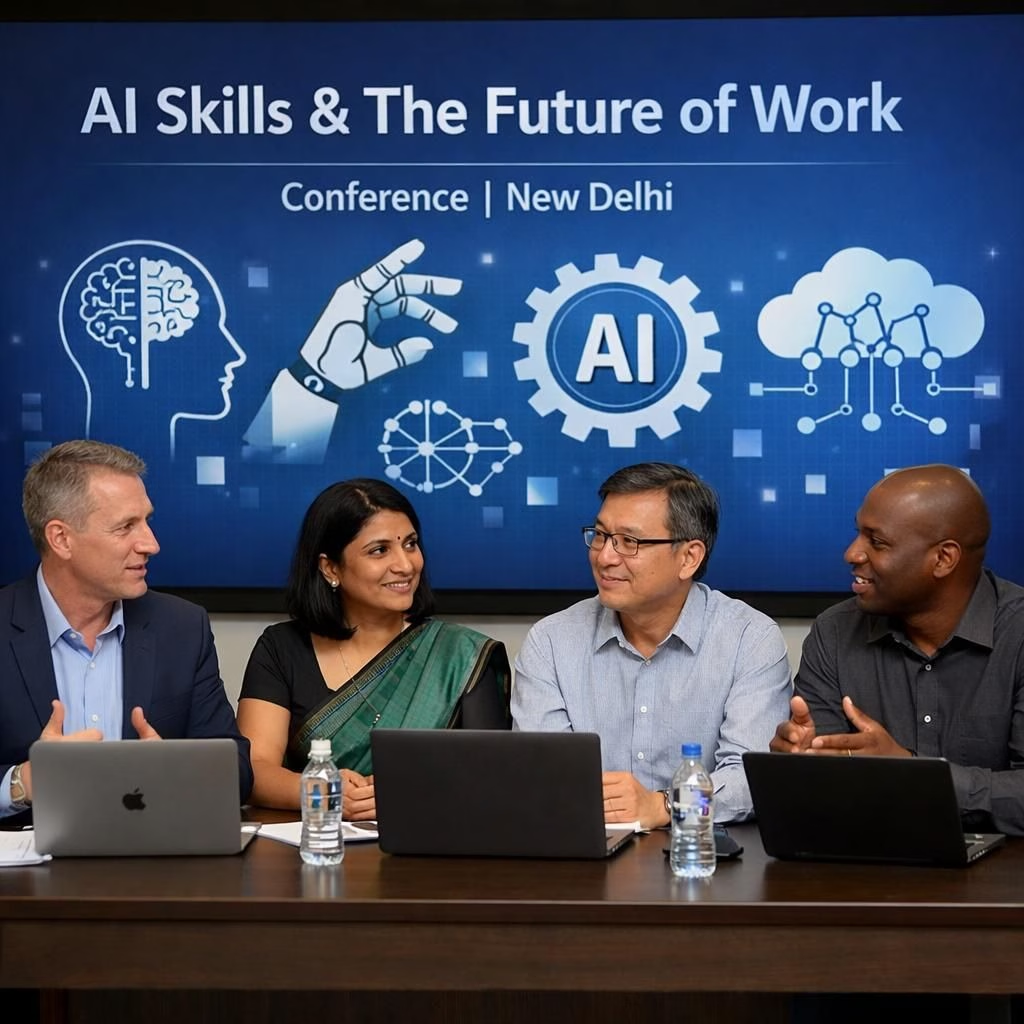
Stay calm and focus on AI Skills, the new literacy for modern careers, as leaders at the India AI Impact Summit in New Delhi remind us. They say the Future of Work will reshape, not erase, opportunity, and that lifelong learning will be the core habit that keeps professionals ahead of the AI curve.
AI Skills: Practical steps to future-proof your career
From the stage, Sateesh Seetharamiah, CEO of EdgeVerve, framed AI as a fast capability multiplier. That simple frame turns every job into a moving target and every target into a chance to learn. The core message? AI Skills are a toolset you carry from meeting to meeting. Seetharamiah notes that productivity rises when people pair human accountability with AI-powered speed. He stresses that there must still be a person who takes responsibility for the final decision. The jobs adapt; the nature of work shifts; the real leverage comes from disciplined practice and clear goals.
Vineet Nayar, chairman of Sampark, offered a pragmatic forecast: perhaps 50% of today’s roles will transform or fade as AI advances, while another 50% will emerge in new forms requiring sharpened capabilities. “AI offers us a scope to reskill ourselves,” he said, urging listeners to identify what skills matter in their own paths. The practical takeaway is simple: you don’t wait for policy to save you—you map your skills gaps, pick targeted learning, and start a three‑month sprint. The message here is clear: if you want to stay employable, commit to a concrete plan for AI‑assisted upskilling. We’re talking about AI Skills in action, not slogans in a brochure.
Sanjeev Bikhchandani, founder of Info Edge, pointed to the banks’ computer era as a lesson: productivity grew when humans used technology, not when computers replaced them. His counsel was straightforward: don’t count on policy to shield you. Instead, set a personal target of learning three AI platforms in three months and track progress. “AI is happening, it is relentless,” he warned, and the cure is practice. People who build small projects and demonstrate real value will prove their relevance in a changing job landscape. AI Skills, if pursued with consistency, become an increasingly trusted asset across sectors.
Puneet Chandok, president of Microsoft India and South Asia, offered the structural view: AI will reshape and unbundle roles rather than erase them. “If you are not learning AI today, you are not learning anything,” he quipped, urging a continuous learning rhythm. The practical message for workers is simple: treat AI as a partner, not a threat, and design a personal learning plan that fits daily life. The emphasis is on action—experiment, measure impact, and iterate. The path to resilience lies in building habits that compound into durable, real‑world skills.
Future of Work: Roles redefined, not erased
The forum’s vibe stayed optimistic about change, with a realistic wink. Leaders argued that work will be redesigned, not eliminated. In many sectors, automation will take over repetitive tasks, while humans move toward design, strategy, and ethical judgment. That’s the core of the Future of Work: humans and machines cooperate to unlock higher value. It’s not a bleak forecast; it’s a blueprint for creative collaboration that invites ownership of outcomes. As work becomes more end‑to‑end, individuals who curate evolving skill sets will stay aligned with demand and opportunity.
To stay ahead, speakers recommended three practical habits: audit responsibilities, identify tasks AI can accelerate, and reimagine a daily routine around continuous learning. The shared credo is that competence grows from deliberate practice, and careers prosper when people own their upskilling journey. The summit’s tone was supportive, encouraging action over anxiety, and it connected curiosity to measurable results through small, repeatable experiments. This is the path that rewards those who plan, practice, and persevere in the face of rapid change.
AI Skills quick-start checklist
- Audit your current responsibilities and identify tasks AI can accelerate.
- Choose three AI platforms to learn over the next three months and set concrete milestones.
- Build a small project that demonstrates real value to your team.
- Document outcomes and adjust your plan based on feedback and results.
As a closing nudge for the future, the message is clear: keep strengthening AI Skills because they anchor your adaptability across industries. The more you train, the better you communicate your value to any team that uses AI to move faster.
For the younger audience, the takeaway was crisp: learn useful AI tools, not just theoretical concepts. The path forward is a mix of curiosity, discipline, and a willingness to fail fast and learn faster. The leaders highlighted practical tools and platforms, but the underlying core remains human: accountability, creativity, and the capacity to adapt. The Future of Work wave will push many into new rails, yet with the right approach, those rails lead to better, more purposeful work.
In closing, the summit delivered not alarm but a practical playbook. Step one: define your own AI Skills target. Step two: pick three tools to master in three months. Step three: apply what you learn in real tasks, documenting the impact. Step four: repeat. The message was consistent from the dais and the hallways alike—embrace lifelong learning, lean into AI with intent, and treat the Future of Work as an invitation to reimagine your career rather than a forecast of doom. And yes, you can have a little fun with it as you go.
Original article: Thank you to the original source for the material on the AIS event.
If you enjoyed this take, please share your thoughts in the comments and tell us how you plan to build your AI Skills and navigate the Future of Work in 2026.
References
- New perspectives on AI and work: World Economic Forum: The Future of Work in the Age of AI
- Insights on AI, automation, and the future of work: McKinsey: AI, automation, and the future of work
- Original source: Times of India