

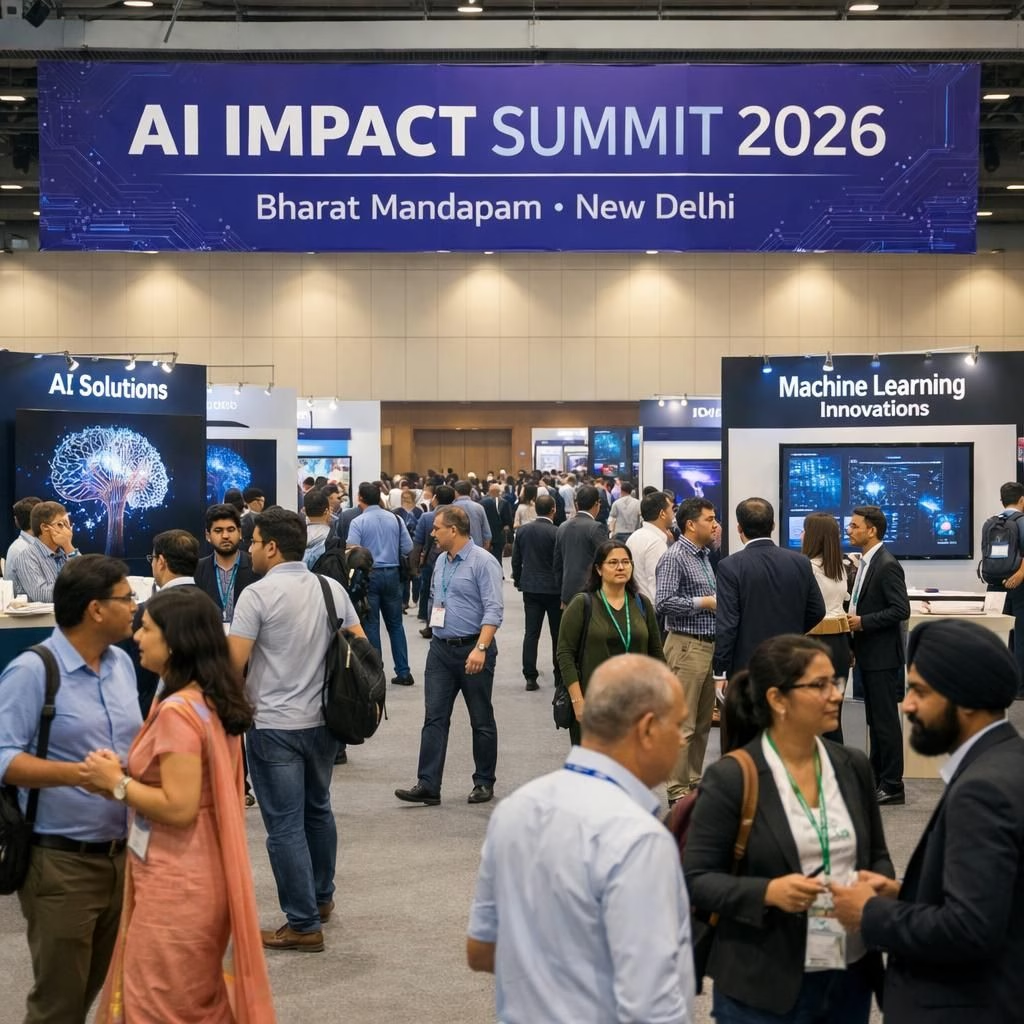
Welcome to our upbeat tour of AI and Impact as India hosts the AI Impact Summit 2026 in New Delhi from February 16 to 20. The event promises more than 840 exhibitors, 500 events, and a five‑day sprint where policy meets prototypes with a confident grin. Think of AI as the backstage pass to tomorrow, and Impact as the spotlight that makes sure tomorrow actually helps people today. The vibe is serious but not suffocating, ambitious but approachable, and yes, caffeinated enough to power a small data center.
AI and Impact in One Massive Roadshow: Delhi 2026
The main arena is Bharat Mandapam, with three other venues rotating in to share the spotlight: Sushma Swaraj Bhawan, Vigyan Bhawan, and Dr. Ambedkar Bhawan. The AI Impact Expo sits alongside the main plenary sessions, while other events unfold across rotating venues. The Expo spans 70,000 square metres and runs all five days. It is organized around seven Chakras—Health, Agriculture, Safe & Trusted AI, Science, Inclusion, Democratising AI Resources, and Economic Development. More than 30 countries participate, with 300+ exhibitors across ten thematic pavilions. The guiding principles—People, Planet, and Progress—read as a practical checklist for AI that helps, respects resources, and avoids power concentrations.
The schedule unfolds like a well‑paced thriller: February 16 opens with keynotes and policy panels, and the Expo is inaugurated for live audiences online. February 17 adds Knowledge Compendiums—casebooks on AI in Health, Energy, Education, Agriculture, Gender Empowerment, and Disabilities—and includes a seminar on Applied AI. February 18 spotlights the Research Symposium with IIIT Hyderabad as knowledge partner, featuring new AI research, Global South showcases, and poster sessions. Finalists of the AI by HER – Global Impact Challenge will demo solutions, and a Summit Dinner promises networking at Bharat Mandapam. February 19 features the formal ceremony with Prime Minister Narendra Modi inaugurating the event; a Leaders’ Plenary and CEO Roundtable follow, with access to the venue restricted but registered visitors able to enter the Expo Arena from 11 am to 6 pm. February 20 focuses on GPAI Council alignment on responsible AI priorities and the anticipated Leaders’ Declaration.
Livestreaming will be available via the IndiaAI site for those who cannot attend in person, making global participation easier when ambition meets bandwidth.
AI Knowledge, Impact Data: Global South At The Center
Among the attendees are tech leaders and policymakers who care about real progress. Sundar Pichai, Demis Hassabis, Brad Smith, Cristiano Amon, and Arthur Mensch figure prominently on the attendee list, underscoring the event’s scale and seriousness. The seven Chakras are designed as working domains where AI can improve health outcomes, farming yields, energy efficiency, and governance—areas where the Global South often negotiates for fair access.
Practical details for participants include no registration fee, a straightforward online sign‑up at Impact.indiaai.gov.in, OTP email verification, and a QR entry pass upon approval. Entry points are Bharat Mandapam Gate No. 4 and Gate 10, and Sushma Swaraj Bhawan Gate No. 2. Bring a government‑issued photo ID; international visitors should plan for passport checks. On‑site logistics include options such as dedicated vehicles, Delhi Metro passes, and an official Summit Uber feature to ease intra‑city travel.
The two cultural evenings bookend the Summit week: February 17’s “India’s Journey from Tradition to Technology” and February 20’s “Hornbill Dream – Where Tradition Meets Technology.” Both are free for registered attendees and help humanize the tech talk with warmth and texture.
The Knowledge Compendiums published on February 17 promise to capture case studies across multiple domains, offering attendees useful references long after the banners come down. The overall tone remains hopeful: AI is not a single invention but a suite of tools that, when used wisely, can amplify human potential across health, education, infrastructure, and governance. The event signals a broad push for inclusive innovation: more than a showcase, it’s a forum for cross‑border collaboration that respects local realities while staying hungry for global cooperation. The balance of star power and field demos keeps the energy high, but the real prize is a clearer path from idea to implementation.
Original article: Original article — thank you to the authors for the foundational material that inspired this rewrite. We’re grateful for the chance to broaden access to the key insights from the AI Impact Summit 2026.
We’d love to hear your thoughts on AI and Impact. Please share your perspectives in the comments below.
Frequently Asked Questions
- Q: What is the AI Impact Summit 2026?
A: A five‑day event in New Delhi focused on responsible AI, inclusive growth, and practical implementations across sectors. It gathers policymakers, researchers, startups, and leaders to discuss governance and collaboration.
- Q: Who should attend?
A: Policymakers, researchers, business leaders, startups, students, and civil society with an interest in AI for public good. The event emphasizes inclusion and practical projects from the Global South.
- Q: Is there a registration fee?
A: No general registration fee; some activities require tickets or invitations. Details are available on the official site.
- Q: Will there be livestreams?
A: Yes. Livestreaming will be available via the IndiaAI site for remote attendees.
In short, the AI Impact Summit 2026 in New Delhi presents a practical blend of ambition and accountability. If you’re seeking tangible takeaways, follow the Knowledge Compendiums and the flagship challenges for scalable, real‑world impact.