

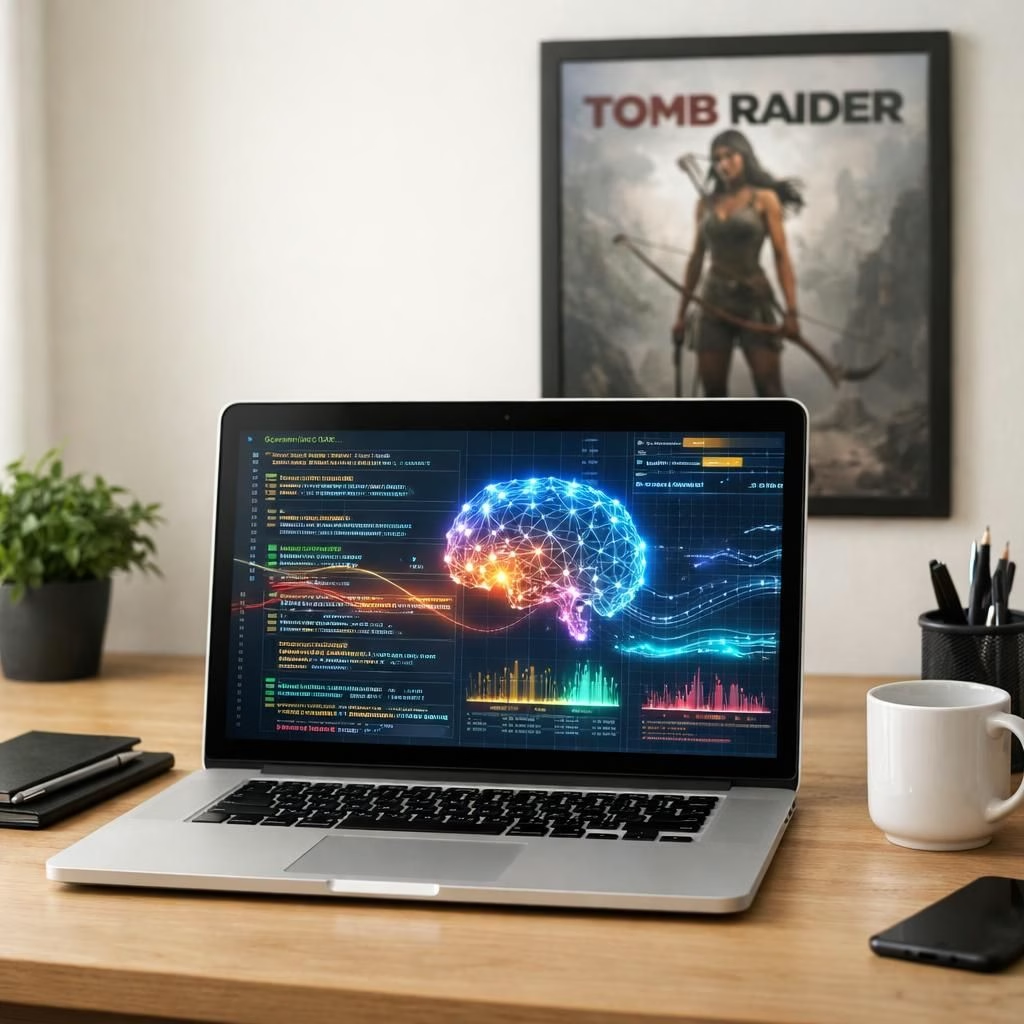
AI in gaming has quietly parked itself alongside the long-running Tomb Raider saga, and the latest chapter, Legacy of Atlantis, gives a peek into the studio’s toolbox. Crystal Dynamics openly explains that gen AI helped them arrive at the right answers faster. The idea is simple and a touch cheeky: let an AI surface plausible design options, automate repetitive QA tasks, and organize pipelines, then have humans review and polish. The result is a tighter feedback loop, more stable assets, and a studio mood that leans into curiosity rather than crunch. The team frames AI as a tool, not a tyrant, a way to trim the dull bits so creative decisions—loud, bold, and undeniably Tomb Raider—can shine. And yes, this is all unfolding in 2026, a year when the balance between ambition and pragmatism shapes how stories meet software.
AI in gaming: Tomb Raider’s Legacy of Atlantis reveals faster-path problem solving
Eurogamer’s coverage crystallizes the core point: the developers used gen AI to surface the right answers faster, not to replace judgment. The AI acts as a fast-reading assistant that scans design briefs, pipelines, asset constraints, and QA notes to surface actionable options. Humans then decide which path preserves the franchise’s tone and pacing. Think of it as a supercharged triage system that flags edge cases and compiles cross-disciplinary notes, enabling designers and artists to iterate with speed. The upside is clear: fewer late-night firefights with brittle spreadsheets, more room for creative risk-taking, and a workflow that respects the human craft behind the Tomb Raider experience. Crucially, the team emphasises that AI in gaming is a collaborative tool—speeding up decisions while keeping the soul of the representation intact. This is not a dystopian reboot; it’s a pragmatic upgrade to a beloved creative process.
Tomb Raider as a case study of AI in gaming workflows
The broader conversation around AI in gaming finds a welcoming example in Legacy of Atlantis. Polygon captured the studio’s stance: AI is “a tool that can help our teams” manage information, test ideas, and answer tough questions faster. The PlayStation.Blog hands-on piece paints a picture of AI integration that respects project discipline—data pipelines, asset labeling, and iteration cycles align with creative milestones rather than erasing them. In practice, AI helps with triage—spotting which levels, assets, or scripts need human attention first—while editors, writers, and designers fine-tune the details that give a Tomb Raider project its personality. Of course, there’s a careful reminder: AI suggestions require human judgment to avoid formulaic patterns or misinterpretations of tone. The takeaway is a balanced partnership, where AI accelerates exploration but the team retains ownership of the definitive vision for the franchise’s next chapter.
Industry chatter also keeps things grounded. For a Brief Moment, You Got To See How The Sausage Is Made reminds readers that production is rarely glamorous and often iterative, while Kotaku’s piece on tough questions probes the limits of AI’s ability to supply real answers. The Tomb Raider project anchors a broader narrative: AI in gaming can illuminate paths, but it cannot replace the intuition that guides design, storytelling, and player feeling. In this view, artificial intelligence serves as a collaborator that can sanity-check assumptions, surface alternatives, and accelerate testing, all without compromising the franchise’s voice or Lara Croft’s agency. The result is a hopeful synthesis where technology and craftsmanship reinforce each other rather than compete for the spotlight.
As fans digest the milestones, they may notice that AI in gaming reshapes how studios approach risk, collaboration, and critique. The Legacy of Atlantis case shows that the strongest outcomes arise when AI handles the routine and the creative team champions the bold, the surprising, and the emotionally resonant moments that define Tomb Raider. The combination of precise data handling and brave storytelling is what keeps a legacy alive while inviting new audiences to explore its evolving universe. If you’ve followed similar projects, you know the thrill of watching a development pipeline become a living dialogue between imagination and automation, where every milestone is a chance to iterate toward a richer, more human-centered experience of Tomb Raider.
Thank you to Eurogamer for the original reporting that sparked this synthesis. Original article: Tomb Raider: Legacy of Atlantis AI use – Eurogamer.
If you have thoughts on AI in gaming and Tomb Raider‘s evolving tech stack, share them in the comments below. I’m curious how you imagine AI could reshape your favorite adventures.
Practical takeaways for studios
- Define the role of AI clearly. Use AI to triage, label assets, and surface design options, not to replace human judgment.
- Preserve voice and pacing. Keep a review process that guards tone and character moments.
- Invest in data pipelines. Structured data, tagging, and version control speed up iteration without chaos.
- Iterate with milestones. Tie AI-assisted steps to creative milestones to avoid bottlenecks.
FAQ
- Is AI replacing designers or writers? No. AI acts as a supportive tool that accelerates exploration while humans make the final calls.
- Will AI change how Tomb Raider feels to players? The goal is to keep Lara Croft’s voice intact by ensuring creative leadership remains in human hands.
- What can players expect from this approach? Faster iteration cycles, more polished assets, and new storytelling possibilities without sacrificing quality.