

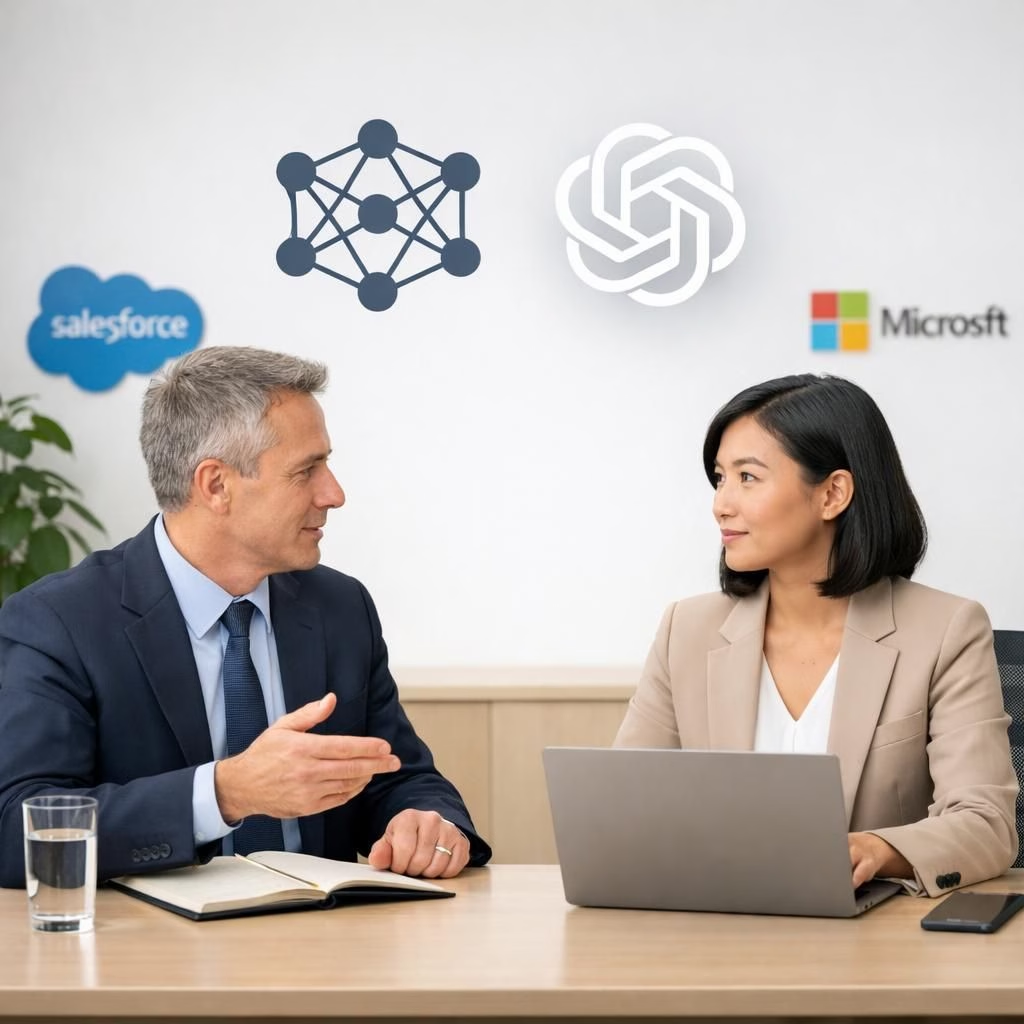
AI in Enterprise: Salesforce’s Bold Vision
In the AI OpenAI era of 2026, Salesforce is chasing an AI-powered future with optimism and a dash of stubborn charm. OpenAI remains a benchmark in the enterprise AI chase, and Salesforce’s leadership has been vocal about wanting a stake in that AI story—ideally with friends, not just founders, and certainly not after a long detour. This is an AI-led era.
In a candid chat with Future Forward’s Matthew Berman, Marc Benioff described how Microsoft—already pouring billions into OpenAI and weaving Copilot into its software—discouraged others from joining the round. He said Microsoft blocked Salesforce from investing in OpenAI, a move that stung but did not stop Salesforce from pursuing an AI future. This marks a pivot toward a broader AI strategy.
Undeterred, Salesforce pivoted. It invested in Cohere, Mistral, and Anthropic to stay close to the next generation of AI models. Benioff stressed that the aim was to be part of the next generation AI model and to shape the AI conversation from inside an enterprise-friendly cradle. They even noted they liked the OpenAI team and the leaders and friends with them.
Benioff has long teased Microsoft’s aggressive moves, joking about Copilot being Clippy 2.0 and questioning whether heavy AI spending yields real returns. The latest remarks shine a light on concerns about concentration of power in a single ecosystem, while also underscoring Salesforce’s willingness to hedge its bets and keep options open.
OpenAI investments and Salesforce strategy
Salesforce has positioned itself as a major player in enterprise AI. It embeds generative AI features into its CRM and rolled out Einstein GPT to turn raw data into actionable insights. The goal is not to use AI as a gadget but to reshape how businesses operate with intelligence at their core. This is about governance, security, and practical value, not hype.
Microsoft’s deep partnership with OpenAI has drawn attention. It has raised concerns about power concentration across the AI stack. Other companies, including Salesforce, are exploring ways to diversify their AI strategies and avoid over-reliance on a single cloud. The move amplifies healthy competition and personalizes AI for different business needs. This approach fits an AI economy that rewards diverse capabilities.
In this evolving AI economy, the key is balance: invest boldly where it matters, diversify where it protects certainty, and keep customers at the center. Benioff’s revelations show a leader who wants to play for keeps while inviting others to the table. The next-gen AI model will not spring from a lone source; it will emerge from a network of partners, ideas, and practical deployments across industries.
Practical steps for embracing AI with diverse partnerships
- Map your core business processes to identify where AI can add the most value without compromising governance.
- Diversify partnerships across several AI models and providers to spread risk and unlock different strengths.
- Prioritize enterprise-grade security, data privacy, and regulatory compliance in every AI deployment.
- Build a transparent ROI framework to measure practical benefits beyond hype.
For readers wondering about the practicalities, here are quick takeaways: focus on governance, select multiple AI suppliers, and keep customer trust at the center of every rollout.
Frequently asked questions
- Why did Salesforce diversify away from OpenAI?
- Marc Benioff explained that Microsoft’s blocking of Salesforce’s OpenAI investment led Salesforce to seek other options such as Cohere, Mistral, and Anthropic to stay close to the next generation AI models.
- Will Salesforce rely on a single AI provider?
- No. Salesforce is hedging its bets to avoid vendor lock-in and to tailor AI in ways that fit diverse business needs.
- How does Einstein GPT fit into this strategy?
- Einstein GPT is Salesforce’s approach to embedding intelligent capabilities directly into CRM workflows, turning data into actionable insights without requiring a separate AI system.
- OpenAI ecosystems: what should leaders consider?
- OpenAI ecosystems offer strong capabilities, but broader AI strategies help reduce risk, improve resilience, and tailor AI to different use cases across industries.
Have thoughts on Salesforce’s AI strategy and the OpenAI ecosystem? Share your thoughts in the comments, and tell us how you see the AI landscape evolving in 2026.
Original article: Thank you to the author for the source material.