

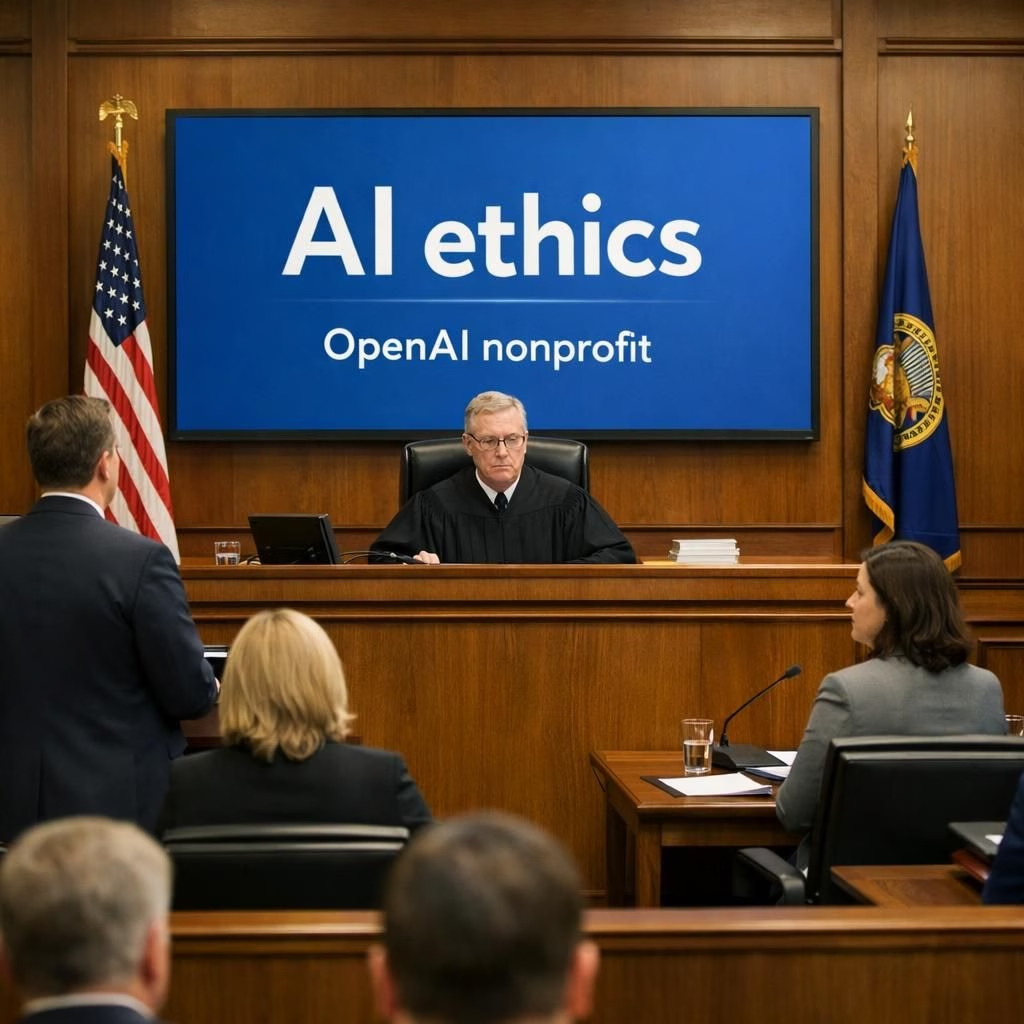
In a case that reads like a tech fable about AI ethics and the OpenAI nonprofit origin story, a courtroom timer ticks toward a widely watched showdown between Elon Musk and Sam Altman. The case questions why a nonprofit mission gave way to a funded entity, and what it means for the dawn of AGI.
The players argue about promises, not millions. They argue about trust, governance, and the direction of breakthrough AI.
AI ethics in the Musk-Altman saga
OpenAI nonprofit roots mattered from day one. The founders pledged to share findings and keep the research transparent. Musk and a small circle funded the venture to prove that serious science could stay accessible. Altman led OpenAI’s pivot toward fundraising while insisting the mission remained intact. The nonprofit frame mattered, even as the lab grew and attracted skeptics.
OpenAI, the nonprofit-leaning lab, faced the financial reality of training ever-bigger models. Early grants could not cover compute costs for GPT-2 or GPT-3 at scale. The tension between open publication and the need for capital grew louder. Musk stepped back from governance in 2019, setting the stage for a governance shift that would shape the project for years to come.
By 2022, ChatGPT redefined consumer AI. The product reached millions within days, then hundreds of millions within weeks. The rapid adoption forced incumbents to react, especially Google, which faced a reckoning about releasing a powerful tool too soon or too late. The industry learned a hard lesson about timing, safety, and ambition all at once.
Microsoft’s billions joined the chorus. The $13 billion commitment gave OpenAI a stable runway and a powerful ally. Copilot and AI-enabled features spread across Word, Excel, and other tools, accelerating the real-world impact of the technology. The business case for scaling AI grew louder, and the debate about governance grew louder still.
As Musk watched OpenAI evolve, his public criticisms sharpened. He argued that the move to a for-profit arm distorted the original pledge. He believed the economics of profit and the pace of development could outstrip prudent safety and public benefit. The conflict spilled into social media chatter, investor briefings, and eventually this courtroom crossfire.
AI ethics matters here, not as abstract theory but as a practical test of how a promising tool is deployed. Some supporters argue that the alignment problem demands experiments with real capital. Others worry that investors push the product beyond safe bounds. The courtroom will decide how the two can coexist, or whether the line between mission and market is permanently blurred. That debate is a real-world test of AI ethics in action.
OpenAI nonprofit origins remain a memory in the story, yet its influence appears in every funding decision, governance tweak, and product release. The tension between public good and private gain keeps tugging at the edges of the lab. In the background, other AI labs push forward, offering more capabilities and, with them, more questions about safety and governance.
OpenAI nonprofit origins meet a modern profit push
The OpenAI story is a blend of idealism and financial reality. The nonprofit frame was meant to guard against profit-driven shortcuts while enabling bold experimentation. The “capped profit” model grew out of a need to attract capital while claiming to honor the mission. Critics called it a pragmatic compromise; fans called it a necessary bridge to scale. Musk called the pivot a betrayal of the original pledge, while Altman and the board argued that the world moved on and that capital was essential for safety and reach.
In Silicon Valley, money flows fast. Microsoft poured billions into the project, strengthening both the for-profit arm and product integration across software ecosystems. The partnership accelerated production and pushed the AI envelope further than many expected. OpenAI, with roots in a nonprofit promise, found itself balancing governance, risk, and opportunity at a scale never imagined in its early fundraising emails.
Some observers worry about safety and accountability when a lab becomes a marketplace player. Others celebrate the speed, the talent, and the real-world usefulness of tools that power classrooms, clinics, and creative studios. The core issue remains: can a storied nonprofit ethos survive the demands of rapid growth and massive funding, or must the mission evolve to stay functional?
OpenAI nonprofit origins continue to echo through policy debates and boardroom decisions. The ongoing tension between broad public benefit and aggressive monetization shapes every major release and every partnership. If the court sides with Musk, it could force a rethink of how big AI labs are funded and governed. If Altman prevails, the industry might accept a blended model where safety checks and public access are built into the financing structure itself.
OpenAI nonprofit origins may be historic, but their lessons stay relevant for researchers, investors, and policymakers alike. The practical question remains how to keep safety, openness, and accountability intact as the push for transformative AI accelerates. The courtroom will not magically settle all debates, but it will illuminate which pathways seem politically and ethically sustainable in 2026 and beyond.
OpenAI nonprofit origins influence a broad set of conversations about governance, transparency, and accountability. The legal arguments will hinge on how binding promises are and what happens when the business model shifts. Either outcome will send reverberations through the research community and the markets that fund it.
Source attribution: Thanks to the Times of India for the material that informed this discussion. The original article provided a chronology that helped shape this narrative. Times of India coverage.
If you have thoughts about how these two paths can coexist, share them in the comments below.
Practical takeaways for governance and safety
- Governance structures matter: clear roles and accountability help balance openness with speed.
- Transparency at the design stage reduces risk and builds trust with users.
- When for-profit arms exist, built-in safety checks and independent audits become essential.
- Funding models should tie safety milestones to milestones in production, not just to revenue.
FAQ
- What is OpenAI nonprofit? The organization began as a nonprofit aiming to advance AI for all, later creating a capped-profit structure to attract capital while trying to preserve safeguards.
- Why is this case important? It tests whether a nonprofit mission can survive the pressures of large-scale funding and rapid product development, with implications for governance in the AI sector.
- What happens if Musk wins? It could prompt changes in how AI labs are funded and governed and potentially slow certain collaborations or product rollouts.
- What happens if Altman prevails? It could normalize blended funding models that embed safety reviews into the funding framework.
- When did OpenAI pivot to a “capped profit” model? In 2019, OpenAI established OpenAI LP with a cap on profits as it sought capital while aiming to stay aligned with the original mission.
Conclusion and next steps
The case is about shaping how AI safety, access, and accountability survive the collision of mission and market. The coming weeks will reveal how principles endure under pressure and which governance models prove most sustainable for transformative AI. Viewers and readers should watch how this ruling could influence funding, transparency, and collaboration across the industry.
References
- Times of India: Sam Altman vs Elon Musk — The Billion-Dollar Feud
- OpenAI Safety
- Microsoft OpenAI partnership