

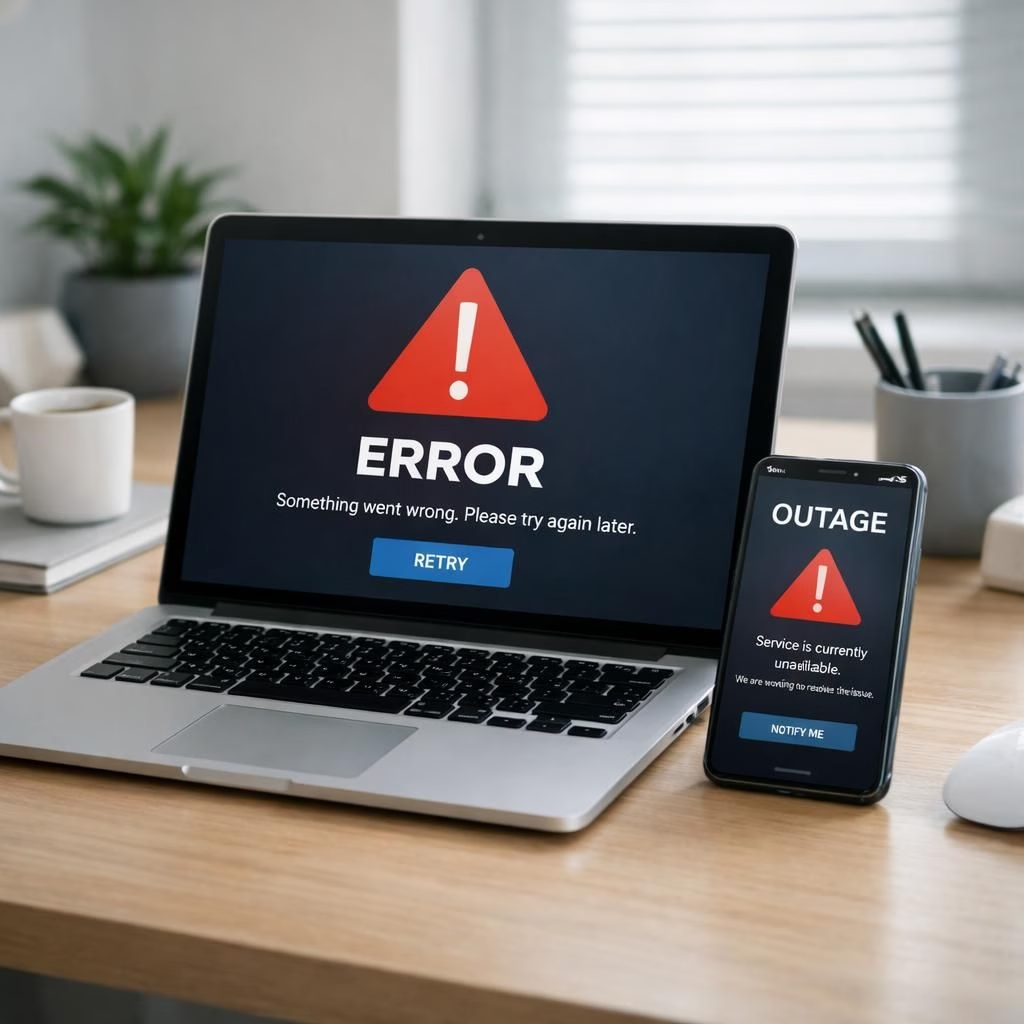
OpenAI outages hit classrooms, developers, and busy workers with a sharp reminder that even elegant clouds can hiccup. In that moment, AI reliability takes the spotlight as the unsung hero of 2026. The outage isn’t a dramatic thriller; it’s a prod to plan, test, and breathe deeply when software lives in a shared, online space. We see the human side of innovation in real time: teams sprint to runbooks, students pivot to alternate tools, and managers practice calm management while engineers troubleshoot with coffee in one hand and code in the other.
According to Downdetector, the disruption touched both web and mobile experiences and registered a barrier that affected thousands. The picture isn’t a neat line of failures but a chorus of reports across geographies. In the United States and India, more than 3,000 users flagged issues at peak moments, with surprisingly lopsided regional impact: roughly 82% of reported issues in India and about 86% in the US pointed at trouble accessing key services. This is not merely a tech hiccup; it’s a reminder that the ecosystem is a tapestry of devices, networks, and user needs, all tied to a single set of services. OpenAI outages, in other words, are a case study in how fast digital work can slow down when a single cog sticks. AI reliability becomes less abstract and more practical—how do we keep moving when core tools stumble?
The story isn’t one-note. OpenAI’s status page acknowledged that the outage was under investigation, with the company promising ongoing monitoring and mitigation. The language was careful but clear: issues across ChatGPT, Codex, and the API platform were being examined, with the caveat that a precise cause and a firm timeline hadn’t yet been provided. For product teams, this translates into a playbook moment: verify affected regions, check dependency services, and prepare a customer-facing note that is honest without being alarmist. The message also referenced ChatGPT Business, noting that users upgrading or adding seats might see interruptions for up to an hour as mitigations take hold. In practice, you see the value of versioning, resilience, and transparent communication when outages occur. AI reliability depends not just on the codebase but on the clarity with which a company communicates delay, reset, and recovery steps.
OpenAI outages and the human side of AI reliability
Real users, real stories: students imitating exam prep, freelancers finishing a bug fix, and product teams updating dashboards—all momentarily paused by the same wave. In the field, the OpenAI outages event reveals how critical reliable access becomes to learning, professional workflows, and creative experimentation. Yet the data also shows a remarkable resilience pattern. Some users switch to cached or alternative tools and resume work with surprisingly little downtime; others ride out the outage by documenting steps, saving session states, and setting up contingency plans for mission-critical tasks. That is the essence of AI reliability in a live environment: resilience plus transparent recovery guidance, not a promise of perfect uptime. When outages hit, organizations that pre-wire guardrails—offline copies of critical prompts, local testing environments, and clear rollback procedures—reap the biggest rewards in continuity and morale.
Across teams and regions, a practical lesson emerges: diversify access points where feasible. If one tool falters, another path might still carry the project forward. This isn’t about doom scrolling; it’s about pragmatic redundancy and the culture of preparedness. In this sense, OpenAI outages become, oddly, a catalyst for better operational discipline. AI reliability is earned in the margins—through runbooks, rehearsed incident responses, and a willingness to pivot with speed and humor when the servers blink.
AI reliability: practical steps during an OpenAI outages moment
First, confirm the scope. Is the outage affecting a single region, a particular feature, or the entire stack? This triage matters for setting expectations and prioritizing work. If you’re offline, document the exact symptoms in a shared note, including timestamps and user reports. This helps both your team and OpenAI’s engineers pinpoint the root cause more quickly. The emphasis on practical AI reliability can’t be overstated: a good incident log becomes a project asset long after the outage ends. Second, implement a safe workaround. If Codex or API access is flaky, switch to local tooling where possible, or keep a list of compatible offline prompts to preserve momentum. Third, communicate openly with stakeholders. Short, honest updates reduce anxiety and set a predictable rhythm for both internal teams and external users. The more people know what to expect, the sooner confidence returns. As outages unfold, a well-structured playbook for OpenAI outages and AI reliability helps teams stay productive and calm under pressure.
- Confirm scope: Is the outage regional or feature-specific? Document symptoms, times, and user reports to aid triage and recovery.
- Safe workarounds: If Codex or API access is flaky, switch to local tooling or offline prompts to preserve momentum.
- Clear communication: Share concise updates with stakeholders to reduce anxiety and set expectations.
From a security perspective, outages are also a reminder to review access controls and monitor for unusual activity during recovery. Keep an eye on API rate limits, because mitigation steps can unintentionally throttle legitimate workloads. A short checklist—confirm status, log impact, apply mitigation, communicate clearly, and test recovery—can transform a potential derailment into a minor detour. In the end, the goal is not perfection but continuity: the ability to keep delivering value even when the main tools stumble. That is the essence of resilient AI reliability in 2026, where AI reliability matters as much as the latest feature release.
Industry observers have noted related outages in the wider AI ecosystem in recent days, including interruptions affecting Claude and other APIs. This context strengthens the case for citizens and organizations to adopt layered resilience—redundant services, clear upgrade paths, and robust monitoring—so that one outage doesn’t derail critical work for hours or days. If anything, the last few days offer a small masterclass in how to design for failure without panic, and how to recover with poise and pace. OpenAI outages are a reminder that reliability is a shared responsibility—between providers, developers, educators, and end users who adapt and persist.
To close, here are a few quick ideas that teams can adopt now to boost AI reliability during an OpenAI outages moment: maintain offline copies of essential prompts and code snippets; set up lightweight fallbacks for high-priority tasks; practice brief, daily incident standups during a disruption; document lessons learned so future outages become less painful; and celebrate small wins when systems come back online and workflows normalize. The best antidote to outages isn’t bravado; it’s preparation, clear communication, and the shared belief that progress continues even when the cloud happens to blink.
Original article with data and incident notes: Special thanks to the original coverage and outage data from Downdetector and the Times of India tech team for their early reporting on the OpenAI outages and their real-world impact. The collaboration and data shared by these sources helped shape a broader, more grounded view of AI reliability in 2026. You can read more here: Times of India Tech coverage. Thank you for the source material that sparked thoughtful discussion and constructive analysis.
Have thoughts about how your team handles outages or what you’d like to see improved in AI reliability? Share your experiences and tips in the comments below—we’re all in this learning curve together.
Original article attribution: I’m grateful to the Times of India tech team and Downdetector for the outage data that informed this piece. Special thanks to the source material for helping us understand the real-world impact and the practical steps that teams can take. Read the original coverage.