

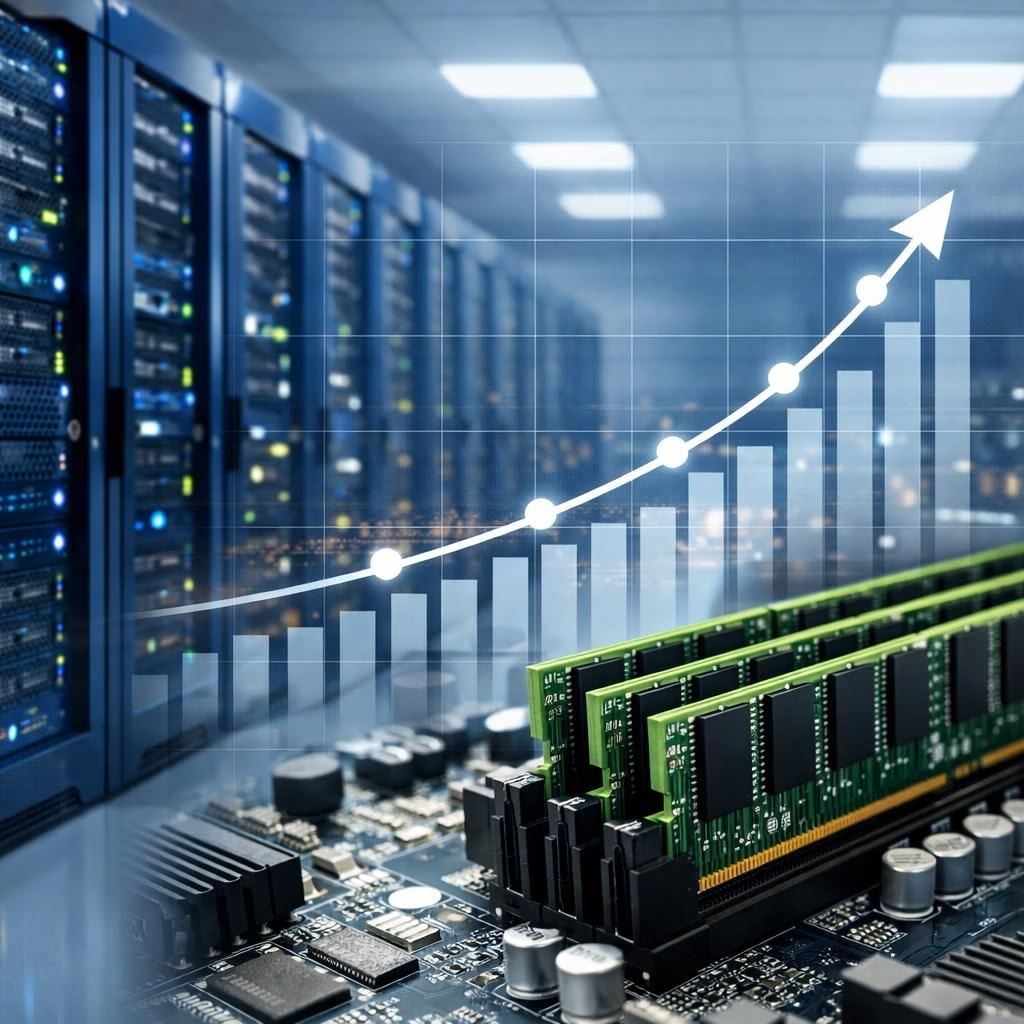
Memory investments are turning into a surprisingly effective tag team with AI momentum, lifting Micron’s stock by nearly 9x in the past year and pushing its market value above $800 billion. It’s not magic; it’s a convergence of demand that loves high-bandwidth memory and data centers that worship AI accelerators. A hint of labor chatter at Samsung adds volatility, but the core story remains buoyant.
Micron has pre-ordered its entire HBM output through 2026 under binding contracts. That means supply is promised for the next several years, a rare bit of predictability in a capex-driven industry. Hyperscalers like Microsoft, Alphabet, and Meta are expected to invest around $700 billion in AI infrastructure this year, and memory sits at the heart of every phase of that plan. If you like your planning notes in ink, this contract-driven growth is the kind of trend that tends to endure for a while.
The stock’s valuation looks reasonable, around 14x FY26 earnings, even for a sector known for swings. Yet the memory cycle remains a weather pattern more than a calm sea: volatile, cyclical, and highly sensitive to how aggressively AI investment evolves. The takeaway: respect the cycle, diversify your exposure, and stay curious about how AI workloads reshape memory demand.
memory AI: The upcycle explained
Three structural elements distinguish this upturn from prior memory booms. First, demand intensity for AI workloads is geometric rather than linear. Nvidia’s HBM and large GPU modules show how memory per AI system climbs as models grow, turning AI inference into a memory-intensive task that users feel in latency terms.
Second, long-term contracts are becoming the norm. HBM is increasingly sold through multiyear commitments with hyperscalers rather than the quick spot trades of yesteryear. In March, Micron secured the industry’s first five-year HBM supply agreement, including volume and price, signaling a shift toward more transparent, contracted revenue streams. This reduces sudden price swings and steadies planning for AI deployments.
Third, supply constraints persist. HBM requires far more wafer capacity per bit than standard DRAM, and its production is complex. That constrained environment has allowed established players like Micron to gain share. Micron’s HBM revenue share rose from about 9% of the global market in Q4 2024 to roughly 21% in Q4 2025, while the overall HBM market roughly doubled. The lesson here: supply discipline can create a moat as others chase capacity with gusto—and sometimes a headache for the stock ticker.
HBM contracts shaping memory AI demand
None of this changes the practical economics of semiconductor manufacturing. Micron projects fiscal 2026 capital expenditures north of $25 billion, with SK Hynix targeting around KRW 40 trillion (roughly $27 billion). Samsung Electronics is pursuing aggressive expansion as well. When the big three memory producers lift capex together, oversupply tends to appear within a two- to three-year window. The odds of a gentle plateau are low; the odds of a cycle with drama are higher, and that drama is what fans of the memory market live for.
Meanwhile, the cycle still hinges on sustained AI investments by hyperscalers such as Alphabet and Amazon. If those giants pause to deliver higher returns on their vast capital outlays, memory demand could slow. But even a tempered view sees a long runway for HBM and related memory technologies to stay essential in AI workflows that require speed and efficiency.
The combination of long-term contracts, higher memory density, and the AI impulse creates a durable tailwind for players who know how to ride it.
To close with a wink: the memory market remains a high-stakes game where timing and capacity decisions matter more than fashion. The upside is real, but so is the risk of a downturn. The best strategy remains diversification, watching AI deployment curves, and staying informed about supply dynamics at the major producers. And yes, the old joke that memory is temporary becomes even more relevant when AI workloads demand permanent, scalable speed.
Special thanks to the original article for the material.
External sources
- SEMI overview of memory tech and market dynamics
- Micron: HBM portfolio and roadmap
- NVIDIA HBM usage in AI accelerators