

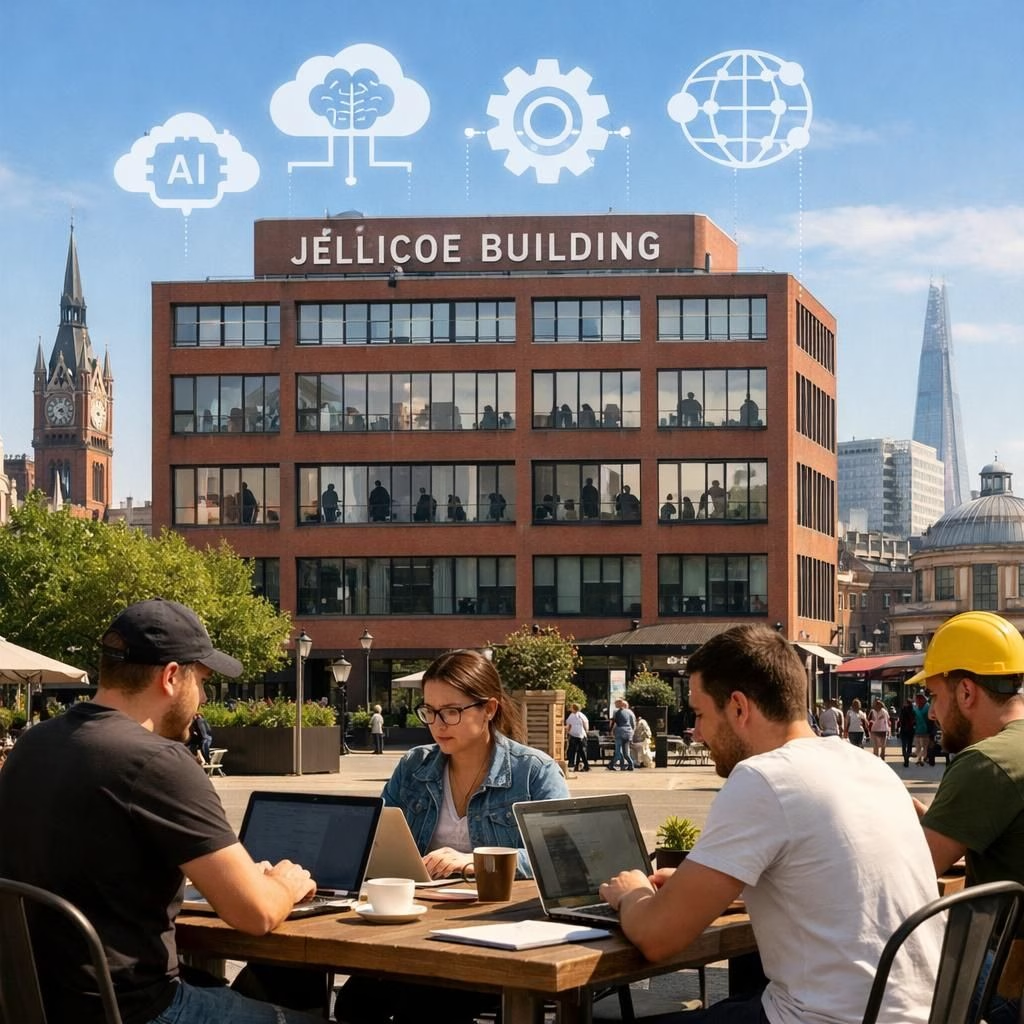
AI-LDN and Tag B are converging as Prometheus eyes a bigger footprint in London’s tech hub. In a move that reads like a bold ambition freeway, the AI startup is reportedly negotiating for three floors at the Jellicoe Building, totaling nearly 38,000 square feet. The round of funding adds fuel to the belief that the UK is becoming a serious stage for AI, with Prometheus raising about 10 billion and a valuation around 38 billion. The plan centers on AI systems that can understand the physical world to support their use in the engineering and manufacturing sectors. By 2026, London could host a larger constellation of AI labs and teams.
AI-LDN and LondonTech: A London Growth Play
London hosts a surge of interest from AI leaders and startups alike. Prometheus is not the only tenant eyeing space in the capital; the Jellicoe deal signals that large blue-chip players and nimble newcomers both want proximity to universities, talent pools, and each other. The city’s real estate market is warming up to AI in practical terms, not just as a headline. This momentum helps AI-LDN and LondonTech communities grow.
The Jellicoe space would be a stage for teams working on perception, robotics, and systems that bridge digital and physical worlds. The expansion follows Prometheus’ headline funding round of 10 billion dollars and a lofty valuation around 38 billion. The goal is to accelerate AI systems that can understand real-world physics for engineering and manufacturing use cases. The 2026 trend is a denser, smarter London AI campus ecosystem that benefits both established players and ambitious newcomers in AI-LDN and LondonTech circles.
LondonTech Momentum: From Co-Working to Corporate Offices
London’s office market is warming for AI. CBRE researchers estimate AI-led firms could occupy up to 4 million square feet of space in central London by 2033, about 43% of all unleased development space. The numbers imply a sustained appetite, not a short sprint. In short, the capital’s AI wave is building a home for both scale-ups and giants. CBRE London Office Market Outlook provides broader context for these shifts.
In the view of market watchers, the speed of growth is notable. You don’t have to see many of those businesses coming over for it to be a really positive story for London, said Michael Wiseman of British Land. Meanwhile, Mike Gedye of CBRE notes that smaller AI firms often start with 15 or 20 seats in a coworking space, then scale to traditional offices within 12 to 18 months. This pace marks a shift from earlier cycles and emphasizes the value of proximity to talent and transport in AI-LDN districts.
- Anthropic: 158,000 square feet at One Triton Square, a property owned by British Land.
- OpenAI: 88,500 square feet at Regent Quarter in King’s Cross, with room for up to 544 employees.
- Scale AI: International HQ move to 2 Pancras Square, 11,000 square feet (nearly four times its Soho footprint).
- ServiceNow: More than 50,000 square feet at EDGE London Bridge, due for completion later this year.
- Quantexa: Pre-leased 52,000 square feet at The Delft near Borough Market, reinforcing AI footprints near central transit hubs.
As Toby Courtauld, chief executive of Great Portland Estates, observes, demand for AI space persists because top locations offer value beyond mere square footage. The combination of prestige, transport links, and a robust talent pipeline remains compelling for AI-LDN and LondonTech-focused firms. The market’s resilience helps keep London competitive, especially as tech giants and nimble startups co-create an ecosystem that blends research, product development, and manufacturing.
Some observers caution that AI enthusiasm could slow, but the data from 2026 suggests otherwise. The city’s mix of established campuses and flexible workspace gives tenants a runway for scale. A strong talent base, universities, and cross-border access to European and global markets reinforce London’s role as a long-term AI hub. The office market is increasingly built around AI’s needs, not the other way around, which bodes well for AI-LDN and LondonTech in the years ahead.
AI-LDN’s Bold Move Signals LondonTech Momentum
Two themes stand out. First, AI aligns with practical business needs, turning research into deployable systems. Second, location matters: proximity to universities, airports, and cross-town transport multiplies impact. AI-LDN and LondonTech together symbolize a city that wants to stay relevant by pairing cutting-edge research with sturdy office space and infrastructure. The result could be faster product cycles, more collaboration between academia and industry, and a stronger UK tech economy overall.
In summary, London’s AI footprint is expanding at a steady clip. Major players sign large leases while new entrants secure flexible spaces and then migrate to traditional offices. The outlook for 2026 is pragmatic, optimistic, and a touch playful about the hype that surrounds AI. If the momentum continues, London may become the most reliable example of a thriving AI ecosystem in Europe.
Original article: Financial Times — Thank you for the thorough reporting and global context. Financial Times.
We’d love to hear your thoughts. Please share your experiences and questions about AI-LDN, LondonTech, and London’s AI real estate scene in the comments.