

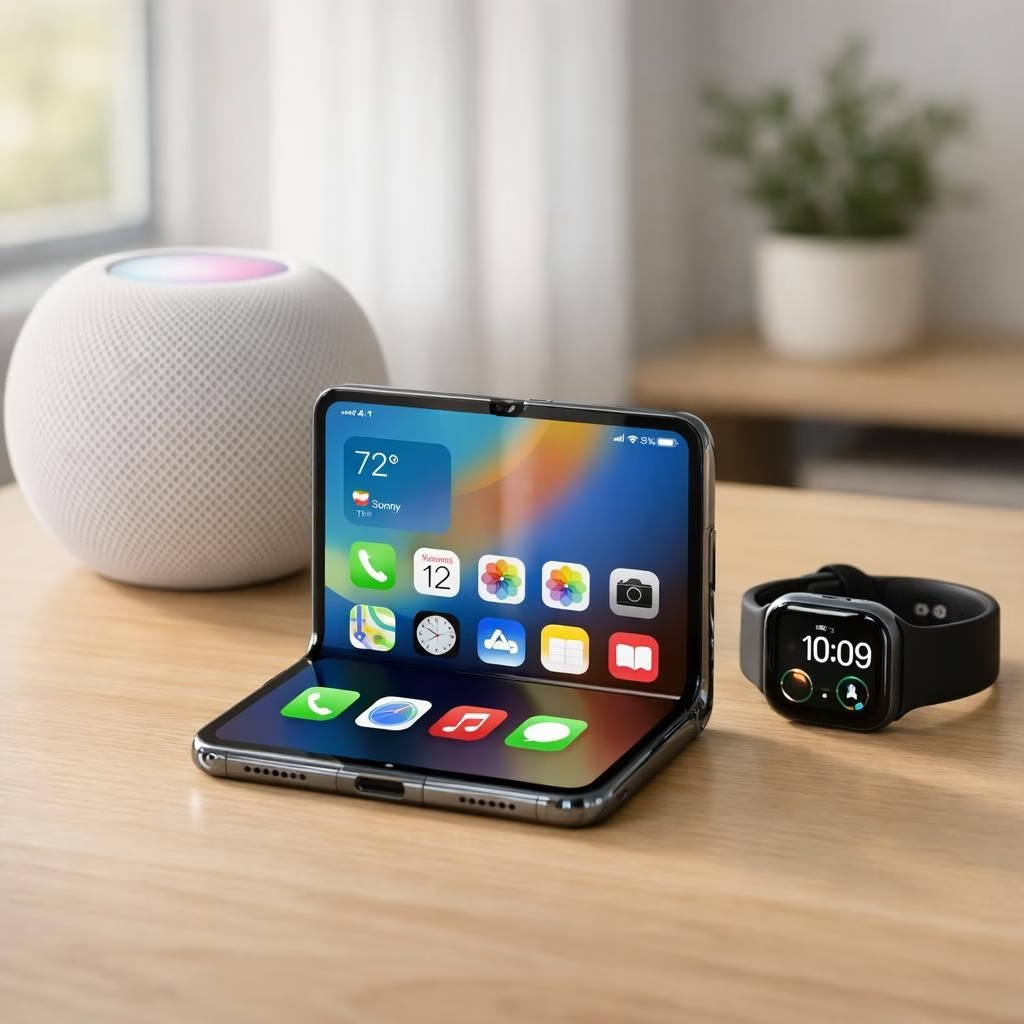
John Ternus becomes Apple’s CEO in 2026, entering with AI ambition and Foldable hardware dreams in hand. AI momentum is not a rumor here, and the Foldable label is not just a gimmick. Bloomberg’s Gurman sketches a roadmap with about 10 new product categories in the coming years, a pace that would make Tim Cook’s era look modest by comparison. The message is simple, and yes, a bit audacious: fuse durable folding tech, an invisible crease, and iPad-like software into devices people actually want to carry every day.
Behind the spectacle lies a practical plan. Ternus reportedly plans to launch the first Foldable iPhone, priced around $2,000, aimed at converting curious Android foldables fans and boosting revenue. The hardware bets hinge on four core improvements: a folding mechanism that lasts, an invisible crease that stays invisible, an iPad-like software experience on a smaller form, and peak performance that keeps up with power users. The company’s executives aren’t aiming for a novelty; they want a durable, reliable daily driver that feels premium every time you open it.
That Foldable path could redefine how people carry tech daily.
AI-Driven Apple: Bold Foldable Horizons
In the Ternus Era, Apple is not just building gadgets; it is shaping an AI-centric ecosystem. The leadership emphasizes alignment between hardware ambition and software polish. Siri and the AI core must be upgraded so the new devices behave as a single, coherent system rather than a jigsaw puzzle of features. With AI at the helm, Apple will test a few existential questions: Can a foldable phone truly feel like a natural extension of your hand? Can an AI brain power the iPad-like workflow without getting in the way?
- Durability of the folding mechanism: the hardware must survive real-world use year after year, not just promo demos.
- Invisible crease: the bend should disappear visually and tactilely, keeping the screen smooth and confident.
- iPad-style experience: the software should feel familiar and fluid, even on a phone-sized canvas.
- Peak performance: long battery life, fast processors, and seamless AI workloads that don’t throttle under load.
In practice, this means Apple will treat the Foldable as more than a gimmick; it becomes a platform with AI-powered intelligence baked in. Expect a tighter integration between devices and services, with a focus on privacy and user control. The tone in internal meetings is pragmatic: if you’re going to ship something Foldable, you ship it well, and you ship it with a clear software roadmap. AI will be the common thread that stitches the hardware together with a consistent user experience across products.
Foldable Futures: AI Wearables, AR, and Smart Home
Beyond the foldable phone, Gurman notes an expanding lineup in AI-powered smart home and wearables. Apple is moving into homes with intent, aiming to compete with Ring and Nest while keeping a privacy-forward stance. The plan mentions a Smart Home Hub—a HomePod with a screen—plus a Tabletop Robot sporting a screen on a moving arm for better video calls, and a new privacy-focused Security Camera. All of this points to a coherent AI ecosystem where devices talk to each other, not in a chaotic chorus but in a well-rehearsed quartet.
On the wearables front, the company is pursuing camera-first devices to feed data into its AI systems. The lineup reportedly includes Smart Glasses to rival Meta’s Ray-Bans, AirPods with cameras to give Siri “eyes,” and a Circular AI Pendant that can be worn as a necklace or pinned to a shirt. If successful, Apple could blur the line between wearables and everyday accessories, making AI part of our fashion statements rather than an afterthought.
Apple’s computing and AR ambitions are equally ambitious. The so-called Ternus Era is expected to bring the first Touch-Screen MacBook in late 2026. Looking farther ahead, Apple aims for lightweight AR glasses around 2028–2030 that could someday replace the iPhone for some users. There’s also talk of a 20-inch foldable iPad in development. The vision is clear: AI devices, smart wearables, and AR gear that complement each other instead of competing for attention.
As the roadmap firms up, the Foldable approach will demand a tighter software bridge that feels native, not stitched together.
But a hardware torrent alone does not make magic. Ternus must align software teams, evolve Siri into a truly capable AI assistant, and ensure the AI brains match the hardware’s promise. The idea isn’t to chase novelty but to deliver a reliable, integrated experience where AI helps you get things done faster, safer, and with a touch of whimsy.
As the roadmap tightens, the Foldable approach will demand a tighter software bridge that feels native, not stitched together.
Practical Implications: What This Means for 2026 and Beyond
If the prognosis holds, 2026 becomes a hinge year. Apple would release the foldable phone in a price range that signals premium but not unattainable status. The durable fold makes sense for power users who demand longevity rather than short-lived gadget hype. The invisible crease isn’t just a pipe dream: it’s a pragmatic fix aimed at restoring confidence in foldable technology. And the iPad-like software experience could finally soften the learning curve for users who want one device to do it all, rather than juggling multiple machines.
In the broader ecosystem, AI-powered smart home products could simplify daily routines. A privacy-preserving security camera, a HomeHub with a screen for quick glance interactions, and a robot desktop companion could redefine how we connect with our living spaces. AI wearables would feed real-time data into ever more capable AI systems, offering context-aware suggestions and assistance while keeping privacy in mind. The aim is not to overwhelm but to enhance daily life with meaningful, unobtrusive intelligence.
Indeed, the practical challenge remains: software. The hardware can be impressive, but the real test lies in how well Siri evolves and how seamlessly the AI helps users. Apple’s strategy appears to be to knit hardware and software into a single fabric, rather than two parallel threads. If that happens, the Foldable tag won’t just label features; they will describe a new Apple habit: thoughtful, capable technology that fits into life without shouting for attention.
As readers, you get to observe a company balancing audacity with discipline. The foldable idea is exciting, yes, but the accompanying AI ambitions must prove themselves in real-world use. The next wave of products will reveal whether the team can translate Zoom calls on a moving tabletop robot into a natural, delightful daily routine and whether the foldable iPhone becomes more than a crowd-pleaser.
What do you think about Apple’s 2026 trajectory? Do you want an AI-powered smart home, or is folding tech the real game-changer? Share your thoughts in the comments below, and let’s discuss how AI and Foldable might reshape everyday tech.
Original article and thanks: For the insights on this roadmap, a special thanks to Bloomberg’s Mark Gurman and the original reporting on Apple’s strategic direction. We appreciate the research and analysis that helped shape this discussion. Source attribution: Bloomberg News.
Practical FAQ
- Q: What is John Ternus prioritizing first?
A: A foldable iPhone around $2,000 with durability, a seamless software experience, and strong performance. - Q: Will Apple replace the iPhone with AR glasses soon?
A: The plan reportedly spans multiple devices, with AR glasses targeted for the 2028–2030 window as part of a broader AI ecosystem. - Q: How will AI improve Siri and daily use?
A: The aim is a cohesive, privacy-forward system where AI assists with tasks across devices without getting in the way. - Q: When should we expect the Foldable devices to appear widely?
A: The foldable iPhone is anticipated soon after he takes the role, with broader hardware and software integrations rolling out in the coming years.
Takeaway
Bottom line: Apple’s 2026 plan blends AI sophistication with Foldable hardware, but real-world success will hinge on software polish, privacy controls, and user experience. Stay tuned for updates as the roadmap unfolds.