

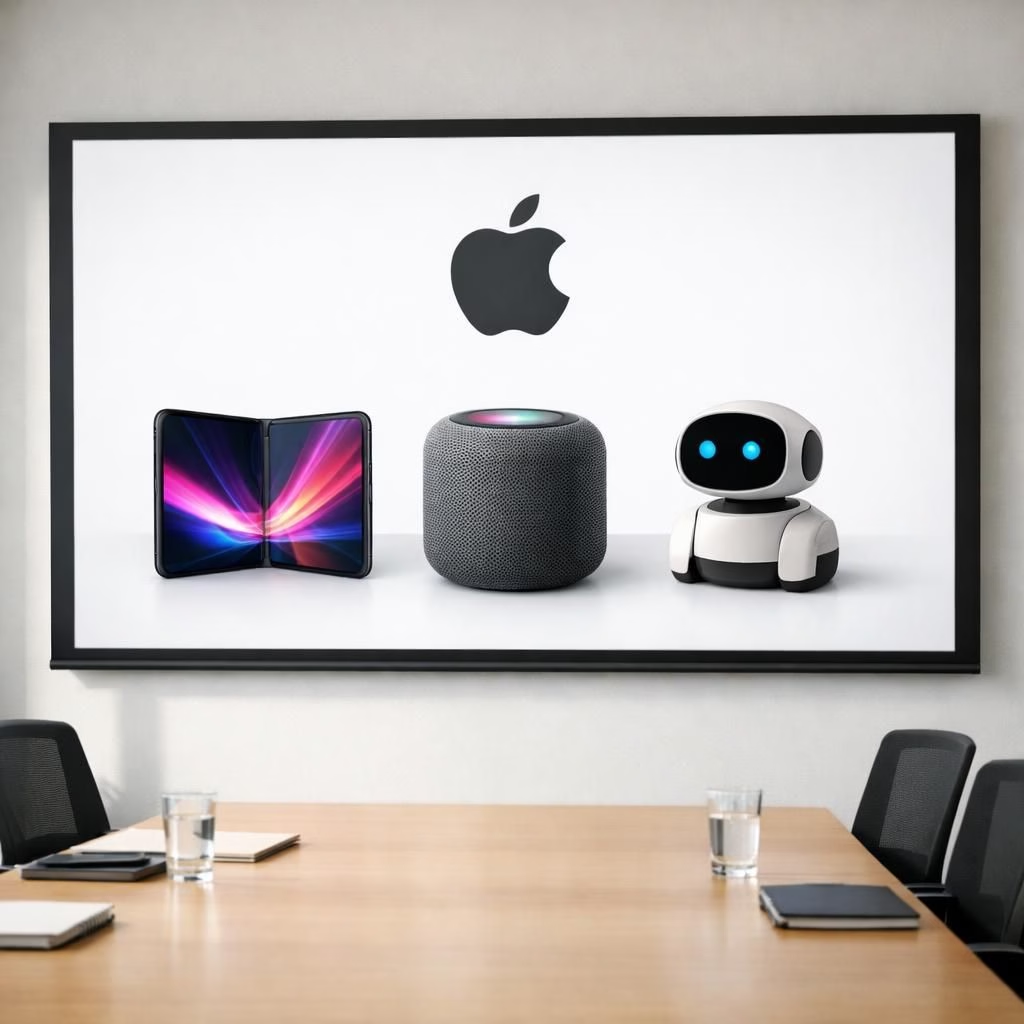
As Apple enters a new era, Apple and AI collide in a bold promise of hardware and software that feels practical and playful. The leadership transition places John Ternus at the helm with a plan that leans into a tech-forward, user-first future. This piece keeps the core truth intact: Apple is pursuing a vigorous product pipeline designed to delight, while keeping the user at the center of every decision. Expect a cadence of hardware and software moves that blend premium feel with practical, everyday usefulness. The company’s Nordic-level obsession with quality and a dash of showmanship suggests the next few years will be less about a single iPhone and more about an Apple AI-enabled ecosystem that just works.
Apple AI 2026 Roadmap: A playful, practical preview
Under Ternus, Apple signals a strategy built around ten new product categories in the near term. This is not a one-off launch plan; it is a deliberate cadence meant to stretch the imagination while preserving reliability. The iPhone Fold sits at the front of the line, a foldable device that aims to redefine how we hold, use, and carry a phone. The September unveiling is framed as a stage for a blockbuster new category, with leadership on display as the product enters the spotlight and a target price near $2,000.
- iPhone Fold: Apple plans to unveil this foldable iPhone at the September event. Gurman and insiders say the new CEO will be the face of the product and the category shift. Early shipments may be tight due to supply constraints, and the price ceiling around $2,000 reflects premium display tech.
- Smart Home Hub: The hub is described as a HomePod with a screen, possibly mounted on a wall or perched on a stylish base. It runs a Siri-centric OS designed for home control and includes FaceTime features. A facial recognition system would tailor experiences to users, though AI safeguards and privacy controls will be central to the design.
- Tabletop Robot: A larger, desk-friendly companion with a roughly 9-inch screen on a movable robotic limb. The limb can reposition the display to improve videoconferencing and collaboration. The concept blends utility with a touch of whimsy, keeping the focus on real-world productivity.
- Security Device: Apple aims to compete in the home security space with a privacy-first device that complements its existing services. Expect robust privacy controls and simple, strong integration with the broader Apple ecosystem.
- Smart Glasses: Apple’s take on wearables includes camera-enabled glasses for media capture and AI-assisted use cases. They’re expected to offer music playback, Siri access, and phone-call functionality, with a design that’s lightweight and comfortable for all-day wear.
- AI AirPods: The audio lineup could gain AI-driven upgrades, including context-aware features that respond to surroundings. Rumors point to camera-based sensing that helps refine guidance, reminders, and navigation within daily tasks.
- AI Pendant: An AI pendant may appear as a compact wearable with computer-vision capabilities. It would process data and feed insights into iPhone AI and Siri, designed to be worn around the neck or attached to clothing for discreet, on-the-go use.
- Touchscreen Macs: A bold move would be to introduce a high-end MacBook with a touchscreen. Slotted for late 2026 or early 2027, this marks a significant design shift that prioritizes tactile input alongside traditional keyboards and trackpads.
- Augmented Reality Glasses: Lighter AR glasses are a long‑term goal, with the aim to overlay digital information on real-world views. Apple reportedly targets a release window between 2028 and 2030, with an eye toward a form factor that could eventually complement or replace the iPhone for certain tasks.
- Foldable iPad: A roughly 20-inch foldable iPad is in the mix as another bold category. Gurman notes it could be a high‑risk, high‑reward project, potentially a showpiece more than a mass-market product—at least initially.
AI-Driven innovation in Apple hardware: Why it matters
The AI thread runs through every item on this list, but it’s not just about smarter chips or cooler cameras. It’s about delivering an Apple experience where AI helps you get more done with less friction. The company’s approach blends hardware quality with software intelligence so that devices feel proactive rather than reactive. When we talk about Apple and AI together, we’re describing a future where context matters: your routines, your preferences, and your privacy all guide how devices respond. This is not hype; it’s a practical path toward a more cohesive, more capable ecosystem where Apple devices learn to anticipate needs while protecting user data.
In this landscape, the ten-product strategy is not merely a parade of gadgets. It’s a test bed for new interaction paradigms, from foldable forms to voice and vision-driven interfaces. The smart home hub, the security device, and the glasses all become connected nodes that feed a wider narrative: technology should disappear into daily life, leaving you more capable without thinking about the tech itself. AI AirPods and the pendant push the AI layer into wearable space, turning everyday moments into opportunities for subtle, useful assistance. And the macOS and AR efforts remind us that Apple aims to blend desk and living room, work and play, in a way that feels inevitable rather than forced.
Of course, the road has challenges. Supply chains, privacy considerations, and user trust will shape how aggressively Apple pushes new categories. The foldable iPhone faces competition and the realities of production; AR goals stretch beyond a single device to a broader, multi-year strategy. Still, the underlying impulse is clear: Apple intends to lead with design excellence and intelligent software, powered by AI that respects user choice. The result could be a quieter, more capable era where devices anticipate needs, not just respond to clicks.
For readers watching the arc of Apple’s hardware journey, the takeaway is simple: expect a steady rhythm of ambitious ideas grounded in practical execution. The roadmap blends familiar strengths with new frontiers, and AI becomes the backbone that makes diverse products feel like parts of a single, coherent system. Apple’s leadership is betting that quality, privacy, and thoughtful AI integration can together deliver a future where high-tech life remains intuitive, not intrusive.
As always, your perspective matters. What excites you most about Apple’s AI-powered hardware direction? Which upcoming category do you think could redefine everyday life? Share your thoughts in the comments below and join the conversation.
Special thanks to Bloomberg for the original reporting and material that informed this piece. Original article: Bloomberg: Apple CEO and product roadmap.
FAQ: Apple and AI roadmap
- Q: What triggers this ten-category plan? A strategic push from leadership aiming to diversify beyond the iPhone and strengthen the ecosystem with AI-enabled devices.
- Q: Will all ten products ship soon? A timeline is likely multi-year, with some concepts showing up earlier than others depending on manufacturing and software integration.
- Q: How will privacy factor into these devices? Apple emphasizes privacy as a core design principle, especially for cameras, sensors, and facial recognition features.
- Q: How does this affect existing products? Expect closer integration between hardware and software, plus new AI-powered experiences across iPhone, Mac, watch, and Home devices.
Conclusion: What this Apple AI roadmap means for you
In short, this is a pragmatic mix of ambition and execution. Expect devices that feel more capable, more private, and more integrated—as if the technology simply anticipates what you need next.