

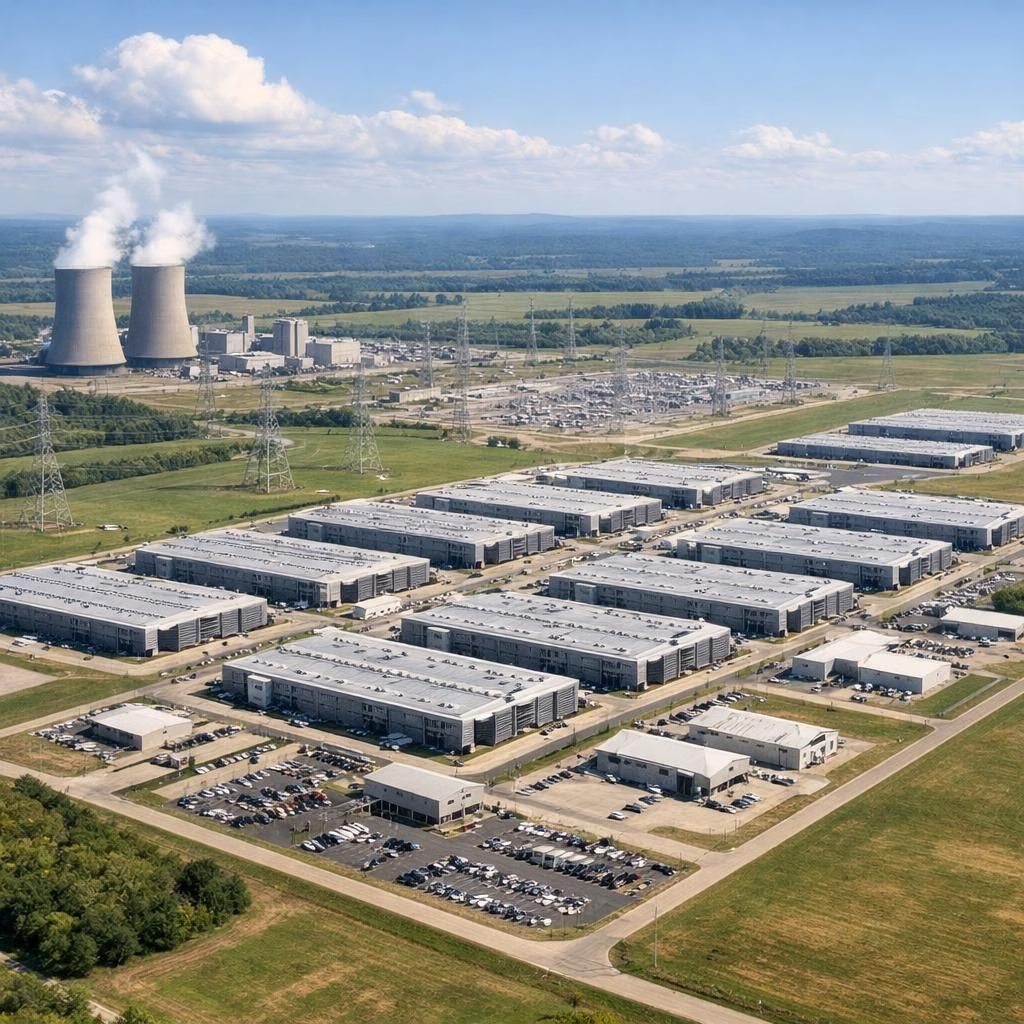
In a move that reads like a tech fortune cookie and a modern construction boom at once, SoftBank’s Masayoshi Son and a slate of top Trump administration officials gave an update on the Ohio data center project. The mood is powered by AI infrastructure, a bold push that blends logistics with megawatts. It’s a story about AI infrastructure ambitions marching forward, unfolding right in the heart of Ohio’s data dreams.
From the angle of scale, this is not a garden-variety campus. The project sits on a vast 3,700-acre plot in Piketon, about 70 miles south of Columbus. Imagine a single campus so large that its power needs look more like a small city than a data center.
The key specs are blunt and bold: 10 gigawatts of total power. For context, one gigawatt can power roughly 750,000 homes. Do the math and you’re staring at a theoretical capacity to light up about 7.5 million homes. If you measure ambition in homes powered, the Ohio data center is in the same neighborhood as a small nation, and it’s all projected to be online in stages by early 2028. The initial build-out is pegged at 30 to 40 billion dollars and will run on about 800 megawatts of electricity, with the site boasted to be fueled by roughly 33 billion dollars’ worth of natural gas. Yes, that’s a lot of natural gas, and a lot of heat for servers that love cold air and clever cooling tricks.
The location makes practical sense on two fronts. It sits on a site that used to house a uranium enrichment complex, so the infrastructure already includes high-voltage power lines that can be tapped for the data center. It’s a bit of an industrial déjà vu, but with better lighting and fewer concerns about the old days. The choice isn’t just about space; it’s about reusing a grid-ready backbone that can hopefully handle the lightning-fast demand for AI infrastructure. In a country that loves big numbers and bold bets, Piketon becomes a banner example of how history can power a new era of Ohio data center work.
AI infrastructure in the Ohio data center: Stargate’s sprawling scope
Critics and curious onlookers have warned that such a colossal project could strain regional resources. On the flip side, proponents say the scale is exactly what the United States needs to compete in artificial intelligence. The White House has framed Stargate as a strategic move in the race to beat China in AI, and early turbine deliveries are expected within a year, with the rest coming online by the decade’s end. The narrative is simple: a bold investment in AI infrastructure can power breakthroughs, attract talent, and turbocharge local economies. Yet it’s not a one-trick pony—the project raises questions about water, electricity costs, and the broader cost of keeping a data center this large running in perpetuity. Still, the team promises that the first big turbines will hum within a year, and that ongoing work will proceed with careful attention to grid stability and local water use. The plan centers on the Ohio data center as a live testing ground for new AI architectures and scalable hardware deployments.
From a purely technical angle, the Stargate venture blends SoftBank’s capital appetite with OpenAI’s AI drive and Oracle’s enterprise backbone. If you want a triple act in AI infrastructure, this is it: a funding juggernaut, a software brain trust, and a hardware infrastructure partner who knows how to scale. The goal is not merely to build a campus, but to create a functioning ecosystem where data flows like careful poetry and the servers stay cool while the ideas hotwire the future. In other words, AI infrastructure gets a real-life test bed, and Ohio data center land becomes a proving ground for the next wave of advanced AI systems.
What AI infrastructure means for energy, policy, and people
This project is as much about policy as it is about circuitry. Regulators worried that such a behemoth could push up water and electricity prices, so the administration has floated the idea that tech firms should cover their own infrastructure costs. It’s a pragmatic stance that mixes a dash of market realism with a pinch of national ambition. The goal, officials say, is to balance a powerful AI infrastructure push with transparent costs that communities can accept. In practice, the numbers are eye-popping: a 10 GW power envelope, an initial 800 MW during the first phase, and a heavy reliance on natural gas to keep the engines warm and the data cool. The message is clear: big bets require big resources, but the aim is to keep costs reasonable for end users and the local grid alike.
For Ohio Ohio data center workers and nearby residents, there’s a mix of folklore and forecast. The Piketon site, already familiar with industrial energy flows, could become a magnet for skilled jobs in construction, engineering, and operations. The broader question remains how the community negotiates the trade-offs—water usage, energy costs, and the long arc of the project’s timeline. The 2026 horizon is not just about building a campus; it’s about building a framework for sustainable growth, a pathway to attract AI specialists, and a test of whether the state’s infrastructure can handle the influx without turning streetlights into sun lamps or water bills into modern sculptures.
In practical terms, the team has signaled that the first massive natural gas turbines will arrive within a year, with the full array of machines and software dancing to the same tune by the end of the decade. It’s a staged ballet of infrastructure, policy, and practical realities. If all goes to plan, the Ohio data center could become a reference point for how to host AI infrastructure responsibly at scale—without drowning in its own ambition. And if it falters, at least the project will give us a lot to talk about in the months and years ahead, which is itself a kind of infrastructure—communication—that every large-scale AI infrastructure project needs.
In 2026, the universe of AI infrastructure in Ohio data center land feels like a plot twist wrapped in concrete and cables. The Stargate story isn’t just about a single campus; it’s about a blueprint for a new kind of American AI ecosystem—ambitious, costly, and undeniably headline-worthy. Whether you cheer the scale or worry about the price tag, one thing is certain: the conversation around AI infrastructure, the Ohio data center, and the future of energy is far from boring. It’s a live test of how a country can blend bold technology bets with practical policy measures, all while keeping a sense of humor about the inevitable startup missteps along the way.
Original attribution: Bloomberg News article. Thank you for the reporting that inspired this rewrite. Read more at Bloomberg.
Practical takeaways
- Monitor turbine deliveries and grid readiness as the plans unfold.
- Review local water-use disclosures and environmental reports as they become available.
- Track energy costs for nearby communities and how the project mitigates rate impacts.
- Check updates from SoftBank, OpenAI, and Oracle for milestones and governance.
FAQ
- What is Stargate? A planned AI infrastructure campus in Piketon, Ohio, led by SoftBank, OpenAI, and Oracle.
- How big is the project? About 3,700 acres, roughly 10 GW of total power, with an initial 800 MW and a multi-decade rollout. Initial costs are pegged at roughly $30–$40 billion.
- When will it be online? The first massive natural gas turbines are expected within a year, with broader online progress by the end of the decade.
- What are the main concerns? Water usage, electricity costs, and the long-term sustainability of operating a project of this scale.