

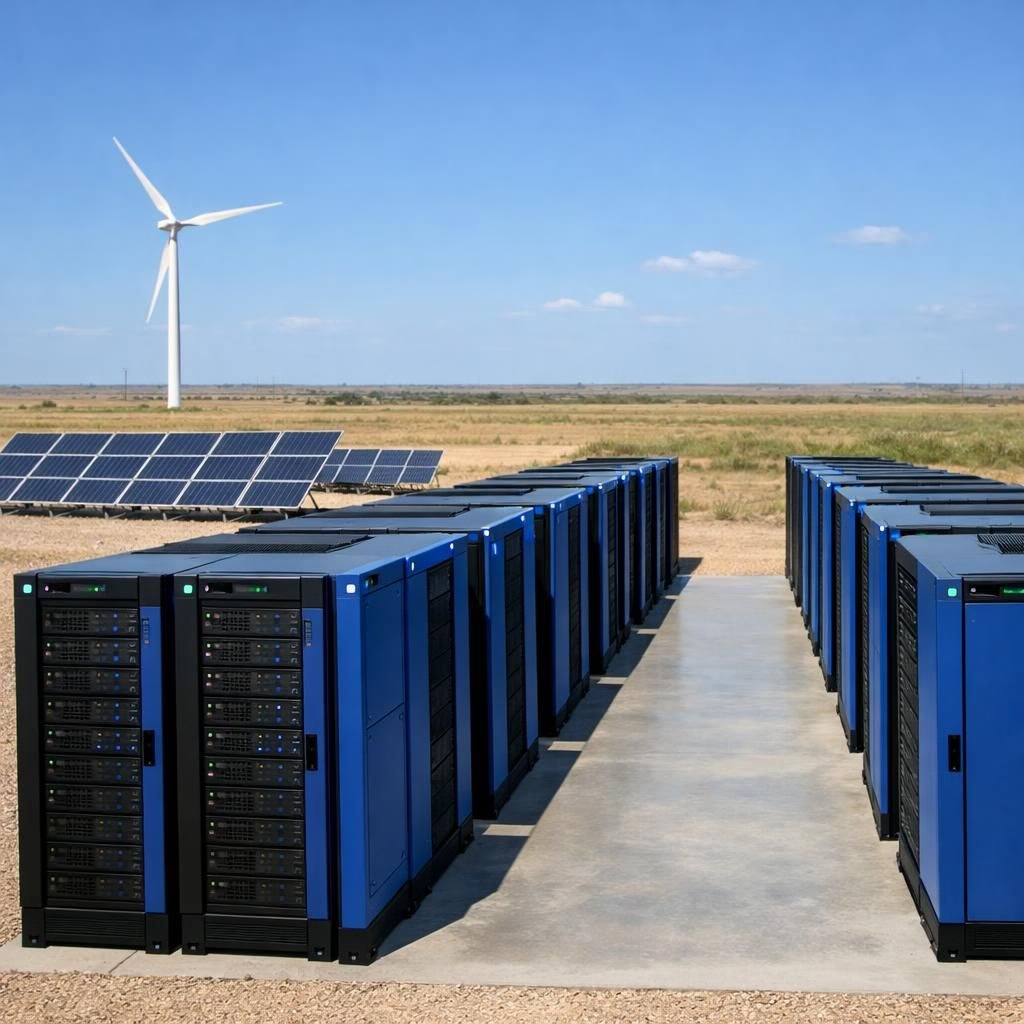
Meta is leaning into AI infrastructure with a bold bet on an El Paso data center, signaling a major shift in how tech giants plan for the next wave of cloud and AI services. The plan elevates a $10 billion investment in the El Paso site and aims for a one gigawatt capacity, marking a sixfold jump from the $1.5 billion commitment Meta announced in October.
AI infrastructure milestones in El Paso and Texas growth
The Texas facility will be Meta’s 29th data center globally and its third in El Paso region. The plan includes tangible jobs: about 300 permanent positions once the site is operational and more than 3,000 workers on site at peak construction. Meta notes contracts to add more than 5,000 megawatts of clean energy to the grid, a commitment that could tilt Texas’ energy mix toward carbon-free sources. The project also involves water initiatives with nonprofits to bring fresh water to the area, a reminder that infrastructure projects touch people beyond servers.
However, the announcement arrived with a real-world sting: Meta recently laid off a few hundred employees across multiple teams. The layoffs, following Reuters reporting on possible sweeping reductions, reflect the ongoing tension between growth and cost discipline in Big Tech. The stock dipped on Thursday as investors weighed the long arc of the project against near-term pressures. Still, Meta frames the Texas project as a long-term bet on AI-enabled services, data sovereignty, and a resilient cloud backbone that could reshape regional employment.
El Paso energy, water, and growth
Across Texas, Meta says projects under contract will add more than 5,000 megawatts of clean energy to the grid. That scale is roughly the energy demand of a mid-sized metro, deployed across wind, solar, and storage systems. The company reiterates its water stewardship plans, working with nonprofits to ease the local water burden. Taken together, these commitments aim to balance a high-energy footprint with community benefits, a balancing act that tests the patience of technologists and residents but can yield meaningful improvements when well executed.
Meanwhile, skeptics note that rapid expansion can clash with regulatory and social realities. Critics say data centers do not exist in a vacuum, and the test is whether these investments translate into stable jobs, affordable energy, and transparent governance. The overall tone remains hopeful: if Meta’s El Paso investment and its broader energy and water initiatives succeed, the region could become a model for tech-enabled growth paired with accountability, not just headlines.
The narrative blends entrepreneurial ambition with communal responsibility. The El Paso ecosystem could become a showcase for how scale can align with local impact, rather than simply stacking headlines. If you want to weigh in, share your thoughts in the comments; your perspective matters in shaping how these large-scale projects land on the ground. Original reporting and context were provided by Reuters; thank you for the foundation this article builds upon: Reuters.
Practical takeaways for communities considering AI infrastructure
- Job market shifts: Expect both construction roles and permanent tech jobs to evolve over years, not days.
- Energy planning: Large data centers can influence local energy demand and grid planning, especially with renewables.
- Water and environment: Partnerships with nonprofits can help communities manage water resources alongside growth.
FAQ
- What is AI infrastructure? A network of data centers, power, and cooling systems built to support AI workloads and large-scale computing.
- Why is El Paso a focal point? The region offers strategic proximity to Texas’ energy grid and growing tech activity, making it a test bed for scalable infrastructure.
- When will the El Paso center be operational? Meta has targeted around 2028 for opening, with phased construction in the years ahead.
- What about environmental commitments? Meta highlights clean energy additions and water stewardship projects tied to the development.
Conclusion
The El Paso investment reflects a broader push by major tech players to anchor AI services in robust physical infrastructure. If the energy and water commitments hold up and local governance remains transparent, the project could become a regional model for responsible tech-enabled growth.
External sources
- U.S. Energy Information Administration – Energy explained
- National Renewable Energy Laboratory
- Reuters Technology News