

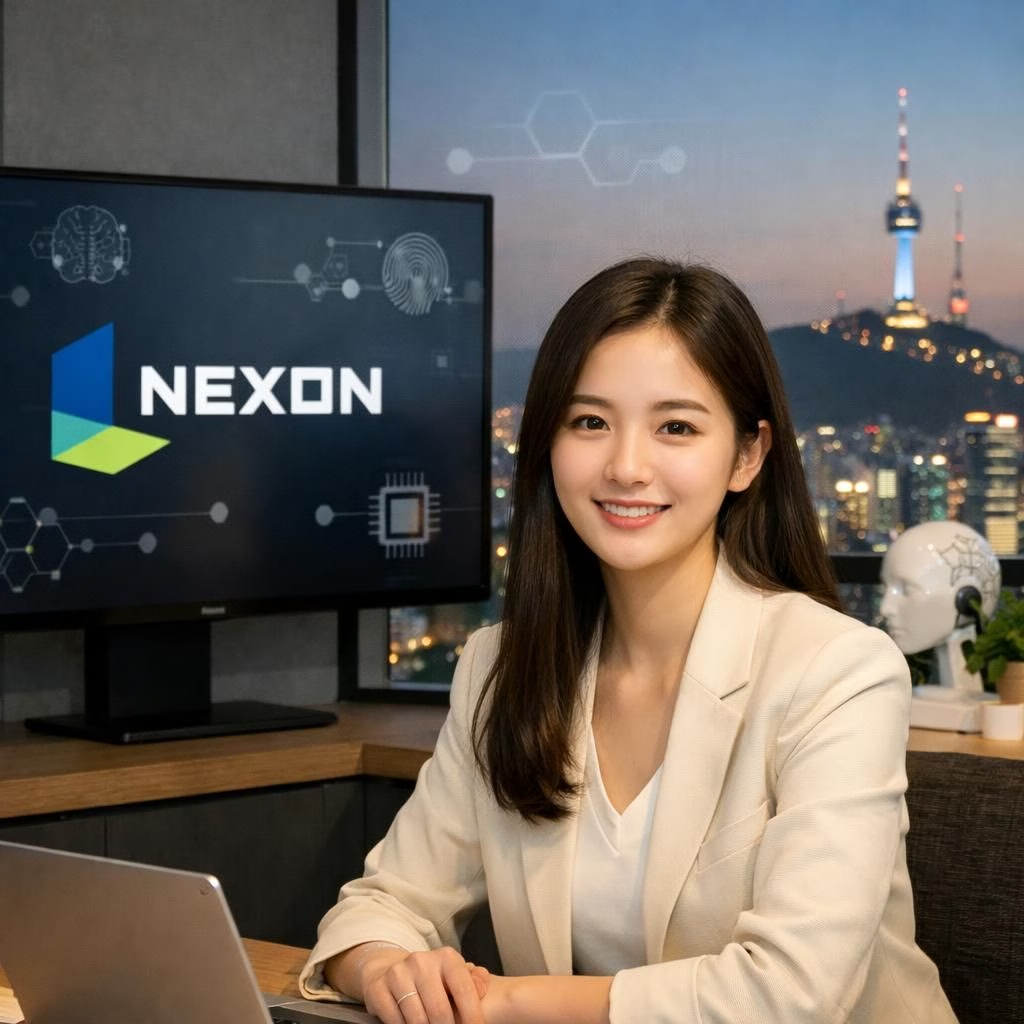
AI and South Korea are rewriting fortunes as Kim Jung-youn, a 22-year-old heiress, enters the tech limelight. Forbes lists her among the youngest tech billionaires for 2026, thanks to inherited stakes in Nexon from her late father, Kim Jung-ju. This compact tale highlights how Asia’s online gaming ecosystem, fueled by fast networks and fast cash, turns family histories into market power. The rise underscores a broader trend: wealth is increasingly passing through digital entertainment and AI-enabled platforms, reshaping who becomes ultra-rich in the 21st century.
AI in South Korea: Nexon, Dynasties, and Data-Driven Growth
In a country famed for its robust tech culture, Nexon sits as a pillar of South Korea‘s digital economy. The company, founded in 1994, popularized multiplayer online role‑playing games and produced enduring hits like MapleStory and Dungeon Fighter. These products didn’t just entertain; they built a revenue backbone that helped Nexon become one of Korea’s most valuable tech firms. The story is a reminder that a game title can become a platform, a platform can become a brand, and a brand can support a new wave of wealth in AI‑savvy markets. AI tools now help tailor experiences, optimize monetization, and forecast player behavior, turning simple gameplay data into strategic decisions that sustain growth year after year.
South Korea’s Gaming Empire and the AI Frontier
Jung-youn’s position is a lens on a broader trend: Asia’s wealth is increasingly tied to AI-enabled business models within gaming, media, and tech. Forbes’s 2026 World’s Billionaires list shows 35 under 30, including several self-made stars, and Jung-youn stands out as the youngest woman billionaire in tech. In this ecosystem, AI isn’t just a buzzword; it’s a real driver of value—especially for investors who track engagement metrics, cross-border partnerships, and scalable infrastructure. The Nexon story demonstrates how a family fortune can be amplified through disciplined growth, strategic stock moves, and a global gamer audience drawn to new AI-driven experiences. South Korea remains at the forefront of this wave, where the blend of culture, gaming, and AI competence creates a unique blueprint for wealth creation.
What does this rising profile mean for investors, policymakers, and gamers? It underscores how the Asia-Pacific region, and South Korea in particular, fuses gaming culture with AI-powered analytics and monetization. The company’s legacy is not just about nostalgia for MapleStory or Dungeon Fighter; it’s a case study in how to leverage data science, infrastructure, and brand equity to sustain growth in a competitive market.
The AI frontier in South Korea isn’t only about clever algorithms; it’s about marrying creative content with data-driven decision making to scale revenue and influence. AI’s role in gaming is evolving from a back-office tool to a frontline differentiator that guides product roadmaps and partner ecosystems.
In the broader context of 2026’s landscape, Jung-youn’s ascent signals how quickly a new generation can redefine what “startup founder” means when a fortune is inherited and converted into strategic bets on AI platforms. With 12 self-made entrants in the under-30 crowd and a growing niche of female tech leaders, the narrative becomes richer and more diverse than the old stereotype of the lone male founder chasing the single breakthrough. The new era rewards speed, collaboration, and an eye for long-term value in AI, gaming, and digital media.
Have thoughts? Please share them in the comments below to join the conversation.
Linkback attribution: Special thanks to Forbes for the original material on the 2026 World’s Billionaires list. Read the original article here: Forbes World’s Billionaires 2026. Thank you.
AI‑driven insights for investors
Practical steps readers can take to interpret AI in gaming wealth in real life:
- Monitor engagement: track daily active users, session length, and retention to gauge AI‑driven personalization effects.
- Evaluate monetization: assess how AI recommendations influence spending and lifetime value.
- Watch partnerships: note cross‑border deals and scalable cloud infrastructure that amplify reach.
- Follow signals: keep an eye on capital infusions in AI‑focused gaming firms and related startups.
As South Korea continues to blend culture with technology, analysts expect AI to keep shaping gamer value and platform strategies across the region.
FAQ
- Q: Who is Kim Jung-youn?
A: She is the daughter of Nexon’s founder, Kim Jung-ju, and ranks among the youngest tech billionaires on Forbes’ 2026 list. - Q: How does Nexon relate to AI?
A: Nexon’s popular titles generate vast data that drive AI‑enabled personalization, monetization, and player insights. - Q: What does this mean for investors?
A: It signals durable potential for AI‑driven gaming platforms in Asia and beyond, especially in scaling user engagement. - Q: Is AI transforming the gaming industry in South Korea?
A: Yes—AI helps tailor experiences, optimize operations, and accelerate growth in leading studios.
Conclusion
Kim Jung-youn’s rise spotlights how inherited wealth and AI‑driven platforms intersect in today’s tech economy. For readers, the takeaway is clear: monitor how data, personalization, and strategic partnerships shape the next wave of growth in gaming and digital media—especially in South Korea.
References
- Times of India: Meet the world’s youngest woman tech billionaire — 22-year-old Kim Jung-youn
- Forbes: Forbes World’s Billionaires 2026