

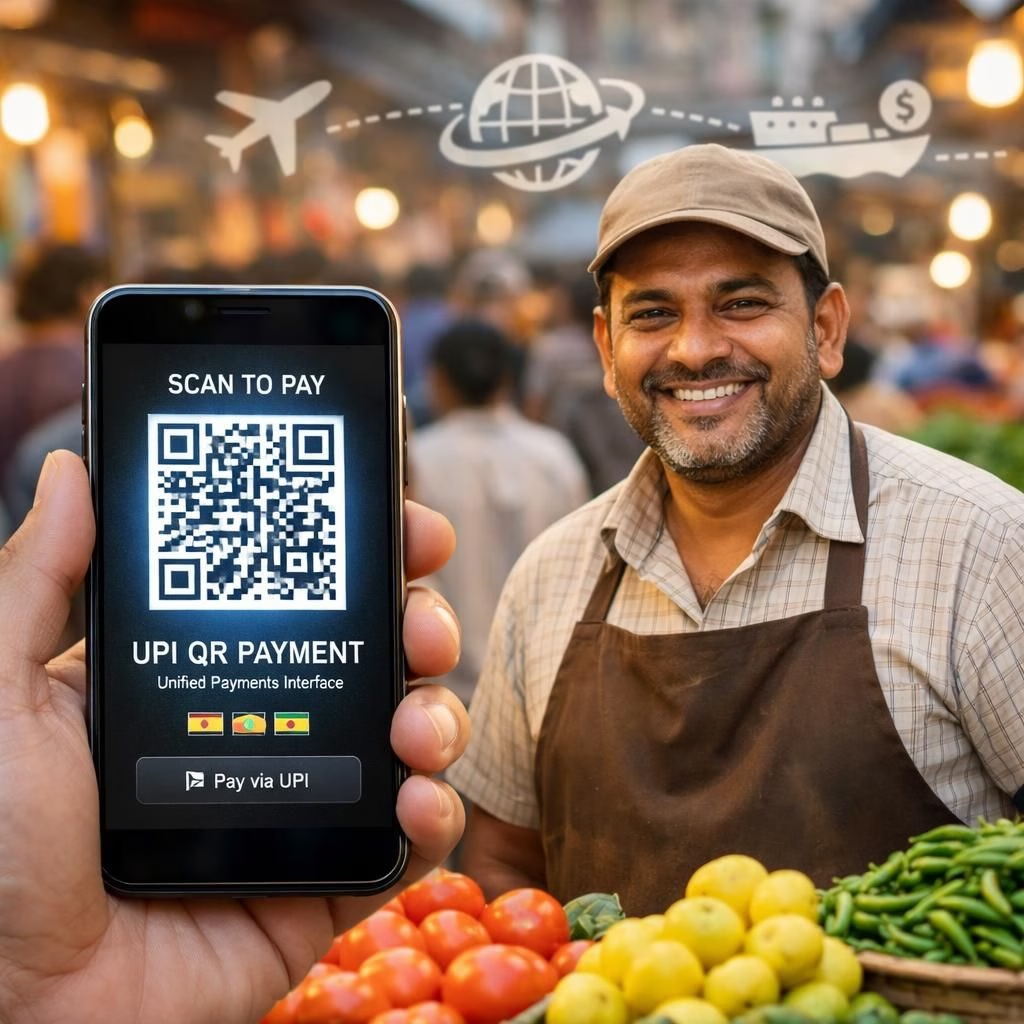
UPI marks its 10th anniversary this year with a headline that reads like a tech forecast: UPI now accounts for 49% of global real‑time payment transactions. In January 2026 alone, the system processed 21.70 billion transactions, with Rs 28.33 lakh crore in value. UPI is responsible for 81% of all retail digital payments in India. The IMF has called UPI the world’s largest real‑time payment system by volume, and officials note that it was built in under 10 years. Since launch, volume has grown 12,000‑fold while value increased 4,000‑fold.
From queues to QR codes, the journey reads like a practical case study in inclusive innovation. A domestic worker can send money across states in seconds using a basic smartphone, powered by UPI. In this system, the divide between urban and rural, formal and informal, steadily disappears. The rise of digital payments is reshaping everyday financial life for millions who previously waited for traditional banking hours.
UPI and digital payments: world-leading platform
UPI has become the backbone of India’s digital payments ecosystem. It scales without sacrificing accessibility, reaching microtransactions at street corners and rural kiosks alike. In 2026, UPI crosses borders as it expands to the United Arab Emirates, Singapore, Bhutan, Nepal, Sri Lanka, France, Mauritius, and Qatar, enabling cross‑border remittances and quick settlements. This global footprint demonstrates how digital payments can operate like an interoperable language for money, uniting diverse economies under a shared standard.
In this sense, UPI is a living demonstration of a financial inclusion agenda. It shows what happens when a homegrown system is designed with the user at the center. The result is a seamless, low‑friction experience that keeps the focus on use, not onboarding. The digital payments architecture supports everything from micro‑pings of small amounts to larger value transfers, always aiming for speed, reliability, and inclusivity.
Financial inclusion at scale thanks to UPI
Financial inclusion here is practical, embedded in everyday transactions. UPI Lite provides quick, small‑value payments for speed and convenience, while UPI AutoPay handles recurring expenses like utilities and subscriptions. The system opens up paths to pre‑approved credit lines, with NBFCs and fintech firms delivering loans, enabling repayments, and offering tailored financial products. The combination of micro‑credit and seamless digital payments turns a smartphone into a robust financial tool for people who previously relied on cash or informal credit.
This inclusive model has reshaped consumer behavior. Vendors now accept instant payments as a routine, improving cash flow and reducing risks tied to handling cash. For households, the ability to pay on time without a bank visit strengthens financial resilience. The broadening footprint of the formal economy into informal markets contributes to stability and transparency; UPI and digital payments thus act as catalysts for financial inclusion that benefit both sides of the ledger.
Cross-border reach and credit enhancements in UPI
As the cross-border dimension expands, UPI helps smooth remittances and regional trade. Cross-border accessibility is not just convenience; it is a bridge that connects workers abroad with their families back home. The accompanying credit options, offered by NBFCs and fintechs, diversify the financial products available to users. This credit accessibility supports small businesses, informal sellers, and new entrepreneurs who previously faced entry barriers. The result is an ecosystem where digital payments and credit work in concert, reinforcing financial inclusion on a global scale.
From retail rails to a full financial platform
UPI is evolving into a broader financial platform. UPI Lite emphasizes small‑value, rapid payments. UPI AutoPay streamlines regular expenses, and credit access expands through an expanding network of lending partners. This layered approach keeps transactions fast and inexpensive while offering meaningful financial products to a broad audience. For practitioners and policymakers, the lesson is clear: a well‑designed digital payments system can scale while staying human‑centered. The emphasis remains on inclusion, efficiency, and reliable performance.
Beyond the numbers, the practical impact is visible in daily life. A street vendor can receive payment in seconds, a student can pay fees through a single tap, and a family can transfer money for groceries without standing in line. The digital payments ecosystem now acts as a daily helper, not a novelty or luxury. The scope of UPI and its peers in the digital payments world demonstrates that technology can serve the common good when guided by thoughtful design and solid governance.
As 2026 unfolds, the message is upbeat: India’s digital payments path, led by UPI, shows what resilient, inclusive innovation looks like. The country’s milestones prove that real‑time payments can be safe, fast, and widely accessible without sacrificing performance or privacy. The result is a model that other nations are watching closely, curious to learn how to scale real‑time payments while keeping inclusion at the core.
We invite readers to share their thoughts in the comments and join this ongoing conversation about the future of money, technology, and inclusion. Your experiences with UPI, digital payments, and financial inclusion can illuminate what works best for everyday users and small businesses alike.
Practical steps to use UPI in daily life
- Download a UPI-enabled app and link your bank account, then create a virtual payment address (VPA).
- Choose to scan a QR code or share your VPA to make a payment, approving with your UPI PIN.
- Tap to pay or transfer money across states in seconds to friends, family, or small vendors.
- Enable UPI Lite for quick, small‑value payments and UPI AutoPay for recurring bills.
FAQ
- What is UPI? A real‑time payment system built by India’s NPCI that enables instant transfers using mobile devices and a single interface across banks.
- How do digital payments support financial inclusion? They reduce barriers to formal finance, enable microtransactions, and connect informal markets with banked ecosystems.
- Is UPI safe? It relies on bank‑grade security, device authentication, and fraud controls, with user consent and privacy protections baked in.
- Who can use UPI across borders? Cross‑border support is expanding, enabling remittances and trade with partner countries, subject to local regulations and interoperability rules.