

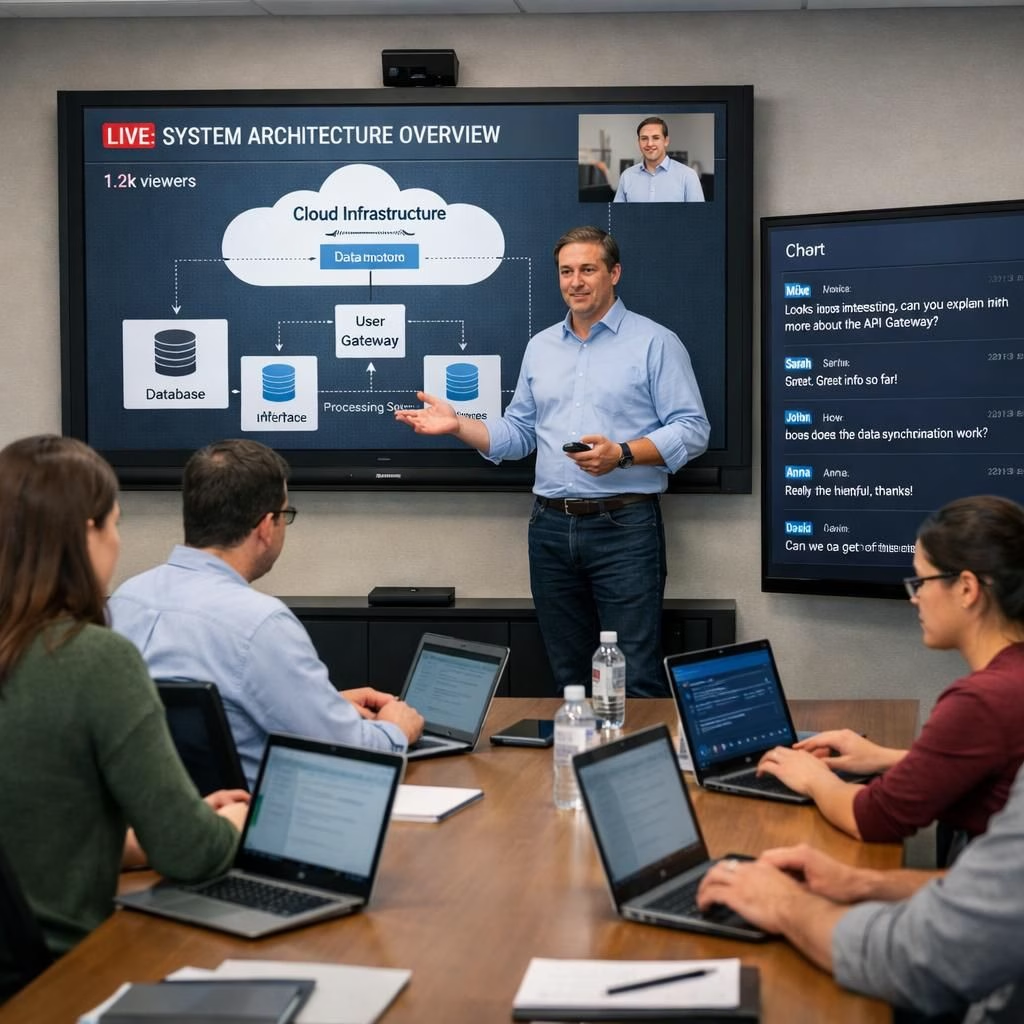
In a livestream that felt like a rollercoaster, AI morale was on everyone’s lips; Meta’s Applied AI team quickly found itself at a test of nerves and intent.
AI morale: Meta’s mood check and momentum
Inside Meta’s Applied AI unit, formed in March to back researchers at Meta Superintelligence Labs, the group now counts roughly 6,500 engineers and product managers. Insiders describe a pattern of intense workloads and a sense that the team was assembled quickly for a high-stakes mission. The work, as described by several employees, feels grind-heavy: two tasks a week, focused on generating puzzles and coding problems to stress-test frontier models. One veteran compared the cadence to a harsh regime, saying you wake up to tasks and drift through your days with little room for creativity. A second worker called some assignments mechanical and misaligned with the skill set they were hired for, while a third summed it up in a single line: the work can feel soul-crushing. Even with the optimism baked into a moonshot project, fatigue is real—and so is the need for clearer purpose and more human-scale pacing.
Many in the unit describe themselves as draftees—people who felt they had to stay because their skills were in demand, not because they had a clear voluntary path. The wave-like growth of the team since early April has been dramatic, and leadership has had to respond quickly to keep talent from drifting away. As one early member noted, it’s remarkable to watch the shock of new team arrivals ripple through the culture at the pace of a product release. All of this underlines a simple truth: when the mission is enormous, the AI morale must feel meaningful or morale will sag even as the tech grows more capable.
Applied AI: balancing workload with purpose
Beyond the Applied AI unit, Meta’s broader AI-focused restructuring has touched many teams. The company announced a substantial reorganization that affected thousands of roles, and the resulting extra workload has added pressure on data center engineering and social platforms such as Instagram. A new program that monitors keystrokes and clicks to guide AI training has drawn significant internal interest and scrutiny; the company has since paused collection on some fronts and offered exemptions, signaling a willingness to recalibrate quickly in response to employee concerns. In parallel, a group of more than 1,600 employees expressed disquiet through a petition directed at the monitoring program, underscoring the need for balancing privacy, productivity, and innovation. The tension between speed and steadiness is real, and Meta has shown capacity to adjust course while maintaining momentum in AI research and deployment.
At an Instagram all-hands this week, chief product officer Chris Cox acknowledged the environment as brutal, likening the recent months to running a marathon in a hailstorm with a teammate swapped mid-race. The moment drew laughter, but the underlying message was clear: leadership must re-anchor the company on humanity and clarity. Cox urged leaders to re-engage with the company’s culture and to move away from overearnest signals about Applied AI without addressing the human factors behind the push. It’s a reminder that technology can scale, but teams scale better with honest feedback, realistic pacing, and a culture that blends ambition with wellbeing.
In an internal memo, CEO Mark Zuckerberg acknowledged the growing pains and promised stability where possible. He conceded that the changes were complex and that mistakes would happen along the way, and he pledged to curb mass layoffs this year. He also proposed practical steps: capping the number of reports per manager, increasing budgets for team events to foster cohesion, and hosting a large hackathon to bring the company together around common goals. He framed Applied AI as a waypoint rather than a destination, emphasizing mobility within Meta so employees can explore other roles as the company evolves. The commitment to talent and to a path forward—without pretending perfection—signals a more iterative approach to AI leadership that communities and engineers can rally around.
What does this mean for the near term? The company is signaling that high aspiration must be paired with higher transparency, more humane workflows, and better clarity about how individual contributions connect to larger AI outcomes. The hope is that AI morale will rise when teams see a credible, steady path forward, when managers ensure manageable workloads, and when leadership nurtures a culture where experimentation is paired with real, measurable impact. Applied AI should be both a proving ground and a professional home where skilled engineers can grow, not just burnishing the world’s most ambitious models.
From a strategic perspective, the push into AI is designed to be resilient—an enterprise-scale learning system that improves as it learns from its own missteps. Meta’s leadership has signaled that it intends to learn fast and to adjust faster, while keeping employees at the center of the journey. The company’s move to offer mobility across teams and to rethink management structures reflects a broader trend in tech: big bets require flexible careers and humane work practices, not just heroic slogging through a stubborn backlog.
Practical steps for AI morale
- Clarify roles, milestones, and pathways to show daily work has purpose.
- Calibrate workload to a sustainable pace with clear task limits for individuals.
- Establish open, frequent feedback channels between teams and leadership.
- Invest in wellbeing initiatives and team-building events to rebuild trust.
- Offer cross-team mobility so people can use their strengths and interests.
Applied AI FAQs
- What caused the morale concerns?
Several factors converged: rapid restructuring, high workload, and a perception that the work lacks clear purpose. Within the Applied AI effort, teams described grind tasks and limited creative work that stifled motivation.
- How is Meta responding?
CEO Zuckerberg signaled a path to stability, capped manager ratios, increased budgets for events, and a large hackathon. He framed Applied AI as a waypoint with mobility across Meta’s roles, and leaders highlighted the need for more human-focused practices.
- What does this mean for AI development at Meta?
Expect a balance between ambitious product goals and more transparent, humane processes. The emphasis will be on sustainable workflows and on connecting individual efforts to broader outcomes.
- What can teams do to sustain morale?
Keep workloads manageable, establish clear feedback channels, and invest in rituals and cross-functional collaboration that tie daily tasks to real impact.
As a closing note, Meta’s journey is not unique in the tech world. It mirrors a broader pattern: the tension between ambitious AI programs and the human realities of those who make them real. The road to a healthier AI culture—one that sustains creativity while delivering on promise—depends on listening, adjusting, and rewarding thoughtful contributions. The lessons here may help other teams, too, as they navigate the delicate balance of speed, security, and soul.
Original article and reporting by Wired — a sincere thank you for the detailed reporting that made this synthesis possible.
If you have thoughts on how tech teams can maintain AI morale and purpose during big transitions, share them in the comments below. Your perspective helps illuminate the path forward.
References
- Original article and reporting by Times of India
- Wired
- Bloomberg Technology
- CNBC Technology