

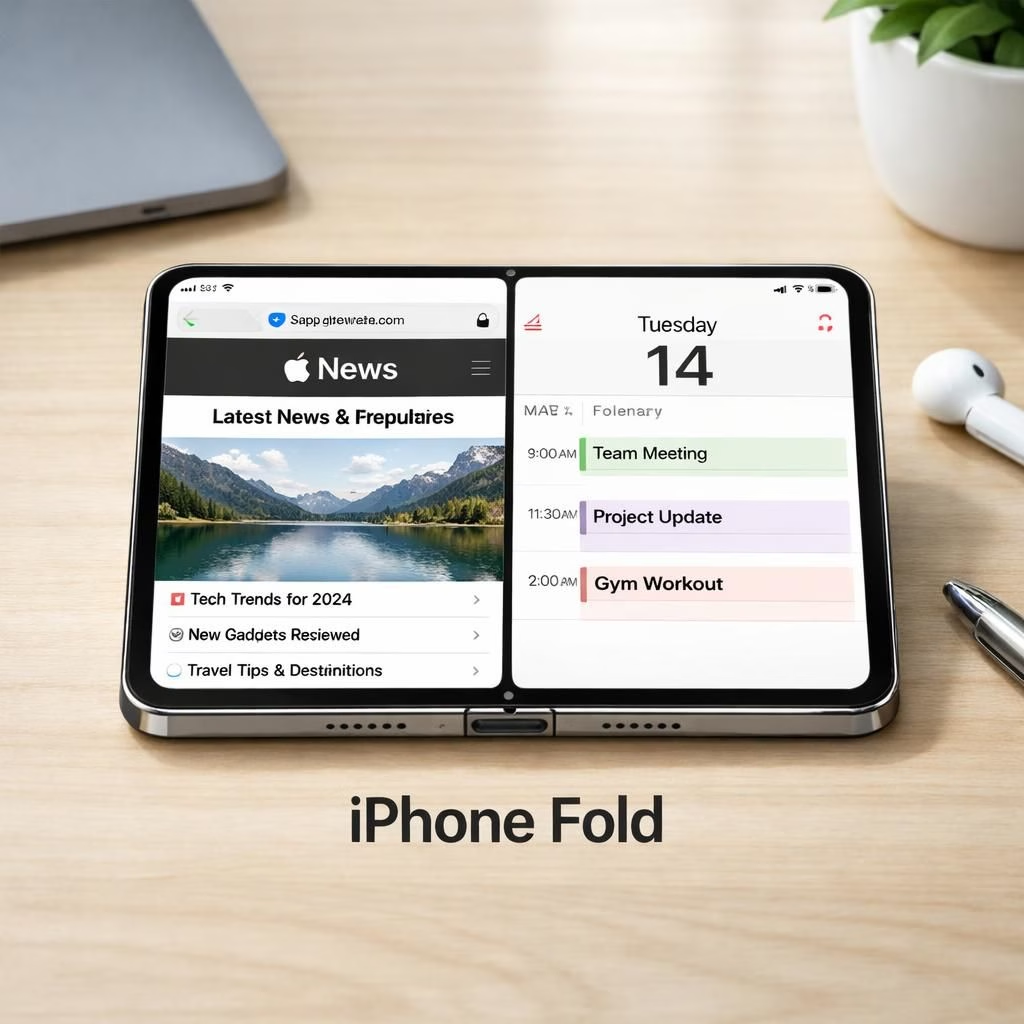
Welcome to a sunny, practical look at the iPhone Fold and multitasking in 2026. Rumors swirl about a foldable flagship, yet this piece keeps feet on the ground while curiosity stays high. We separate hype from hardware and offer a light, useful guide to what matters when the first iPhone Fold rumors heat up.
Price, RAM, and storage are the usual trifecta in foldable chatter. The iPhone Fold should keep costs reasonable, with RAM around 8GB or more and storage from 128GB up to 512GB. Pricing chatter ranges under $2,000 in optimistic scenarios, though some reports suggest higher tiers for flagship builds. Design-wise, engineers weigh a sturdy hinge, a crease-optional main display, and heat management that avoids midday throttling.
As a reality check, the iPhone Fold needs solid RAM and flexible storage. The device should balance performance with battery life, not a power binge. The iPhone Fold should deliver dependable RAM and flexible storage, with a sub-$2,000 price signaling serious intent for early adopters who want screen real estate without buyer’s remorse. A durable hinge, crease management, and efficient heat dissipation are a must for daily use.
Multitasking Potential on the iPhone Fold in 2026
The Verge has teased iPad-like multitasking without iPad apps and even without Face ID in some models. If the fold can support split-view and drag-and-drop between apps, it would matter for daily multitasking productivity. The challenge remains whether developers unlock the necessary capabilities or rely on the OS alone. Ultimately, success hinges on software architecture as much as hardware design.
What to Expect From the iPhone Fold in 2026
For the iPhone Fold, expect a thoughtful mix of novelty and practicality. If RAM is solid and storage options are generous, the device can handle multitasking across several apps without stutter. If pricing lands around the sub-$2,000 mark, it could win over a market tired of compromises on large-screen devices. The hinge should feel durable, glass resistant to daily wear, and battery life capable of a full day with light multitasking.
To evaluate real user value, compare the iPhone Fold against a capable iPad or a high-end smartphone for productivity. Use foldable devices for tasks like note-taking, on-the-go messaging, or quick photo editing. If you need laptop-like productivity, a compact laptop or larger iPad with a keyboard may still win. Still, it’s exciting to see Apple push hinge tech and watch how developers adapt for broader multitasking across screens.
If you have thoughts about the iPhone Fold and its multitasking potential, share your thoughts in the comments below and join the conversation.
Special thanks to the original reporting from PCMag for inspiring this discussion. See here: iPhone Fold Rumors Are Heating Up, But I’m Not Buying One. Here’s Why. Thank you for the original source material.
Frequently Asked Questions
- Q: Is the iPhone Fold real or just rumor?
A: The article focuses on rumors, practical considerations, and how real-world use could shape the experience if it launches. - Q: What RAM and storage are expected?
A: Rumors point to around 8GB of RAM and storage from 128GB up to 512GB, with pricing potentially under $2,000. - Q: Will it truly support multitasking like an iPad?
A: That depends on software and developer support in addition to hardware design. - Q: How should you evaluate value if it launches?
A: Compare it with a capable iPad or a high-end phone for productivity, and watch for software polish and real-world performance.