

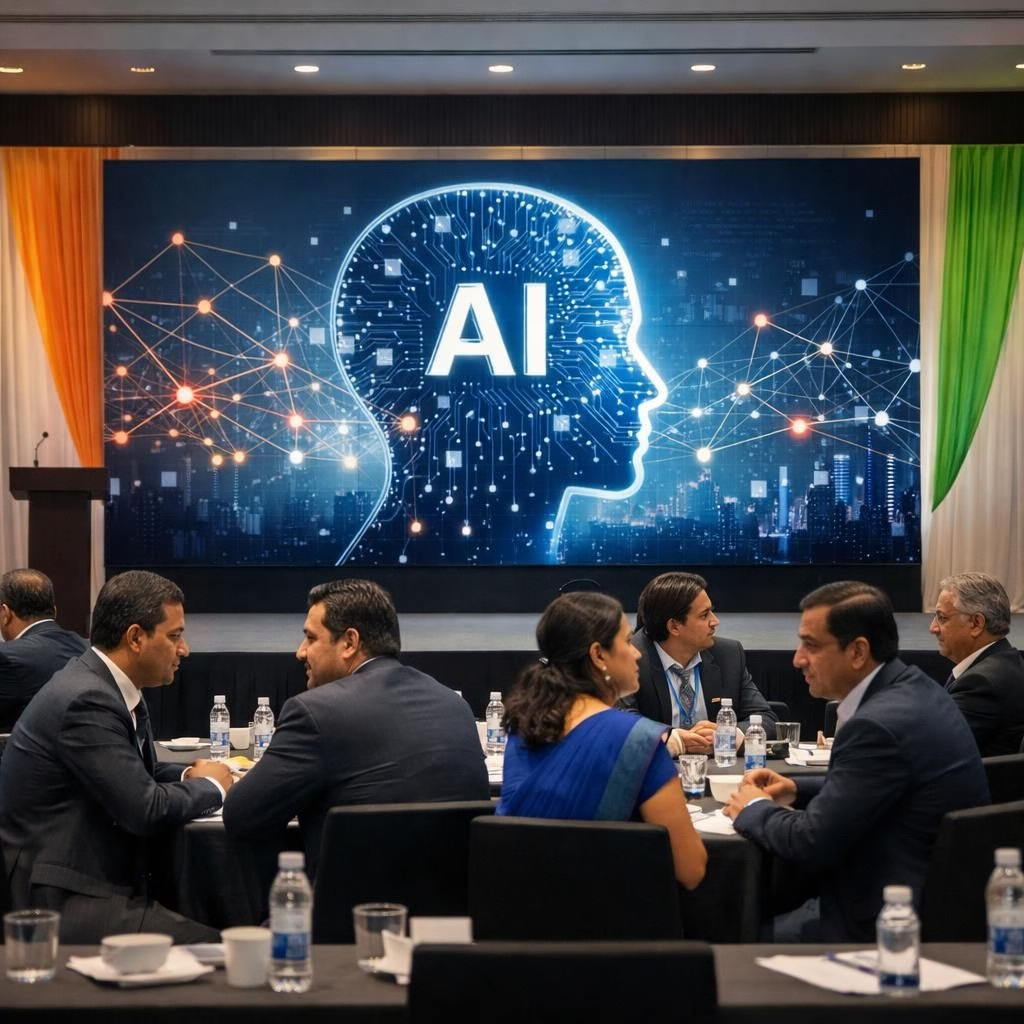
AI debate sharpens. India takes center stage this week by hosting the AI Impact Summit 2026 at Bharat Mandapam in New Delhi, February 16–20. The five-day gathering will bring together heads of state, senior ministers, global tech leaders, researchers and startup founders, signaling India as a pivotal voice in shaping the next phase of AI. The event is organized under the [IndiaAI](https://www.geekyopinions.com/tag/IndiaAI) banner, underscoring a serious push to turn bold ideas into practical results with a distinctly Indian blend of pragmatism and enterprise.
AI in the Global South: Why IndiaAI Takes the Stage
This is not a one-country show. More than 45 countries will send ministerial delegations, and UN officials will join the dialogue. The aim is to move conversations from risk and safety to practical, inclusive progress. Expect demonstrations of real-world AI deployments that boost healthcare, farming, energy and education while keeping governance on track. The approach is pragmatic, combining ambition with accountability—and it nods to the idea that AI policy can be collaborative, not punitive.
Crucially, the event promises more than seven thematic working groups. They will draft deliverables on AI Commons, trusted tools and shared compute resources. In a world where compute is king, this is an attempt to level the playing field for researchers and startups from the Global South and the Global North alike. The framing motto—People, Planet and Progress—stays at the fore, reminding attendees that technology should serve people first.
IndiaAI’s Innovation-First Path: A Practical AI Roadmap
Unlike the heavy-handed regulation often seen in other regions, AI champions in India advocate an innovation-first path. It prioritizes development-led growth, strong data standards, and open datasets where possible. The [IndiaAI](https://www.geekyopinions.com/tag/IndiaAI) Mission, backed by the Ministry of Electronics and Information Technology, funds compute capacity, curated datasets and skill-building programs. The goal is to nurture indigenous foundation models while inviting collaboration with global players in a way that respects local needs and values.
Television screens will show ministerial dialogues with a view to align on governance, data protection and platform accountability. There is careful attention to how AI-generated content is labeled and how deepfakes are countered, but the tone remains constructive. The emphasis is not just on keeping up with technology but on shaping it so it benefits farmers, doctors, teachers and small businesses, with safety built into every step.
As the five-day program unfolds, attendees will see a mix of keynote addresses, CEO sessions and expo walkthroughs. The live telecast on the official IndiaAI YouTube channel will connect people around the world with India’s roadmap for responsible, inclusive AI adoption. The schedule is dense, but the messaging is hopeful: if we invest wisely, AI can help create jobs, improve services and close gaps rather than widen them.
The agenda includes AI-tinged discussions on data governance, platform accountability and the responsible deployment of algorithms in public services, health care and education. The goal is tangible: better outcomes through practical, scalable tools that respect user rights and local context.
Why this matters beyond the conference hall? This summit is the first major global AI gathering hosted in the Global South, signaling a shift in who frames the conversation. It matters because it invites diverse perspectives to the table, not as tokens but as real contributors to policy, investment and product design. The focus on inclusive growth and shared benefits aims to move commerce and research away from exclusive ecosystems toward open collaboration and fair access.
The presence of high-profile leaders adds energy to the dialogue. Sundar Pichai, CEO of Google; Sam Altman, CEO of OpenAI; Demis Hassabis of DeepMind; Dario Amodei, CEO of Anthropic; and Brad Smith of Microsoft are among the participants whose involvement could translate talk into action. Their participation increases the odds that thoughtful ideas become pilots, partnerships and, eventually, scalable impact.
What should you watch for as the summit unfolds? Expect updates on AI safety best practices, governance models, and data-protection frameworks that balance innovation with privacy. You may notice a practical streak: real-world pilots, cross-border collaborations and commitments to shared compute resources that help smaller players experiment without breaking the bank. The [IndiaAI](https://www.geekyopinions.com/tag/IndiaAI) Mission calls for indigenous models that can operate in local languages and contexts while remaining compatible with global standards.
Critically, the emphasis remains on people-first outcomes. Technology should improve healthcare delivery, boost agricultural yields, and empower teachers and small business owners. If the week yields concrete commitments and pilots, that would be a win for the entire ecosystem. The sky is not the limit; it is the starting line.
In short, the AI conversation is evolving, and this event sets a hopeful agenda. The [IndiaAI](https://www.geekyopinions.com/tag/IndiaAI)-led initiative aims to turn bold ideas into scalable tools and policies that governments, businesses and citizens can trust. If executed well, the plan could show how inclusive AI policy helps bridge the digital divide rather than widen it. Expect a blend of visionary speeches and grounded actions that leave room for skepticism but plenty of optimism.
Have thoughts? Please share them in the comments below, and tell us how you see the AI landscape evolving in 2026 and beyond.
Original article: Thank you to PTI for the foundational material this post builds on. You can read the original source here: Original PTI article.