

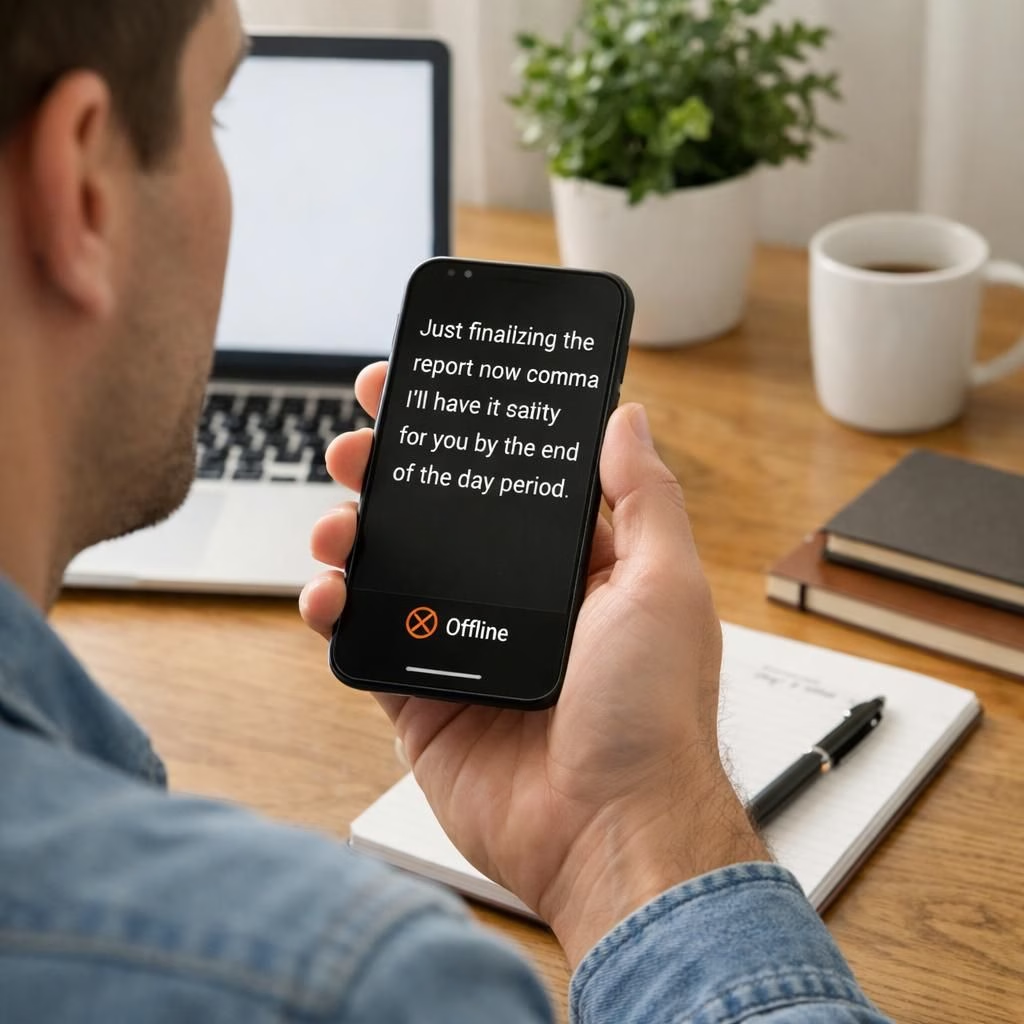
In 2026, Google’s quiet win lands in pockets and on devices: AI dictation that works offline tool, a real offline tool you can trust when the Wi‑Fi wanders off. This isn’t hype; it’s a deliberately useful feature that sidesteps the usual dance with servers and dashboards. With this approach, your voice becomes text right on the device, and the result feels like a natural extension of your thoughts rather than a cloud experiment. The first impression is a crisp transcription even in a noisy room, plus a fast, responsive feel when you speak. No more hunting for bars of signal or watching the app stall because the internet blinked. This is what a sane, offline path for dictation looks like in 2026.
AI dictation at a glance
Google’s app leans into local processing. The offline mode isn’t a tease; it runs on-device, with optional on-device voice models that minimize data sent to the cloud. That reduces privacy anxiety and speeds things up. The setup is refreshingly straightforward: pick your language, grant mic permission, and you’re dictating with fewer worries about data leakage. The interface stays unobtrusive: a tiny waveform, a clean text pane, and a keyboard ready to spring into action when you press record. This AI dictation approach keeps your voice private while staying quick. The on-device design also hints at a future where your notes don’t bounce through distant servers just to become legible text.
offline tool in daily life
Beyond ease of use, the offline tool carries a privacy-leaning footprint. Because processing happens on-device, fewer bits of speech leave your device, and responses remain snappy. For educators, fieldworkers, or travelers, that privacy boost matters as much as the convenience. If you chat with languages beyond English, you may see some variation, but the core idea remains clear: you dictate, the device handles the heavy lifting, and you share your notes where you like. This is especially handy for those who prefer quiet, private note-taking in crowded spaces or where data plans are tight.
Some caveats: on-device models can be leaner than cloud-based ones and may stumble in noisy rooms or with heavy accents. A handful of languages perform better than others, and there can be hiccups when switching languages mid-dictation. Still, the gains—the ability to transcribe on the go, a lighter data footprint, and crisp results—make this a welcome addition in 2026. The best tools sometimes arrive quietly, and this one does its job without fanfare.
How to try it: make sure your device supports offline transcription, update to the latest version, and enable offline mode in settings. If you’re curious about this AI dictation feature, give it a spin and see how it lands for your voice and setup. Helpful tips include speaking clearly, pausing between phrases, and correcting misheard words to help the local model learn. This is the kind of iteration that rewards patient trial and a little curiosity about how your words translate into text on-device. This is where the offline tool shines in practice.
Original article: Google quietly launched an AI dictation app that works offline from TechCrunch. Thank you to the original authors for their coverage.
If this update helps your workflow, share your experience with AI dictation and offline tool in the comments below. Your perspective could help others discover a smarter way to jot notes on the go.
Practical AI dictation tips
To get the most out of this on-device approach, keep sentences concise and speak naturally. Matte-sounding punctuation is often inferred from pauses, so a light, steady rhythm helps the model decide where to insert periods and commas. If you notice misheard words, re-dictate the affected passage and let the model learn your cadence. Over time, the device adapts to your voice and vocabulary, delivering crisper text with less editing.
- Start with a clear speaking pace and enunciate key words.
- Pause briefly between phrases to aid punctuation decisions.
- Use the on-screen editing tools to correct mistakes as you go.
- Save frequently to keep your notes organized in your preferred apps.
FAQ: AI dictation and offline tool
- Is AI dictation on-device truly private?
- Yes. On-device processing keeps voice data away from distant servers, reducing exposure.
- Which devices support offline dictation?
- Support varies by platform. Check your settings for the offline transcription option and update to the latest OS.
- How well does it work in noisy spaces?
- Performance can dip in loud environments, but advancements continue. Training and updates usually improve accuracy over time.
- Can I customize vocabulary or voice models?
- Some apps offer adaptive vocab and user-specific training that improves recognition for your voice over time.
Conclusion and next steps
The offline-first approach to AI dictation demonstrates a practical blend of privacy, speed, and convenience. If you value speedy notes on the go, this is worth a test-drive. Start by updating your device and enabling offline transcription, then compare results with your usual cloud-based workflow. A little experimentation can reveal a lot about how you capture ideas in real time.
References
Original article: Google quietly launched an AI dictation app that works offline from TechCrunch. Thank you to the original authors for their coverage.