

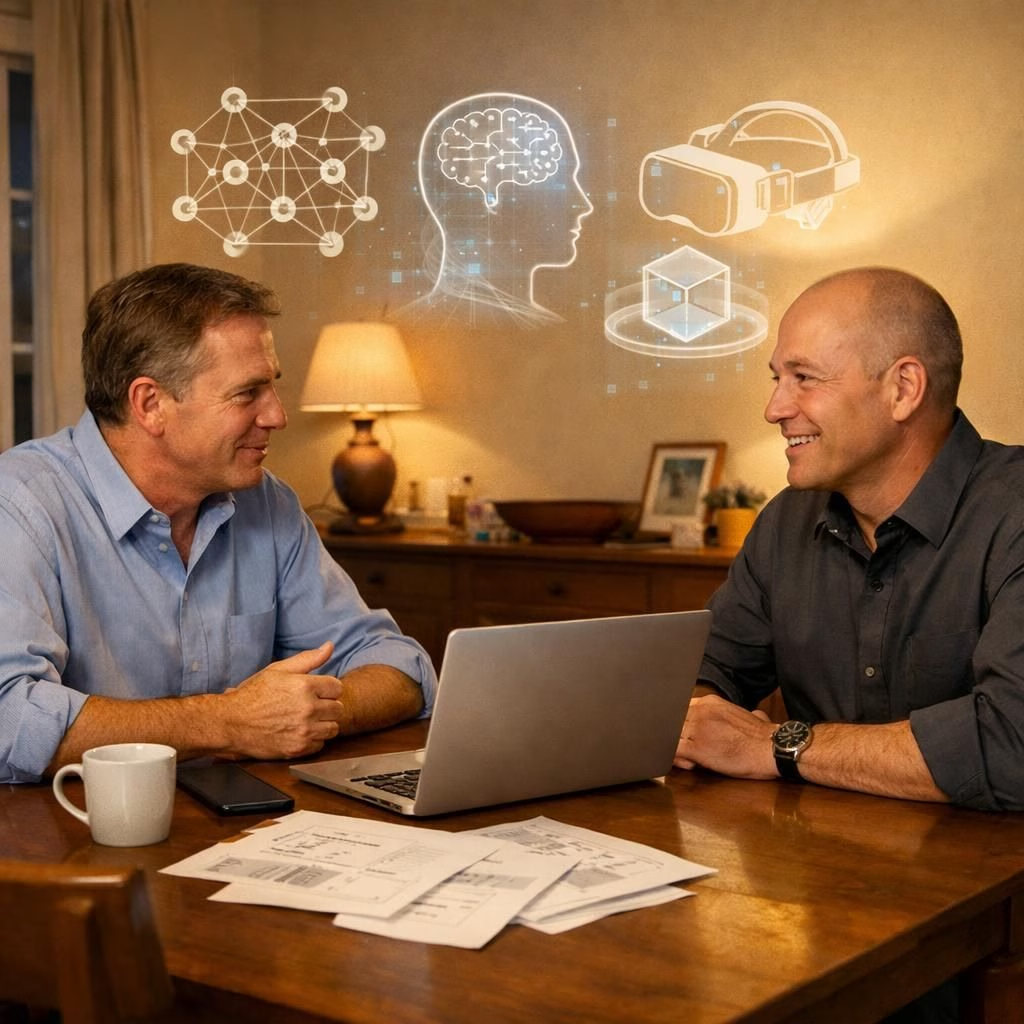
AI and DeepMind have a knack for turning a dinner into a high-stakes forecast. The 2013 Palo Alto meeting pitted Demis Hassabis, the co-founder of DeepMind, against Mark Zuckerberg. It felt more like chess than a negotiation. Hassabis faced a richer Facebook offer. He weighed Google’s pull toward grand AI goals. He steered the conversation toward VR, AR, and 3D printing. He watched Zuckerberg for a signal that he understood why AI mattered. The result was not a sale. It was a strategic audition with DeepMind in the spotlight. That audition wasn’t about numbers. It was about governance, agenda, and safety as the tech grew.
AI DeepMind Dinner: The Pivot That Shaped 2013
We later learned how the dinner story played out. Zuckerberg had already pitched Hassabis at Elon Musk’s birthday party. The idea was that Hassabis could spend the best part of his career trying to build a standalone giant. Or he could use Google’s existing infrastructure to go straight at artificial general intelligence. Hassabis and Suleyman used Zuckerberg’s interest as leverage to pressure Google into committing faster. Suleyman, a poker player by instinct, talked up DeepMind‘s billionaire backers—Elon Musk, Peter Thiel, Solina Chau—even though those investors didn’t exactly have their backs in any binding sense. Zuckerberg’s team saw the appeal of a quick win, but Hassabis pressed the longer horizon. All sides wanted speed, yet they valued discipline.
From AI to DeepMind deals: A 2013 tale
Beyond headlines, safety framed the real issue. Suleyman proposed an independent AI safety oversight board. Facebook dismissed it. Google treated safety as non negotiable risk management. Google’s CFO Patrick Pichette compared AI to atomic energy, noting both catastrophe risk and huge upside. In January 2014, Google bought DeepMind for $650 million. Zuckerberg felt the sting of the missed deal and pivoted to hire Yann LeCun to lead Facebook’s AI lab. He chose to build in-house rather than buy a lab. The sequence reads like an anatomy of ambition. DeepMind‘s promise, Facebook’s appetite, and Google’s readiness to pair infrastructure with safety minded AI work show the pattern. Google pushed for a plan that balanced speed with governance. Facebook pursued control with a lab-like autonomy that could scale more slowly, but more safely in the long run.
The deal, safety, and the longer horizon
Mallaby’s The Infinity Machine frames the tale as a larger arc about who bears responsibility with strong AI. Google’s acquisition was a vote for safety minded growth. DeepMind pursued a tighter integration with Google’s infrastructure while insisting on governance that could scale. The bigger point for readers today is that AI breakthroughs arrive fastest when partners share a long term vision and invest in safety. This is the tale that helps explain why AI, DeepMind, and responsible innovation sit at the center of modern computing. In 2026 terms, the story remains instructive. The core lesson is simple: align on a durable vision, share risk, and invest in responsible practices. The tie between AI progress and thoughtful governance is not optional; it is the engine of scalable, trustworthy innovation. The chapter also offers a reminder that the most productive tech revolutions require both boldness and restraint in equal measure.
If you have thoughts, share them in the comments below. And a note of thanks to the Wall Street Journal for the original reporting, as well as to Sebastian Mallaby for The Infinity Machine, which brings the narrative to life. Original article at: Wall Street Journal. Thank you for the thoughtful material and for sparking this discussion.
Practical takeaways for today
- Prioritize safety and governance when negotiating AI partnerships; they matter as much as speed.
- Use social proof and backers as influence, not as binding guarantees.
- Balance aggressive timelines with durable oversight and risk management.
- Consider an independent oversight approach as a core part of the strategy.
FAQ
- Why did Google acquire DeepMind? Google wanted to fuse aggressive AI ambition with scalable infrastructure and safety-minded governance.
- What happened to Facebook’s AI plans? Facebook pivoted to building in-house capabilities under LeCun, rather than buying an existing lab.
- What does this story teach about AI governance? The tale shows that long-term vision and independent safety oversight can influence who leads the next wave of AI breakthroughs.
- Is this still relevant today? Yes. It underscores why durable governance and responsible practices matter as AI accelerates.