

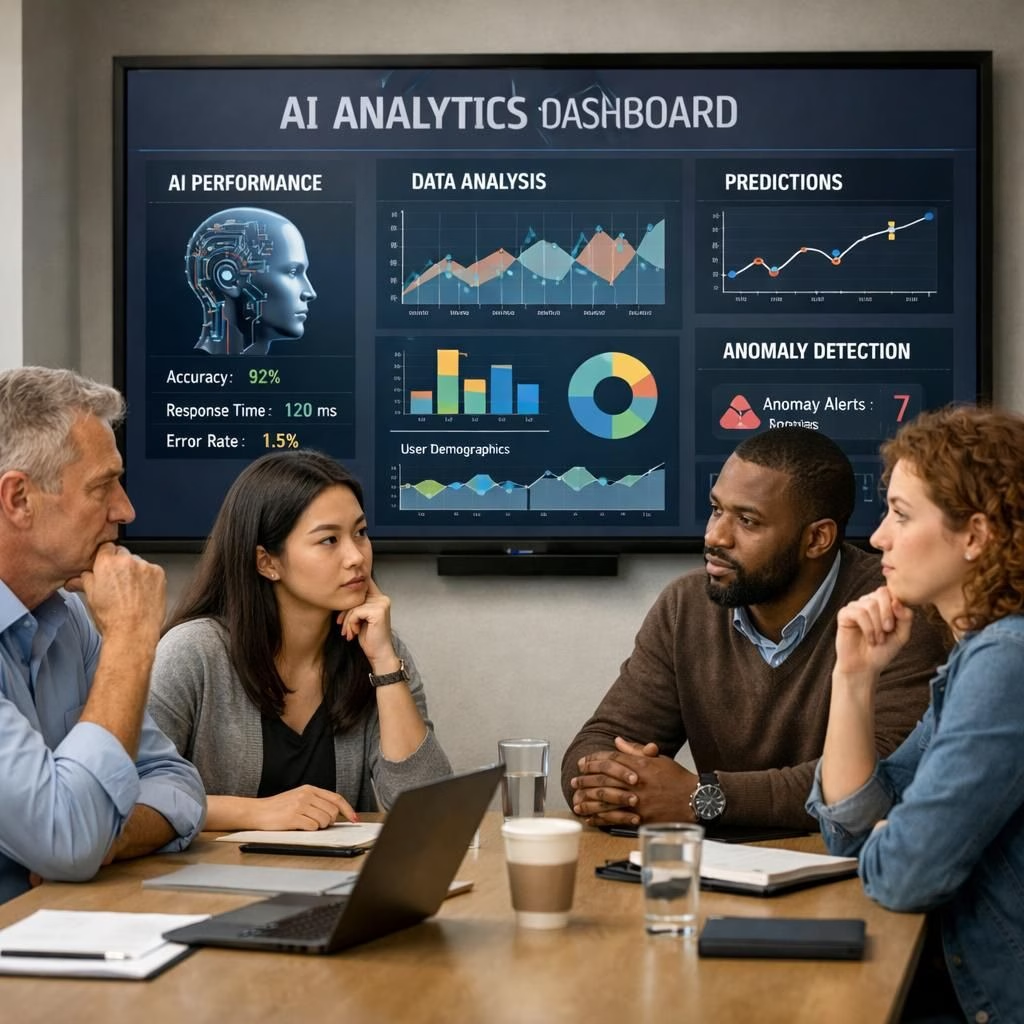
In 2026, Applied AI and Employee Morale collide as Meta unveils a massive new team and reshapes it, turning bold ambition into a live test of culture. The company says the move will accelerate progress in its models, but workers feel like they are navigating a maze with no map. The moment was almost cinematic: a livestream into employee-only territory where frustration spilled into the chat and the room carried a strange mix of determination and dread. The vibe wasn’t resignation so much as a loud, practical protest wrapped in tech-speak and inside jokes.
Applied AI now counts roughly 6,500 engineers and product managers under its umbrella, a workforce scale that can redraw the company’s internal gravity. Yet the reassignments arrived by surprise—often via email that felt like a draft notice rather than a hiring decision. Staff described themselves as draftees rather than new teammates, a label that sticks because the daily task list feels narrow, repetitive, and far from glamorous. In conversations with Wired, several employees compared the work to solving a never-ending puzzle: code and puzzles used to train Meta’s models appear to demand human insight, not just brute cycles. For many, the term Applied AI stopped feeling like a buzzword and started feeling like a work reality that demands a certain stubborn optimism alongside grit.
Applied AI in Practice: What Meta’s Pivot Means for Teams
The revolt also spilled into the broader culture of the place. A livestream moment captured a speaker who exposed a raw edge in the team’s mood, a reminder that even large players can miscast the timing of major changes. People called the experience soul-crushing, and one employee invoked the harsh image of a gulag to describe the daily grind of model-training tasks. The language was harsh, but the sentiment was clear: when the work feels like a forced draft rather than a career choice, morale suffers. Meta has argued the changes are necessary because current models still lag behind human capabilities in critical tasks, including coding. Still, the conversation isn’t simply about tech prowess; it’s about how teams feel when they are asked to adapt and reallocate their daily duties almost overnight.
In internal notes obtained by reporters, Meta framed the reassignments as a step toward building better, more capable AI—an explanation that resonates when you consider how Applied AI needs human examples and judgment to advance. The company’s justification sits beside a more human question: how do you keep productivity high while also protecting the sense of purpose that keeps engineers motivated in long, complex projects? The tension is not only between people and tasks, but also between the fast pace of AI innovation and the slower, steadier cadence that healthy teams require to stay creative and engaged.
Employee Morale and the Human Side of AI Investments
Meanwhile, the mood around Employee Morale isn’t simply a footnote. More than 1,600 Meta employees reportedly signed a petition opposing a program that tracks keystrokes and clicks to train AI data—part of a wider push to embed AI more deeply into everyday work. The petition signals a broader concern: when data flows from human behavior into algorithms, teams want clarity, control, and consent. Chief Product Officer Chris Cox acknowledged the “brutal” environment in calls with staff, signaling that leadership recognizes the strain and wants to repair it. Meta has not publicly commented on every detail, but the signals from leadership include promises of more offsites, a company hackathon, assigned desks, and a reduction in the number of reports per manager. The aim is to restore trust and create space for teams to regrow Employee Morale without sacrificing progress on AI capabilities.
The internal conversation sits atop a broader strategic push. Meta is increasing its AI investments to fuel data centers, training clusters, and the compute required to scale new models. The company has expanded its 2026 capital expenditure plan to a range of $125 billion to $145 billion, roughly doubling last year’s outlay. The math is straightforward: more compute can unlock better models, and better models can justify more spending. But the human cost is real. The churn in Applied AI shows a ceiling: you can buy chips, but you cannot order morale to stay high on a long horizon. Investors are watching to see whether all that AI spending translates into measurable returns and real improvements in product quality and business outcomes, rather than just headlines about scale.
That is why Meta’s leadership is leaning into culture as a lever, promising more deliberate interactions, clearer roles for those stuck on model-training work, and concrete steps to ease the sense of drift. The company is betting that by aligning work with a shared north star—“to be the best place for the most talented people in the world to make an impact”—it can turn a period of upheaval into a period of constructive transformation for both Applied AI and Employee Morale.
As with any sweeping, AI-driven pivot, there are skeptics. Some investors wonder whether the churn translates into durable competitive advantage, and some employees worry that the “no broad layoffs in 2026” pledge is a glimmer rather than a guarantee. Still, the ongoing adjustments—new offsites, a hackathon, better desks, fewer reports per manager, and new roles for staff stuck on training work—signal a conscious effort to balance momentum with humanity. The thread tying all of this together is simple: the future of AI thrives only when people want to be part of it, and people want to feel valued while they solve real problems.
In short, the story of Meta’s 2026 pivot is not only about technology; it is about how teams navigate change with energy, humor, and a willingness to reimagine work. The equation isn’t just more compute; it is also better culture, better communication, and better alignment between ambitious AI bets and the everyday experiences of the people who build them. If you read this far, you likely know that Applied AI and Employee Morale will continue to shape each other as Meta tests, learns, and iterates in the year ahead. How would you navigate a similar transition in your own workplace?
Source attribution and thanks: Original reporting and research were provided by Wired and related outlets in the public domain. We extend our gratitude for the detailed coverage that informed this synthesis and rewrite.
Source note and attribution: Thanks to Wired for the in-depth reporting that informed this rewrite. Original article: Wired: Meta’s Applied AI Revolt.
Share your thoughts in the comments below and tell us how you would balance AI ambition with team morale in your organization.
Practical steps for teams navigating this pivot
- Clarify roles quickly: publish clear expectations and move people to tasks that match long-term goals.
- Protect meaningful work: mix training tasks with opportunities for real problem solving.
- Increase transparency: regular updates from leadership reduce uncertainty and build trust.
- Offer support structures: coaching, feedback loops, and peer mentoring to maintain morale.
FAQ
Q: What sparked the morale concerns at Meta’s Applied AI group?
A: A rapid reorganization, draft-style assignments, and monitoring programs left many feeling their daily work lacked purpose.
Q: Will there be layoffs or new hires cut back?
A: The company promised no broad layoffs in 2026, but execution and timing remain under scrutiny by investors and staff.
Q: How should teams balance speed with culture?
A: By aligning tasks with a clear north star, preserving meaningful work, and maintaining open channels for feedback.
References
External coverage
Further reading: Wired: Meta’s Applied AI Revolt and MIT Technology Review: AI in industry coverage.