

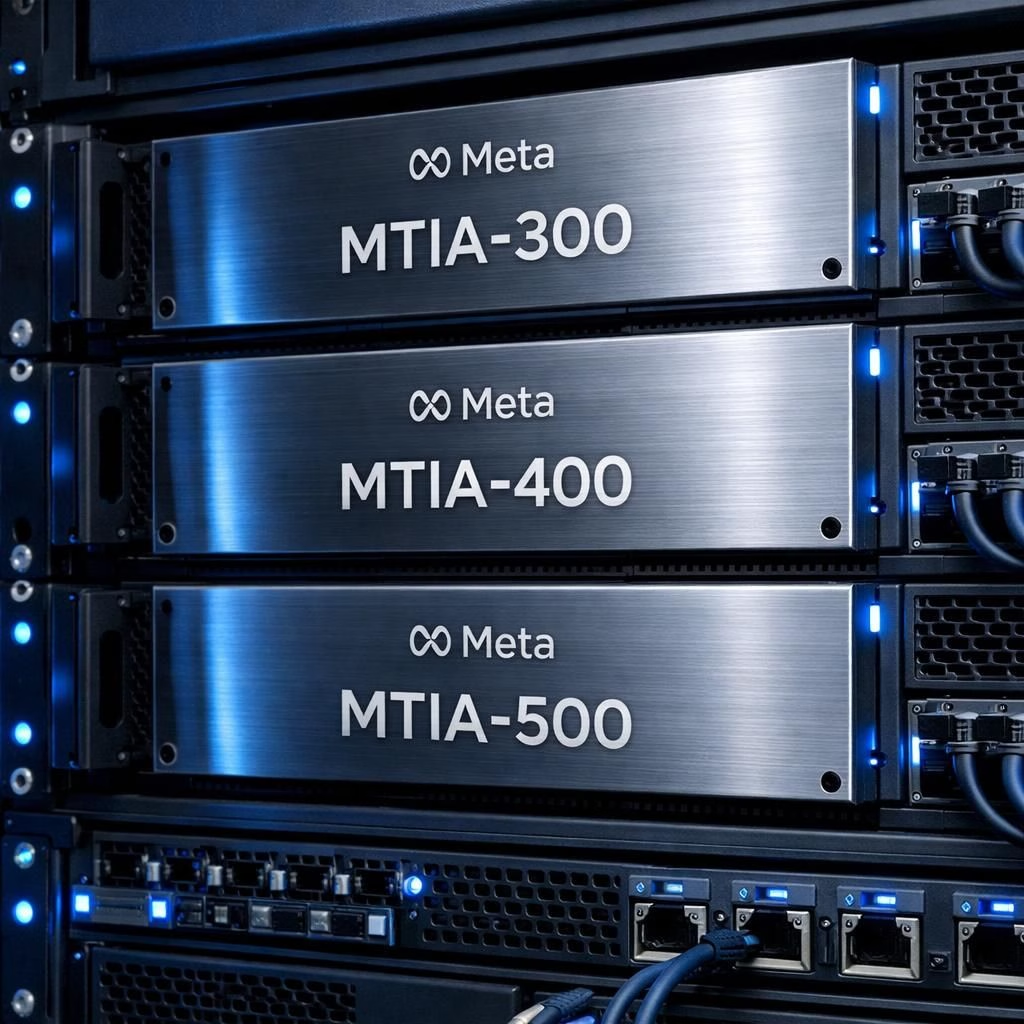
Meta is riding the wave of AI chips. MTIA, its in‑house silicon family, powers a data center expansion with a pragmatic wink. The plan blends playfulness with practicality: a modular system built for six‑month upgrade cycles and an inference‑first mindset that shrugs off the GPU supply drama.
AI chips and MTIA: Meta’s modular silicon strategy
MTIA is a family, not a single chip. Meta designed MTIA to evolve on industry standards rather than reinvent the wheel each year. The company positions MTIA as a competitive strategy that emphasizes rapid, iterative development—an alignment of hardware and software for inference‑first workloads. In short, Meta targets how AI behaves now, not how it looked on the whiteboard last year.
MTIA 300 is already deployed and handles ranking and recommendations—the engine behind which ads and posts you see on Facebook and Instagram. This MTIA 300 usage shows Meta’s preference for an inference‑first configuration, where the chip excels at real‑time decisions and ranking. The MTIA 400, MTIA 450, and MTIA 500 target generative AI workloads: turning prompts into images or video and powering more creative experiences.
MTIA journey: AI chips powering faster inference and growth
MTIA journey: Meta plans to release new MTIA versions every six months or faster. The reason is simple: AI methods shift quickly, and hardware must keep pace without breaking the budget. The claim is bold, but the logic is straightforward—modular designs let Meta swap in the latest silicon without scrapping the rest of the stack. The result: more resilience in silicon supply and a smoother path to adoption by developers who want to use MTIA‘s open‑standards approach.
MTIA 450 and MTIA 500 focus on GenAI inference first. They still support other tasks such as ranking and recommendations and, when needed, GenAI training. Meta argues that mainstream chips usually target the heaviest workloads, then apply them to inference. MTIA reverses this: it optimizes for inference performance and lets training scale as an add‑on. This stance matches rising demand for real‑time content creation, summarization, and personalization across Meta’s services.
MTIA 300 already powers ranking and recommendation tasks—the engine behind the ads system and feed ranking on Facebook and Instagram. The MTIA 400, MTIA 450, and MTIA 500 chips push for generative AI, enabling higher‑quality images and videos from text prompts. Meta says testing on MTIA 400 is complete, with MTIA 450 and MTIA 500 expected to be fully operational by 2026. The year 2026 marks a moment when the company strengthens its vision: custom silicon can deliver price‑performance gains and diversify supply, reducing reliance on Nvidia and AMD suppliers.
As Google, Microsoft, and Amazon invest in their own silicon, MTIA’s strategy adds a pragmatic twist: more autonomy and more predictable pricing. Yee Jiun Song, Meta’s VP of Engineering, told CNBC that custom chips help “squeeze more price per performance” and build silicon diversity that protects against price swings. In practice, this means a more adaptable data center footprint, less exposure to supplier bottlenecks, and a more resilient compute strategy that rides the next AI wave without flinching.
Critics may worry about frequent chip upgrades complicating software compatibility or data center management. MTIA counters by stressing modular, reusable designs and adherence to industry standards. The goal is not to chase novelty but to run a sustainable upgrade cadence that keeps the MTIA family aligned with real shifts in AI techniques. MTIA isn’t a marketing stunt; it’s a disciplined, ongoing refinement loop designed to deliver value across applications—from real‑time inference to creative GenAI workloads.
Look at the broader implications. A diversified silicon portfolio reduces single‑vendor dependencies, which can smooth procurement costs and improve price stability. For developers and data scientists, MTIA promises a more predictable base for inference latency and throughput, making it easier to tune models and deployments across Meta’s services. For users, the payoff could be faster recommendations, more engaging generative features, and a more responsive social experience—all powered by MTIA’s evolving architecture.
Looking forward to 2026 and beyond, Meta’s MTIA road map resembles a careful chess match: anticipate model shifts, align hardware increments, and keep a modular design that makes sense for developers who value speed and stability. The emphasis on inference first doesn’t mean neglecting training; it means giving time‑sensitive tasks the best hardware path while keeping training accessible when needed.
In a landscape where other giants pursue custom silicon, Meta’s MTIA story reads as a pragmatic, optimistic rewrite of the silicon race. MTIA 300 shows the real‑world impact of in‑house chips, while MTIA 400–MTIA 500 signal a broader horizon for GenAI within the same architecture. The lesson is clear: price‑performance and supply diversity matter, and Meta bets that a modular, fast‑moving chip family can deliver both.
If you’re curious about what this means for developers and users, drop your thoughts in the comments. We’d love to hear how you imagine AI chips shaping future apps and platforms as MTIA matures in 2026 and beyond.
Original source linkback: Read the original article here: https://timesofindia.indiatimes.com/technology/tech-news/weeks-after-nvidia-and-amd-deals-meta-enters-custom-ai-chip-club-with-google-microsoft/articleshow/129512696.cms
Practical steps for AI chips with MTIA
- Evaluate MTIA’s inference-first focus when planning workloads.
- Design your software stack to be modular and standards-based for easy upgrades.
- Map model deployment to MTIA generations to balance latency and cost.
- Prepare monitoring and governance to handle rapid cadence upgrades.
FAQ
- What is MTIA?
MTIA is Meta’s family of in‑house AI chips designed for fast, modular upgrades with an emphasis on inference workloads. - Why six‑month upgrades?
The goal is to stay current with evolving AI techniques while controlling costs and supply risks. - Will MTIA replace Nvidia/AMD GPUs entirely?
Not entirely; the plan aims to diversify supply and improve price‑performance, reducing single‑vendor risk while keeping access to existing ecosystems.
In a broader sense, MTIA represents a practical approach to the silicon race: smaller, faster iterations that stay aligned with real AI needs rather than chasing novelty.
References
- Times of India: Meta enters custom AI chip club after Nvidia and AMD deals
- NVIDIA – AI Inference Acceleration
- McKinsey – Artificial intelligence insights
- CNBC – Technology news