

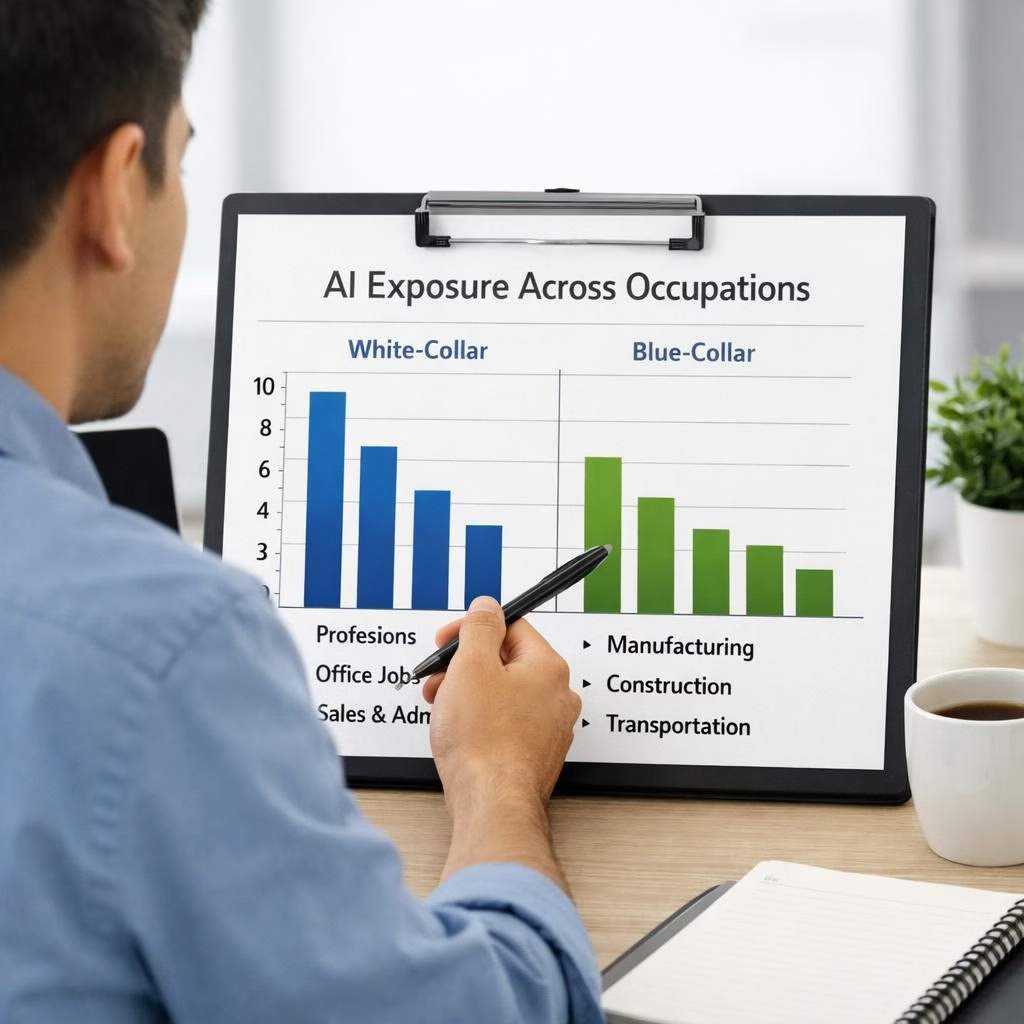
AI and Automation reshape work in 2026, but this isn’t doom. It’s a map for skill, role, and teamwork. The chart uses US Bureau of Labor Statistics data, assigning exposure scores from 0 to 10. It’s practical, not fatal: AI is a teammate, and Automation tools can boost human performance.
AI and Automation: The White-Collar Reality
In this weekend snapshot, Karpathy mapped exposure scores using BLS data and a simple 0–10 scale. He found an average exposure of 6.7 for high-salary roles (> $100k) and about 3.4 for lower-paid ones (< $35k). These numbers aren’t destiny; they highlight skills that can leverage Automation rather than replace them. White-collar tasks like software development, data analysis, and financial analysis show higher exposure, while hands-on trades lag in Automation-readiness.
AI and Automation: Practical Takeaways for 2026
Here are practical steps for workers, managers, and teams to stay ahead: boost AI literacy and data fluency by reading charts, tracing data, and crafting prompts; seek cross-disciplinary roles that blend domain knowledge with tools; and build soft skills like communication and ethics. The Anthropic report notes that AI can perform real-world tasks in business, finance, and law, but this doesn’t mean full replacement—it signals a shift in how tasks get done. Automation pace varies by sector, and costs can influence the timeline.
AI and Automation in the Workplace: Managing the Transition
Reality favors preparation over panic. Learn to pair human judgment with machine workflows. Repetitive steps suit machine workflows; humans handle creativity, strategy, and empathy. Micro-credentials and on-the-job experiments help teams stay nimble. Replacing the repetitive with careful human oversight yields better decisions and fewer errors.
- Upskill with data literacy and AI literacy courses
- Experiment with prompts and workflows that augment existing roles
- Document processes and create handbooks to share best practices
- Prioritize cross-functional collaboration and mentorship
We invite you to share your thoughts in the comments. Your experiences with AI-enabled processes in 2026 can help others plan their next move.
Original article and data source: Fortune. Thank you to Fortune for the original material and data that inspired this reflective rewrite.
External sources
U.S. Bureau of Labor Statistics provides the underlying data used in this analysis.
Anthropic: AI task research highlights how AI can handle real-world work without automatic replacement.
Citadel Securities notes rising demand for software engineers alongside AI-enabled workflows.
References
- Fortune — Original data source for the chart
- Times of India — Original article that discussed Karpathy’s chart
FAQ: AI and Automation in the Workplace
- What does high exposure to AI mean for my job? It suggests your tasks may be more automatable, but it also signals opportunities to redesign work and add new value with human judgment, domain knowledge, and cross-disciplinary skills.
- Should I pivot to AI-focused roles? Consider building data literacy, learning to interpret prompts, and collaborating across teams to blend expertise with AI tools.
- Is automation coming for skilled trades? Some routine tasks may automate, but many trades rely on tactile, supervisory, and customer-facing work that remains hard to replicate fully.
- What can organizations do to manage transitions? Invest in upskilling, create mentorship programs, document processes, and align automation efforts with ethical guidelines.
Conclusion: stay curious, stay human, and let AI tools augment your strengths.