

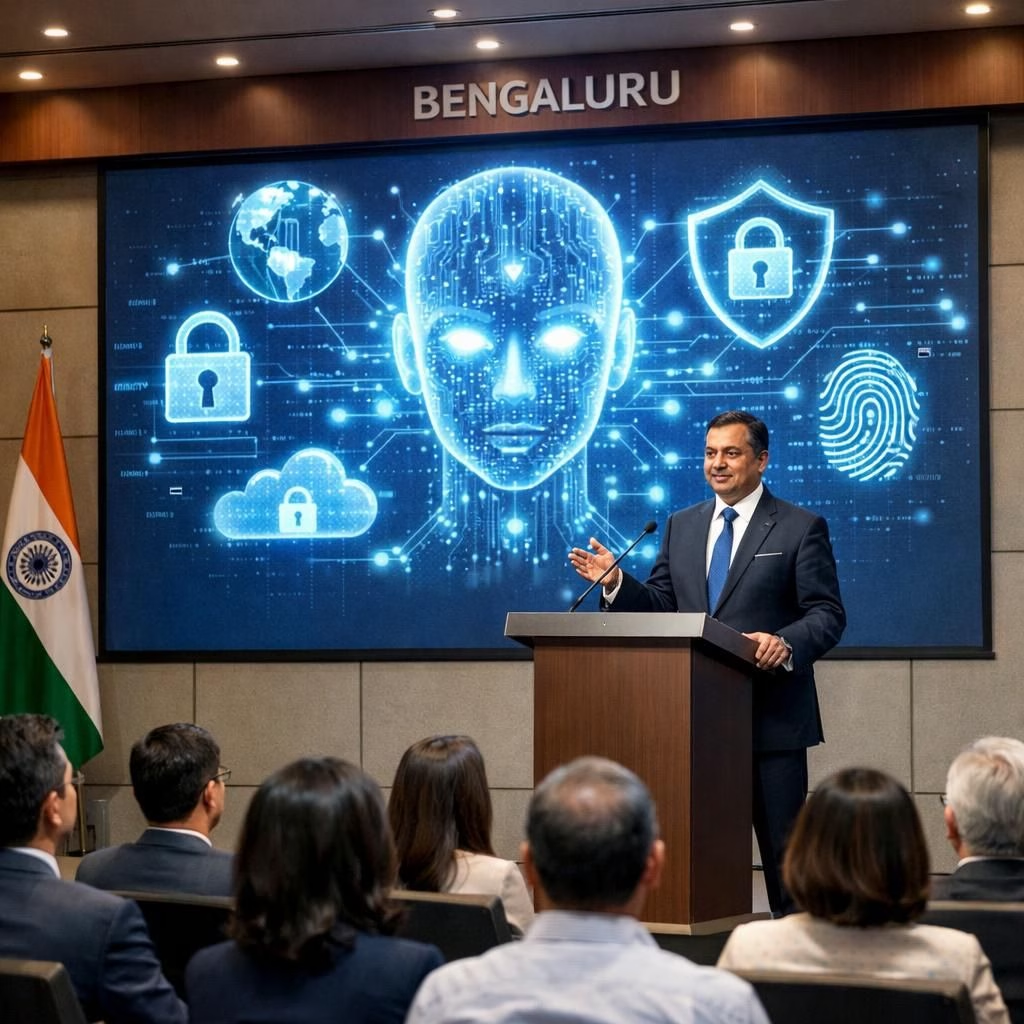
At the India Today AI Summit 2026, Rubrik CEO Bipul Sinha framed AI and cybersecurity as two sides of a coin: opportunity and risk. He urged a practical, recovery-first mindset rather than doomscrolling.
AI has delivered productivity gains, but models still hallucinate. The more they hallucinate, the higher the risk of compromise. He argued for a balanced strategy: strengthen cybersecurity while building recovery playbooks so organizations can bounce back quickly after any incident.
AI and cybersecurity: A pragmatic summit takeaway
The discussion returned to the core tension: cybersecurity is essential as AI automates knowledge work and unlocks efficiencies, but it also opens new attack surfaces. The speaker advocated practical guardrails, from certifiable outputs to auditable data chains, so teams use AI to augment judgment rather than replace it. The takeaway was hopeful: AI can boost decision quality, but it needs deliberate cybersecurity discipline to keep decisions trustworthy.
He again noted that AI now yields productivity leaps, but models still hallucinate; the more they do, the more they are prone to compromise. The message was simple: embrace AI for gains, but pair it with strong cybersecurity hygiene and a clear recovery plan so resilience becomes a feature, not an afterthought.
Deepfakes, trust, and AI in cybersecurity
The session tackled deepfakes—the realistic AI avatars that imitate voices and faces with alarming fidelity. Sinha proposed trusted signals and certification marks for AI avatars, much like the badges that built trust for online merchants. In a world where misinformation travels fast, a visible, verifiable AI avatar badge helps audiences distinguish credible content from manipulation—an essential step for maintaining trust across media, commerce, and enterprise security concerns related to cybersecurity.
On the broader question of what jobs AI can take, Sinha suggested that many knowledge-based tasks could be offloaded to AI. Booking hotels, planning business trips, and coordinating schedules could be handled by AI using preexisting information, freeing people to focus on strategy, creative problem solving, and relationship-building. The implication was not a utopia of robots but a practical reallocation of labor toward higher-value activities, with cybersecurity keeping those processes safe from intruders and error.
Yet the executive reminded the audience that AI does not invent from nothing; it relies on human context, domain expertise, and the nuance of the real world. When asked if he would be replaced by AI, his reply arrived with a wink: AI will not take my job because I live in the future and AI is in the past. The crowd laughed, nodding that AI is a tool to propel vision rather than a wand for personal replacement.
Rubrik has strong roots in India, with many cybersecurity products designed in the Bengaluru office. The emphasis on local engineering talent shows how regional ecosystems can drive global resilience, offering robust, scalable defense tools grounded in real-world requirements. The Bengaluru contribution reminds us that great defense begins with people who understand the day-to-day risk landscape and combine it with disciplined engineering.
For organizations, the practical message is crisp: AI unlocks opportunities when paired with cybersecurity hygiene and a clear recovery plan. A no-surprises playbook—detect, respond, recover—reduces mean time to resilience and keeps critical services humming, whether in healthcare, finance, or manufacturing. The conversation bridged high-level ambition with actionable steps teams can start testing in 2026 and beyond, turning potential tension into productive momentum.
In a world where AI capabilities grow daily, the right stance is neither panic nor passivity. It is planned progress: invest in data quality, certify AI outputs, design for resilience, and practice rapid recovery drills. If you can do those things, you can ride the AI wave rather than be swept away by it.
For readers seeking governance guidance, see the NIST AI Risk Management Framework for a structured approach to risk across data, models, and decisions. Additional guidance on defending against deepfakes is available from CISA.
Original article attribution: India Today Technology — AI Summit 2026 coverage. A sincere thank you to the India Today team for sharing material that inspired this piece and for the thoughtful reporting that sparked deeper reflection.
Have thoughts to share? Please leave them in the comments; we’d love to hear how you balance AI opportunity with cybersecurity in 2026.
Practical steps for AI and cybersecurity
- Establish a data lineage and model governance framework that enables traceability of AI decisions with cybersecurity controls.
- Implement certifiable AI outputs and auditable data chains to build trust in decisions.
- Develop recovery playbooks with defined RTOs and RPOs so services resume quickly after incidents.
- Run regular incident response drills that test AI-enabled workflows while improving cybersecurity hygiene.
- Educate users about trusted AI avatars and signals to minimize manipulation risks.
Frequently asked questions
-
What does AI being 100 times more opportunities and 100 times more risk mean?
It signals that AI can unlock significant gains while expanding potential attack surfaces. The emphasis is on balanced capabilities and preparedness, not on fear-mongering.
-
How can organizations prepare for inevitable cyberattacks?
Adopt a recovery-first posture: detect, respond, recover. Build resilient systems, practice drills, and keep data protected with strong cybersecurity hygiene.
-
Can deepfakes be trusted if avatars carry certification marks?
Certification helps, but verification must extend to data provenance and context. Clear signals reduce misinformation and support informed decisions.
-
Will AI replace human professionals?
No. Leaders like Sinha say AI augments human vision and frees people to focus on strategy, creativity, and relationships.
References
Original source: India Today Technology — AI Summit 2026 coverage