

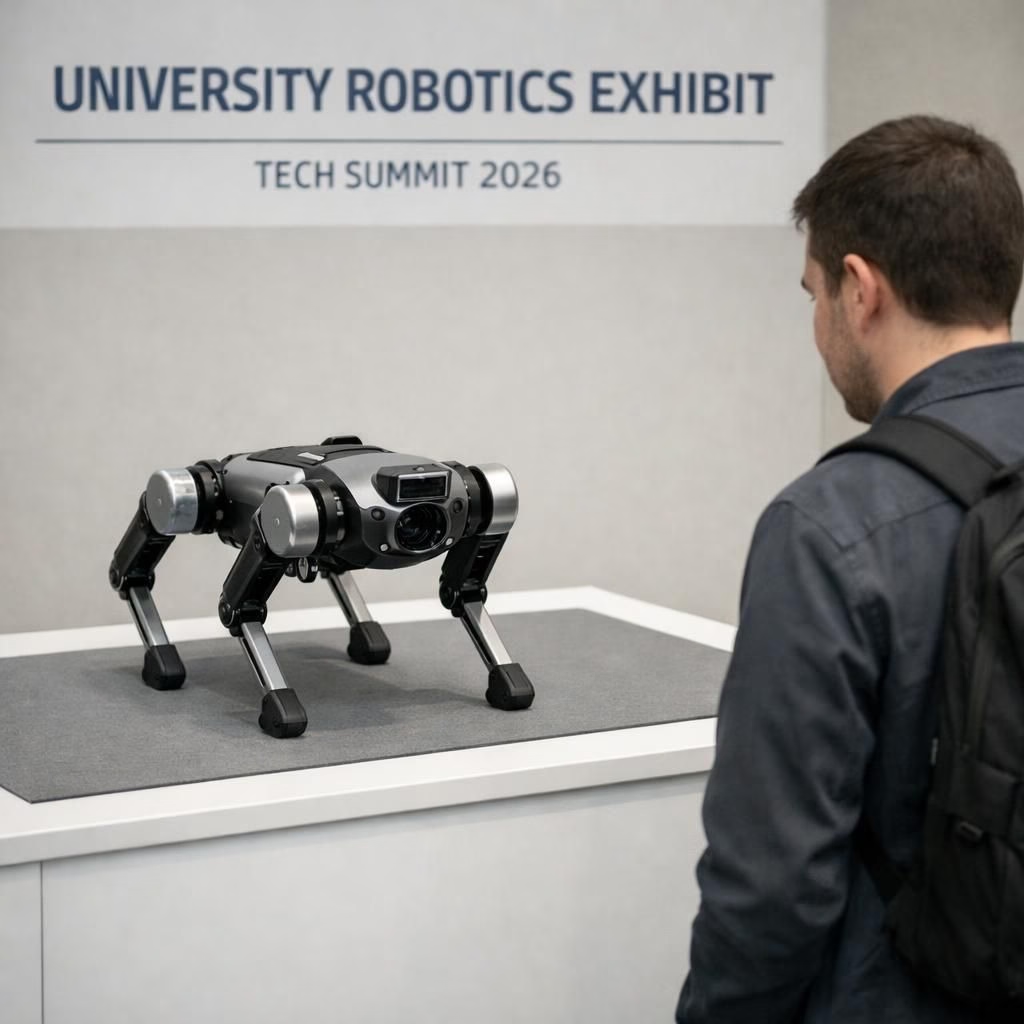
Public expos are about credibility as much as clever prototypes. In 2026, the India AI Impact Summit became a vivid lesson on AI Ethics and Academic Integrity, two guiding principles that shape what belongs on stage. S. Krishnan, Secretary at the Ministry of Electronics and Information Technology, reminded everyone that only genuine work should be showcased at public expos. He warned that the aim is not to create opportunities for misdirection or controversy. ‘We want genuine and actual work to be reflected in the way that people exhibit at expos,’ Krishnan said, making the point with a crisp, bureaucratic bite. We are not chasing sensationalism; we are chasing trust. The takeaway is simple: follow a code, verify origins, and avoid rumors.
Shortly after, a video from the summit lit up feeds, and the internet sparked with questions. The pavilion featured a robotic dog named Orion, described as developed by the university’s Centre of Excellence. Yet observers pointed out that the device resembled Unitree Go2, a widely used quadruped robot. The confusion triggered a wave of responses about misrepresentation rather than mischief. The university apologized, saying a representative was ill-informed and not authorized to speak to the press. They clarified that the origins of the robot were not misrepresented on purpose, and they vacated the exhibit space to respect the organizers’ sentiments. Beyond the drama, the episode highlighted how easily technical demonstrations can be misperceived and how important it is to label prototypes clearly and accurately.
AI Ethics in Expo Communications
Clear communication matters as much as clever code. When a team presents, they must distinguish between a product, a prototype, and a concept. Reflecting AI Ethics means that what visitors see should be labeled, tested, and attributed. This reduces the risk of hype replacing evidence. Even a simple display deserves transparent captions, documented origins, and an honest user story. The 2026 incident shows that neglecting these steps invites backlash and a loss of trust. For universities, that means setting internal guidelines, training staff and students on public engagement, and building review gates before press interaction. AI Ethics becomes a guardrail that keeps the science respectable and the spectacle honest. ACM Code of Ethics and the OECD AI Principles offer companion guidance on transparency and responsibility.
Organizers should publish clear rules covering both AI Ethics and Academic Integrity to prevent overclaiming. Staff training, pre-event reviews, and documented sources help keep exhibitions trustworthy and educational for the public. These practices turn complex demonstrations into reliable learning experiences rather than sources of confusion.
Academic Integrity in University Exhibits
Academic Integrity isn’t a dry syllabus; it is the oxygen that keeps science alive in public spaces. In this case, Galgotias University faced questions about whether the robot presented was their own invention. The university’s apology stated that a representative was ill-informed and not authorized to brief the media. The incident illustrates why Academic Integrity matters in outreach activities: mislabeling, misattribution, and booster-like marketing can erode public trust and invite unnecessary controversy. For students and faculty, that means pre-event audits of prototypes, strict briefing on what can be spoken, and robust citations for demonstrated work. When public perception meets rigorous citation, the audience remains engaged and informed.
Ultimately, the lessons are about clarity, accountability, and confidence. AI Ethics reminds us to respect the public by avoiding overclaiming. Academic Integrity reminds us that real work deserves real attribution. The industry is learning to balance wonder with responsibility. If you are planning future exhibitions in 2026, invest in transparent labeling, verifiable prototypes, and clear attributions. The simplest rule is to test before you talk, show real data, and tell the truth.
Original article: Thank you to the original source for coverage.
Practical steps for organizers
- Label every exhibit clearly as product, prototype, or concept to avoid ambiguity.
- Attach a brief origin story and a data-backed user scenario to each display.
- Train staff to speak consistently and verify facts before interviews.
FAQ
- What is AI Ethics in public exhibits? It refers to applying ethical considerations to how AI work is presented, tested, and attributed in public spaces.
- Why does Academic Integrity matter at expos? It protects trust by ensuring that claimed innovations are real, properly credited, and not overstated.
- How can universities prevent mislabeling? Use pre-event reviews, standardized captions, and documented prototypes with clear attributions.