

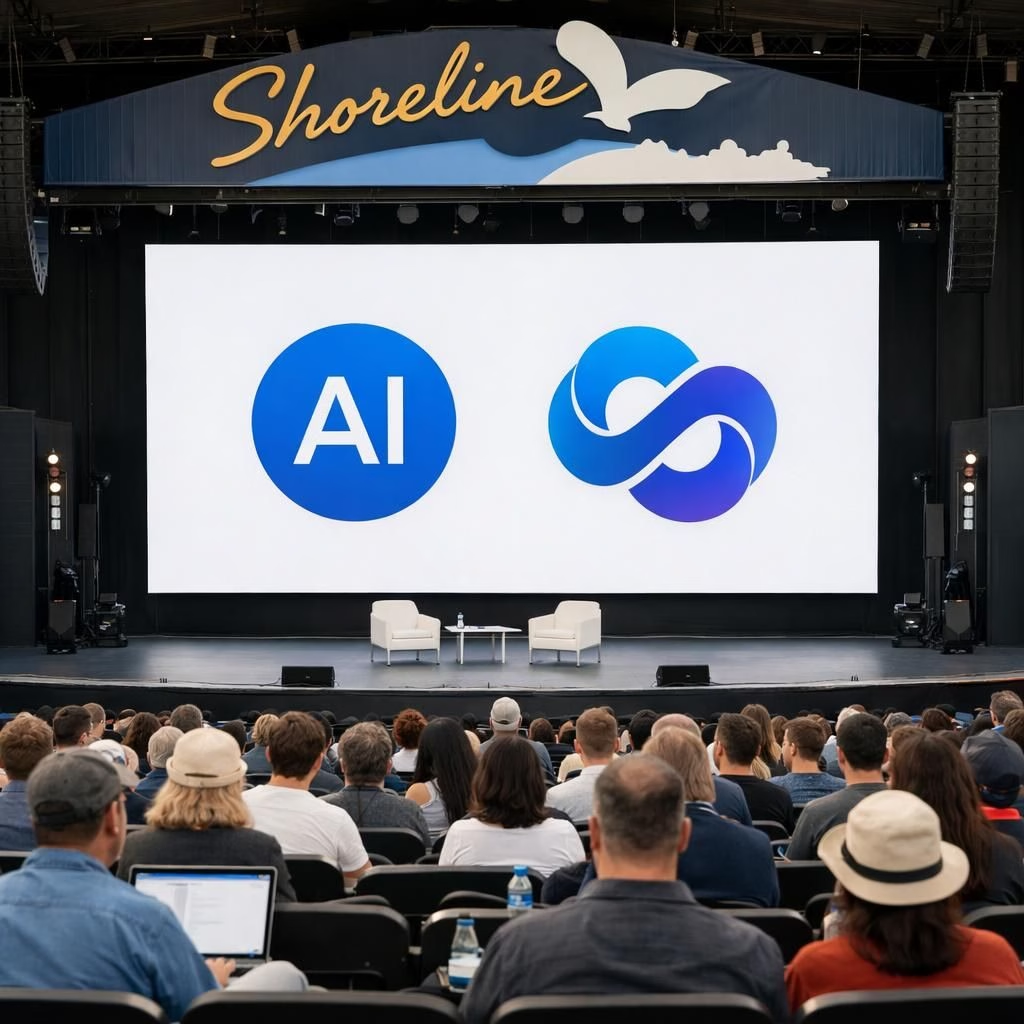
Google I/O 2026 is shaping up as a focused, hands-on showcase where Gemini and AI converge to power core Google products. The event runs May 19–20 at Shoreline Amphitheatre in Mountain View, with a hybrid format that invites both local attendees and remote viewers. The aim is practical updates rather than hype, with AI-enabled improvements across Search, Chrome, Android, Workspace, and Pixel. Expect sessions that feel like a guided lab tour, not a one-off fireworks display.
AI Gemini: I/O 2026 Preview
Google has signaled that the heart of I/O 2026 will be AI breakthroughs and Gemini powered updates across the entire product stack. If you like your tech news served with a pinch of humor and a dash of reality, this is the moment where the company explains how its latest AI models plug into everyday tools. Attendees should anticipate keynotes that set the tone, followed by fireside chats and product demos that translate ambitious ideas into tangible improvements. The emphasis on AI is about practical gains: smarter assistants, smarter search, and smarter apps that streamline workflows and enhance user experiences. Gemini will likely feature in live demos, showing how the model can assist in creative tasks, data analysis, and real-time app enhancements in the room and online. The fusion of AI and Gemini signals a practical, not merely aspirational, future for users and developers alike.
Beyond the stage, Google is expected to offer world-building that blends hardware and software. Developers will find new APIs, SDK updates, and opportunities to integrate Gemini-driven capabilities into custom apps and enterprise workflows. Expect a few surprises as Google tests how well Gemini can collaborate with other services in real time, with a focus on reliability, latency, and privacy. The message is clear: AI features will appear across the portfolio, across consumer and enterprise tools, with intent and transparent capabilities.
For the curious minds, the event will likely showcase how AI models can be integrated into everyday tasks without overwhelming users. The future of AI at Google hinges on balance—powerful enough to assist, but intuitive enough to stay out of the way when not needed. The Gemini angle adds sophistication, suggesting product iterations that improve through user feedback and real-world use. The vibe will be forward looking but grounded, with a steady cadence of updates instead of dramatic leaps. If you love seeing technology translated into usable features, I/O 2026 should feel like a well-earned bow on a year of AI progress, with Gemini as a steady companion rather than a distant star.
In addition to the keynote, Google has hinted at a save the date experience on its site featuring minigames built by the Gemini AI model. This interactive teaser is not just for fun; it serves as a lightweight test bed for how Gemini can handle user prompts, provide prompts, and guide engagement through playful experimentation. It’s a clever way to showcase AI capabilities in a low-risk setting and to build anticipation for the official content. The minigame experience aims to be accessible to developers and enthusiasts alike, offering a glimpse of how embedded AI features can respond to user actions in real time, a signal of what is possible when AI meets thoughtful UX.
The event’s format remains a hybrid model, so developers working remotely can participate in live streams, Q&A, and virtual breakout sessions. For the in-person crowd, the Shoreline Amphitheatre setting will provide a familiar stage for big demos, while the online audience will enjoy synchronized experiences, screen sharing, and interactive polls. The hybrid approach has become a staple for I/O, and this year’s implementation should minimize latency while maximizing accessibility. If you are a developer, marketer, or product manager, tune your expectations and plan your notes, because the agenda is likely to center on practical AI and Gemini deployment ideas you can actually build with in the coming months.
Developers can register to attend Google I/O 2026 starting today, with options for in person or remote participation. The registration is designed to be straightforward, focusing on making sessions, demos, and hands-on labs accessible across regions. For many attendees, the value lies in the interaction: a chance to ask questions, compare use cases, and see how AI tools perform within real-world constraints. The event promises to be a catalyst for developers to prototype AI-powered features across their own projects, while also offering a window into product roadmaps that place Gemini at the center of the strategy. The combination of AI and Gemini across familiar apps makes this I/O feel like a milestone rather than a routine update cycle.
AI-driven Updates Across Google Search and Chrome
The AI story across Search and Chrome is expected to be a backbone of the I/O narrative. AI enhancements could bring smarter query interpretation, more relevant results, and context-aware suggestions that respect user intent. In Gemini-powered updates across these products, AI could improve autofill, tab management, and security prompts, while preserving fast performance. The idea is to deliver more helpful results without adding friction. Developers and product teams will look for concrete examples of how AI reduces user effort, while still preserving control over what the model does and why it acts in certain ways. If you plan to experiment with these capabilities, anticipate API changes, sample code, and best practices that help you incorporate AI features securely and responsibly into your apps. The AI focus signals a push toward smarter, faster, and more reliable web experiences that feel seamless rather than intrusive.
In addition, expect updates aimed at giving users clearer, more actionable information. AI-powered summaries, smarter recommendations, and more precise search results can transform routine online tasks into smoother, more productive experiences. The emphasis will likely be on reliability and user control, ensuring that AI features remain transparent and predictable while offering substantial productivity gains. For developers, the takeaway is to design experiences where AI acts as a helpful assistant, not a mystery box.
Gemini’s Role Across Android, Workspace, and Pixel
The Gemini footprint across Android, Workspace, and Pixel devices will likely expand in 2026. Expect Gemini-powered features that improve device performance, personalize experiences, and help users manage complex workflows with fewer taps. Across Android, Gemini could influence smarter gestures, adaptive layouts, and more intuitive privacy controls. In Workspace apps, Gemini could assist with drafting, scheduling, and data analysis, turning complex tasks into simple routines. On Pixel hardware, Gemini may contribute to on-device AI capabilities that run efficiently, preserving battery life while enabling richer interactions. This multi-product strategy suggests a cohesive, cross-platform approach where Gemini helps unify the user experience from phone to desk to cloud. The end result should feel like a natural extension of the way people work, play, and learn in a connected world.
A notable element is the Gemini powered save the date minigame which demonstrates the model’s ability to respond to user prompts and guide engagement in entertaining ways. While the mechanics are light, the underlying idea is serious: Gemini can orchestrate helpful interactions across devices and services, offering developers a concrete example of cross‑platform AI that remains easy to integrate and fun to use. Expect sessions that walk through the architecture, share integration tips, and present lessons learned from real world deployments of Gemini capabilities across Android, Workspace, and Pixel.
In short, I/O 2026 centers on a practical, user friendly AI vision, with Gemini acting as the connective tissue that makes smart features reliable and accessible. The message to developers is clear: design with intent, measure outcomes, and build with privacy in mind. The message to users is simple: AI powered experiences should feel helpful, not uncanny, and Gemini should quietly enhance the tools you already rely on every day rather than steal your attention. The balance is delicate, but early indications suggest Google is aiming for a well calibrated, user respectful implementation that still feels exciting and modern.
Registration details, session schedules, and hands on labs will be released in the coming weeks. If you are planning to attend, bookmark the official I/O channels and prepare notes on how you might apply Gemini powered features to your own apps or workflows. The combination of AI innovation and Gemini capability offers a compelling path forward for developers who want to experiment without losing sight of user needs and safety considerations.
Original article: Thank you to the original source material for Google I/O 2026 coverage.
We’d love to hear your thoughts on what you think will be the most impactful AI and Gemini updates at I/O 2026. Please share your thoughts in the comments.
Practical steps for developers
- Review Gemini APIs and read the latest docs to map capabilities to your product roadmaps.
- Plan a small pilot around a single app or workflow to test integration and user impact.
- Assess privacy, security, and governance constraints early in the design phase.
- Set up a starter codebase with templates for AI features and data handling.
- Join hands-on labs and community sessions at I/O to share lessons learned.
FAQ
- What is Gemini?
- A family of AI capabilities from Google designed to help with tasks across devices and apps. In practice, Gemini can assist with data processing, creative tasks, and enhanced workflows when integrated into products.
- How can I participate in I/O 2026?
- Developers can register for in‑person or remote access. The event emphasizes hands-on labs, live demos, and practical AI deployment ideas you can build with in the coming months.
- Will AI features affect performance?
- Google stresses reliability and user control. The goal is to add useful features without compromising speed or privacy, with clear transparency about what the AI is doing.
Conclusion
Google I/O 2026 appears to emphasize practical, user-friendly AI progress anchored by Gemini. The event aims to show real-world deployments that developers can start prototyping soon, while keeping user privacy and control at the forefront.
References
Original source linkback retained: https://www.theverge.com/tech/880401/google-io-2026-dates-ai