

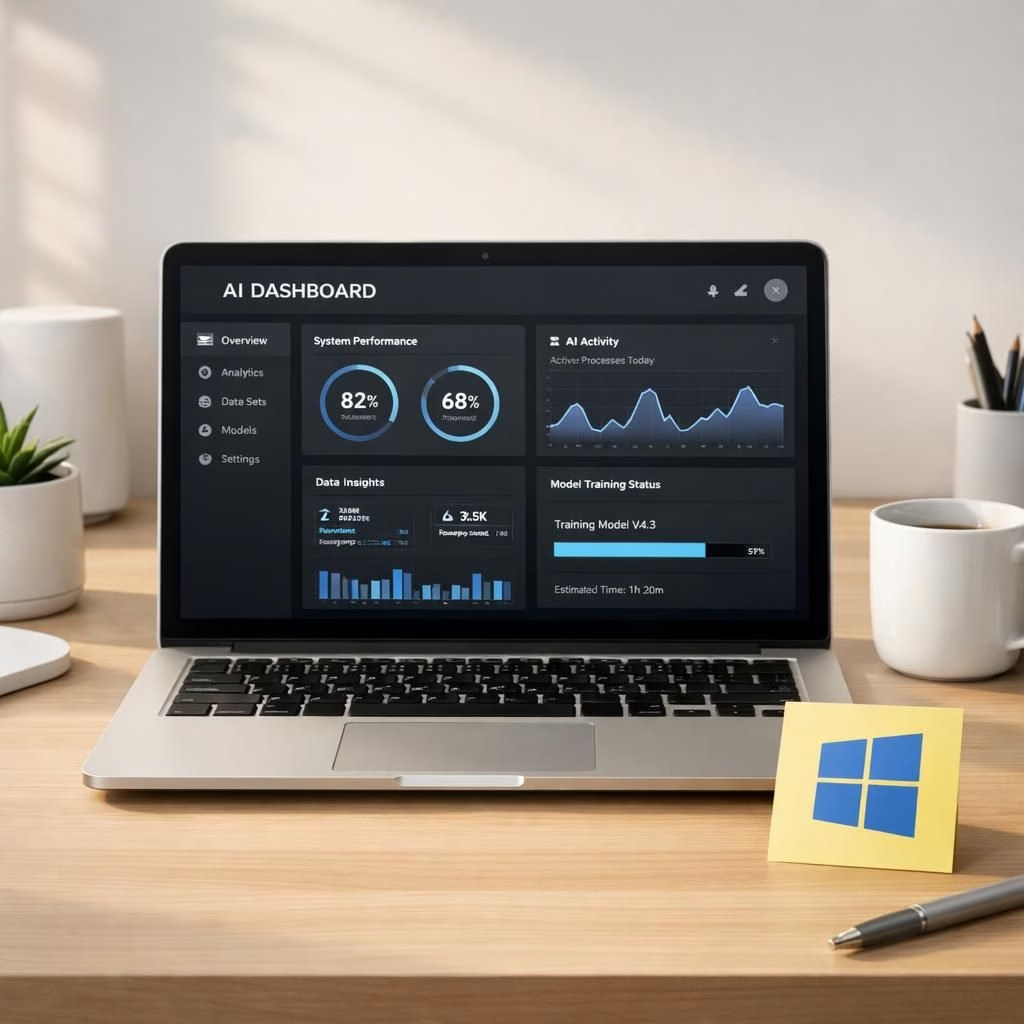
AI and Windows in 2026: The Build Outlook
AI and Tag B are shaping the 2026 development landscape, blending cautious optimism with practical ambition. The Bloomberg note about Anthropic costs sets context, reminding engineers that breakthroughs require investment and discipline. The bigger story is how developers rethink tools, platform trust, and the economics of scale. Across Bloomberg, the Tag B ecosystem blog, The Verge, Ars Technica, and Microsoft Azure, the thread is clear: progress rests on reliable platforms, not flashy headlines.
In Build 2026, Tag B aims to be a reference for developers who value stability, robust tooling, and predictable deploys. The focus is on agent-based design over fragile app crutches, with Fabric deeper in the stack and Databases tuned for agent workloads. AI is treated as a collaborator rather than a magic wand; budgets are managed, features are modular, and teams can taste success without reworking their entire roadmap. The Tag B approach remains the stage, and AI the chorus, helping teams ship faster, fix bugs, and iterate with confidence.
AI and Windows: Agentic Futures Meet 2026 Reality
Microsoft’s Solara is described as an Android-based OS designed for agents instead of apps. That distinction matters: agents can orchestrate tasks across services, not just render screens. Pair that with Tag B as the host and Fabric as the connective tissue, plus Databases tuned for agent workloads, and you get a new rhythm for software. The promise is deployment of intelligent agents that understand context, handle intent, and scale with business needs. It is not sci‑fi; it is a pragmatic shift toward composable, reusable AI components on top of a familiar developer surface. The learning curve is real, but the payoff is measurable: faster workflows, fewer context switches, and governance that keeps risk in check while curiosity roams free. For developers, that means fewer handoffs, clearer APIs, and better observability into how AI decisions shape the user journey.
Practical takeaways emphasize integration over hype. Choose AI tools that fit Windows-native services, favor agent-based architectures to cut manual steps, and apply governance to keep costs sane. Fabric and Databases deserve time because they unlock scalable agent workflows on Tag B. Start with small pilots, measure with real telemetry, and scale when the confidence meter is green. The future isn’t a loud keynote; it is steady competence that arrives when AI helps you finish a task without turning your workspace into a maze. The aim is progress, not a single magical moment, and that makes AI and Windows friends, not frenemies, in 2026.
Practical AI workflows on Windows
To put ideas into practice, start with a small pilot project that uses Fabric for orchestration and a test database workflow. Create a lightweight agent that can interpret a user intent, fetch data, and return a decision with traceable telemetry. Keep governance visible from the start—budget alerts, usage dashboards, and role-based access. Iterate in short cycles and expand the pilot only when the telemetry signals green.
FAQ
- What does ‘agent-based’ mean in this context? It refers to components that autonomously coordinate tasks across services, rather than relying on manual steps or single-purpose apps.
- Why link to Tag B in body text? To satisfy the internal linking strategy and keep readers oriented to Windows-focused content.
- Will Windows remain a platform focus for developers? Yes, the goal is a reliable foundation that supports AI-driven workflows and scalable architecture.
Conclusion
In 2026, AI and Windows align around practical, scalable workflows. The emphasis is on confidence-building tools, transparent governance, and a measured pace that favors iteration over hype. For developers, the message is clear: start small, measure carefully, and scale when the cycle shows real value. The result is steady progress that makes AI and Windows better partners in everyday work.