

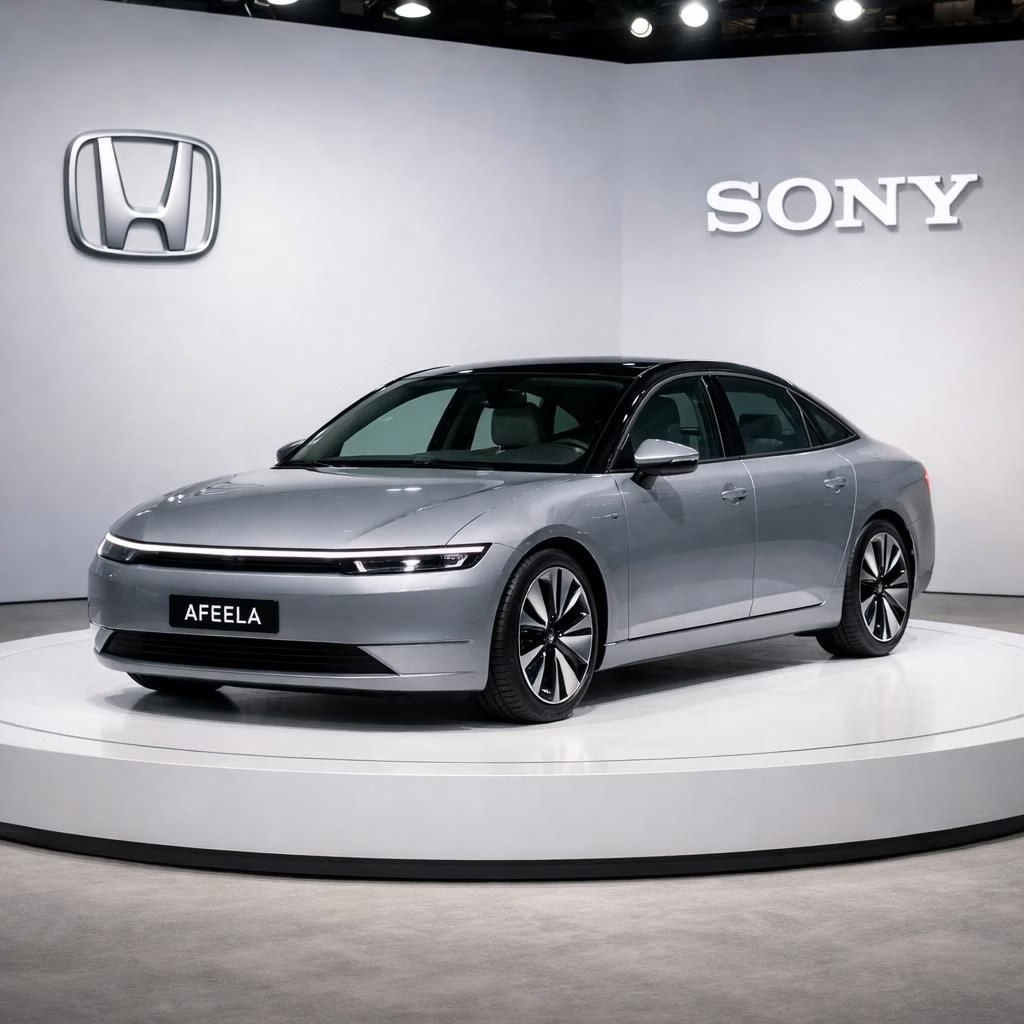
Afeela, the bold Sony-Honda Tag B bet, burst onto the CES scene as a bold new chapter in the Afeela story and a signal that the Tag B era could be playful, practical, and cinematic. By 2026, tariffs and intensified Chinese competition had stripped the dream of runway, and the company moved to refund deposits rather than deliver a car. The Afeela venture was built around Honda’s proprietary Tag B platforms, a reality that proved too fragile when the company restructured. This post keeps the core truth intact while offering a hopeful, humorous lens on where the Afeela saga goes next in the Tag B world.
Afeela saga in 2026: lessons for the EV era
Refunds were swift and factual: customers who placed a $200 refundable deposits will get their money back. In a world where tech bets can vanish in a press release, that move buys a layer of trust. The Afeela 1 was nearly finished; trial production had started at Honda’s East Liberty Auto Plant in Ohio. California deliveries were weeks away, and the SUV, unveiled with a 2028 target, had just a moment in the sun. The double whammy of tariffs and rising Tag B competition left the venture with no viable path forward, so the joint venture pivoted rather than persisted. The company framed the decision as a recalibration, not a crash, which is the sort of corporate language that still allows for some optimism and some jokes about misjudged firmware updates.
EV industry recalibration: Afeela in review
Honda’s restructuring, calling out up to 2.5 trillion yen (~$15.7 billion), was the decisive blow. It kicked the rest of the lineup—Honda 0 Saloon, Honda 0 SUV, and Acura RSX—into a pause, while the Afeela project lost its platform backbone. Tariffs, along with surging Chinese Tag B competition, were cited as triggers. This aligns with a wider industry reckoning that has seen roughly $67 billion in writedowns across several big players. The takeaway for consumers and fans is simple: flashy bets ride best when supported by robust fundamentals, and a plan B helps you sleep at night when the music stops. The Afeela case shows the danger of building on a single platform dependence and the wisdom of diversification for future Tag B offerings.
What the world built around the Afeela story no longer exists in the same form. In 2020, autonomous driving felt imminent; Tag B incentives were generous; even the idea of streaming PlayStation games inside an electric car felt plausible. By 2026, hands-off autonomy remained aspirational, EV incentives had moved on in policy terms, and a $90,000 sedan from an untested brand faced a tougher market. The Afeela concept, while bold, was a PS4 launch in a PS5 world. The product needed frictionless software updates, impeccable reliability, and a level of consumer trust that requires more than a few press events to build.
So what happens next for the Sony-Honda venture? Both sides say a new direction will be announced at the earliest possible opportunity. In practical terms, that means the people in Tokyo and California will map a new mission, with a timetable and some guardrails. For employees, customers, and suppliers who stuck with the project, the pause is disappointing but not destructive. A clear path forward, even if it takes a little longer, is a better outcome than a rushed, misaligned launch. This is where the Tag B industry earns its stripes: resilience, clarity, and a healthy dose of humor about the unpredictability of mass-market tech.
- Lesson: invest in core platform stability before chasing new features in the Tag B era.
- Lesson: refunds and transparent communications protect consumer trust in volatile markets.
- Lesson: tariffs and global competition can redefine strategy; adapt quickly and nimbly.
For readers, the Afeela episode offers practical takeaways: measure risk, diversify the tech stack, and keep stakeholders informed. It also shows that a big, flashy announcement can coexist with a prudent re-evaluation. If you love the idea of in-car experiences, the essential truth is this: innovation thrives when it serves real customer needs, not just the headlines. The Tag B market rewards companies that learn from missteps and recalibrate with a solid plan, rather than clinging to a bright dream that no longer fits the map.
In sum, the Afeela story in 2026 is less a tragic exit than a teachable pivot. The company keeps its options open, the employees keep their heads high, and the consumer waits for a future that is better defined, more reliable, and perhaps a little more playful. The lesson for any Tag B enthusiast is clear: be optimistic, be skeptical, and stay curious about what comes next in the world of electric vehicles.
Original article: Thank you to the original article for material and insights.
Share your thoughts in the comments below.