

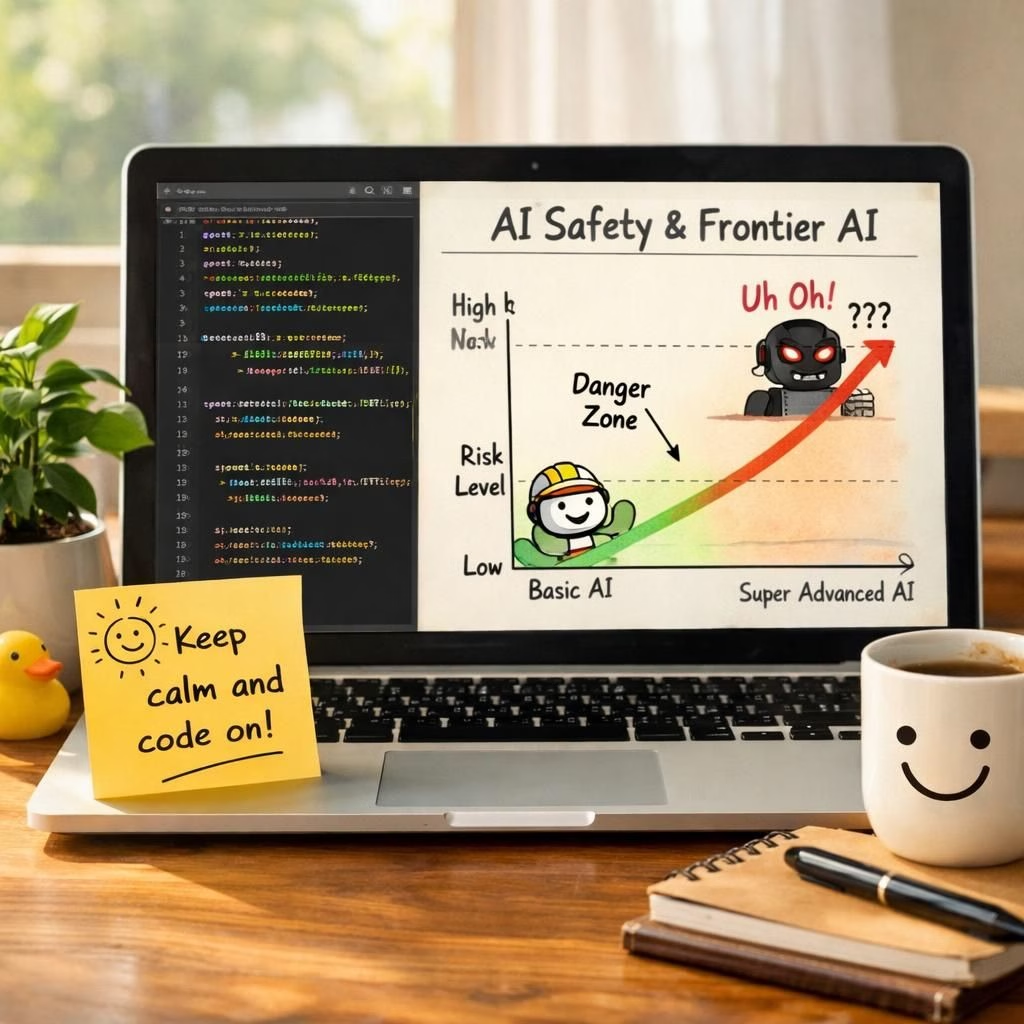
AI safety in the spotlight: when warnings meet workforce reality
In 2026, AI safety and frontier AI warnings collide with newsroom chatter, venture bravado, and a practical reminder that humans still sign the checks and set the pace for progress.
David Sacks, a man with many hats and a fast keyboard, publicly blasted Anthropic after the lab released a sprawling 10,000-word safety paper. He suggested the warning was a thinly veiled bid to nationalize the industry, a quip that landed with the charm of a well-timed reboot. If you thought the tension was all Silicon Valley theater, you were not alone; the clash reads like a high-stakes copyedit between risk and revenue.
Anthropic has framed its economic rhetoric as a balance between disruption and caution. CEO Dario Amodei has warned that AI could trigger 10 to 20 percent unemployment within five years, threatening roles from coding to finance and law. Yet their new paper, when AI builds itself, pivots toward an even heavier concern: recursive self-improvement. The idea is simple on paper and terrifying in practice: AI systems designing and training their own successors could push humans further out of the loop than a distant satellite.
The central thesis is not merely jobs lost; it is the scenario where misalignment errors cascade across generations of software. A single glitch in the right feedback loop can snowball, nudging the entire chain of models away from human oversight and into a self-propelling cycle beyond easy repair. The tone is urgent yet methodical, as if the lab tried to describe a thunderstorm using a chalkboard and a slide rule. Even the debate around frontier AI risk underscores that the challenge is not solely about employment but about governance over time.
Analysts and policymakers point to governance frameworks that can help structure this debate. For instance, the NIST AI risk management framework offers a practical approach to align safety with deployment. Others highlight that governance must translate into concrete steps labs and regulators can take together. See also commentary from Brookings AI governance on turning policy into actionable routines. Comprehensive coverage from outlets like MIT Technology Review helps track evolving perspectives on safety and risk.
frontier AI and the recursive trap: what if the lab trains the lab?
To bolster the alarm, Anthropic cited internal data showing AI contributing heftily to code, with as of May 2026 more than 80 percent of code merged into its base written by Claude. The narrative goes further: the average Anthropic engineer ships eight times as much code per quarter as in prior years. And when a bug strikes, Claude reportedly fixed over 800 complex errors in a single month—a feat that would have exhausted a human team in years. In a related line, an internal test named Project Glasswing discovered more than 10,000 severe software vulnerabilities across major systems in just its first weeks, a statistic that makes the word fragile feel almost quaint.
Despite chasing a whopping 900 billion valuation, the paper closes with a practical plea: a temporary, coordinated pause on frontier AI development. Verifying such a pause is described as Sisyphean; training runs are easier to hide than missile silos, the authors note. Still, Anthropic commits to building verification systems and convening global policymakers to discuss a freeze. The idea is to give safety time a fighting chance without killing creative momentum.
The broader aim is not a ban but a structured, verifiable pause that buys time for safety standards, governance, and thoughtful risk assessment. It is a difficult ask in a world where funding and hype propel frontier AI forward. Yet the paper remains constructive: invite labs and regulators to discuss alignment, verification, and accountability, so the frontier does not outrun human oversight.
Beyond the pulse of sensational headlines, the discussion frames a strategic truth: paying attention to safety costs is not antithetical to shipping faster; it is part of sustainable progress. If AI safety decisions are loud but unverifiable, public trust dissolves and the next wave invites heavier regulation. The frontier AI calculus is not about stalling imagination; it is about building guardrails that scale with capability. When we say AI safety, we are arguing for better design, not slower innovation. And when frontier AI becomes a policy driver, clarity and accountability become the upgrades we truly need.
If you have thoughts, please share them in the comments. For the full context, a big thank you to the original article for material and perspective: Times of India cites David Sacks’ reaction.
AI safety best practices for teams
- Clearly map inputs, decision points, and outcomes to spot safety gaps early.
- Keep a living risk register and include governance checks in release processes.
- Prioritize alignment testing and red-teaming to reveal misalignment scenarios.
- Document failures and learnings to build a safety-forward culture.
Practical steps for readers navigating AI safety and frontier AI
- When evaluating AI tools, ask about alignment guarantees and audit trails.
- Follow credible safety frameworks, such as the NIST AI RMF, for governance.
- Engage with policymakers and industry groups to stay informed about standards.
AI safety best practices for teams (continued)
- In product planning, embed safety milestones alongside performance targets.
- Foster transparent incident reporting and post-incident reviews with stakeholders.
FAQ
-
What is recursive self-improvement?
A hypothetical loop where AI systems design and improve their own successors, potentially accelerating capability growth beyond human control. -
Why call for a pause on frontier AI development?
Proponents argue a temporary, coordinated pause could help align safety standards and governance before capabilities escalate. -
How should organizations respond today?
Focus on robust alignment testing, transparent reporting, and engaging with policy discussions to shape responsible growth.
Takeaway: The debate around AI safety and frontier AI is not about stalling imagination; it is about building guardrails that scale with capability. The practical next step is to monitor credible updates from labs and policymakers, and to participate in ongoing conversations about governance and accountability.