

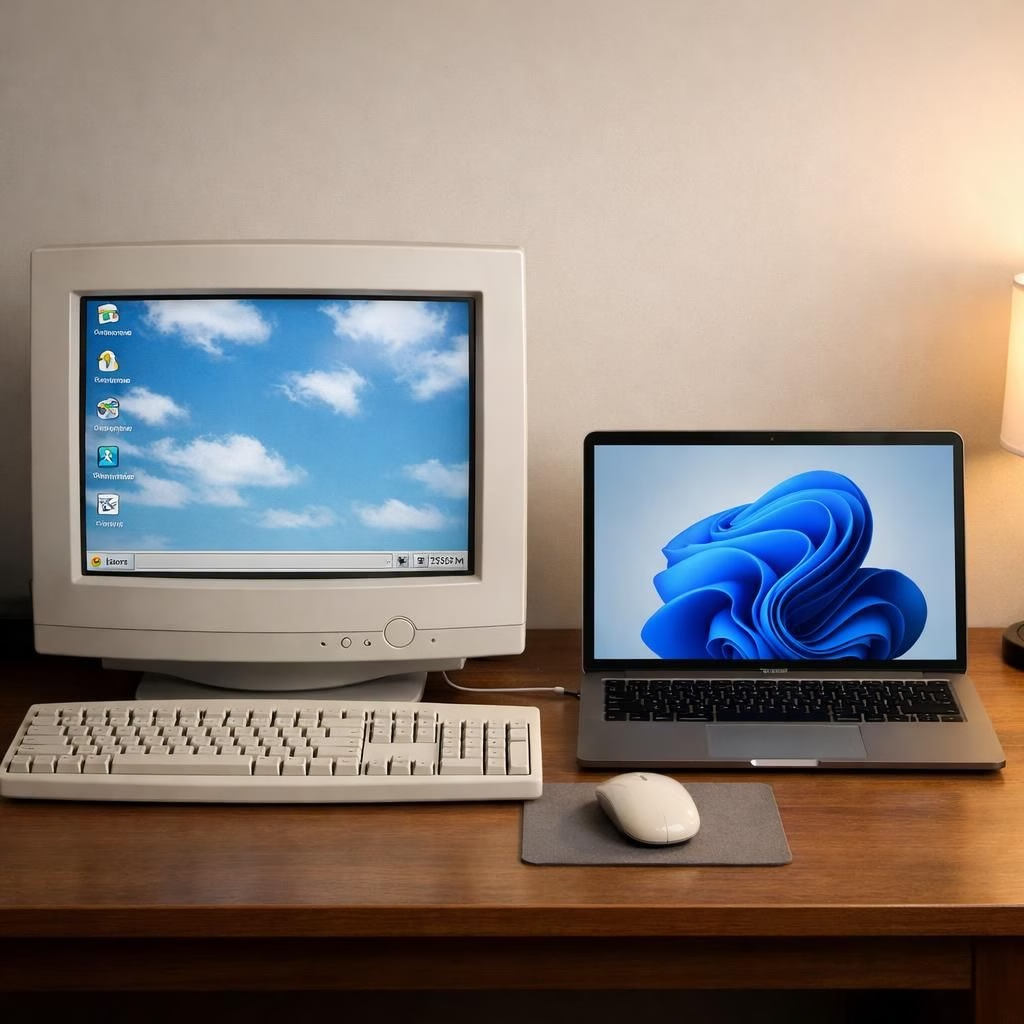
In a world where fast software is king, Windows 98 still gets invited to the party, especially by retro-tech fans and curious observers. This piece treats windows-98 as a living archive rather than a museum piece, exploring its usability in 2026 with practical tests, a dash of humor, and careful caveats. If you love the crisp icons and quirky DOS prompts, you are in for a friendly ride through constraints, workarounds, and real world workflow ideas. The idea is not to pretend Windows 98 is the best operating system today, but to assess what it can still do for a focused task or a playful project, and what modern tools can contribute to that experience. So grab a coffee, and let’s see how this classic OS holds up in a world of modern expectations. The keywords we keep returning to are windows-98 and retro-tech, two sides of the same coin.
windows-98 in 2026: a retro-tech usability reality
Windows 98 still boots quickly on a vintage PC, but that speed is mostly a memory on modern hardware. We tested a barebones install with minimal drivers, then added a few legacy tweaks to bring USB support and improved display performance without turning the system into a laboratory blob. The goal is to see what everyday tasks feel plausible: reading email, editing simple documents, sketching diagrams, or playing a retro-tech game that doesn’t rely on online servers. The answer depends on your expectations: if you want a substitute for a modern OS, you will be disappointed; if you want a historical sandbox or a hardware compatibility test, Windows 98 shines in quirky, human-scale ways. And yes, you can browse a few static sites with a lightweight browser configured to avoid modern trackers, though you should not expect a smooth experience on today’s sites.
Practical tips for running windows-98 in 2026: a retro-tech guide
First, pick your weapon: virtualization or a dedicated retro machine. Virtual machines let you snapshot, pause, and revert; hardware reliability matters less in a virtual environment, and you can run Windows 98 inside a modern hypervisor with a carefully chosen virtual hardware profile. We recommend a VM with 32- or 64-bit x86 emulation, a modest amount of RAM, and a legacy video adapter that won’t fight your host GPU. For the brave, a real vintage PC with a clean power supply and solid surge protection offers the tactile charm you crave—but you will face hardware scarcity and ongoing maintenance headaches. And yes, you can connect to a local network and even email using lightweight clients updated with security-aware fetchers; still, you should maintain strict security boundaries and back up your data.
As you experiment, keep a steady rhythm: back up frequently, snapshot before major changes, and avoid exposing Windows 98 directly to modern internet services. You’ll thank yourself when a driver you need resurfaces in a forum thread or a community patch appears. If you are curious about compatibility, test a handful of universal file formats (TXT, DOC, and basic images) and note where the software feels clumsy or delightfully efficient. The beauty of retro-tech is not flawless perfection but character—the kind that makes a simple task unexpectedly enjoyable.
Usability lessons from a retro-tech lens: what matters in 2026
From a usability perspective, Windows 98 shines on clarity: menus are straightforward, fonts are readable, and the UI keeps modal interruptions to a minimum. But the limits are real: hardware support becomes a barrier, drivers can vanish, and modern peripherals rarely work without clever hacks. The lesson for designers and developers is simple: consider how far backward compatibility can take a product and how much you can rely on a strong online community to supply workarounds. For retro-tech fans, the thrill is in turning a basic utility into something surprisingly functional: a word processor, a small database, or a tiny tool that doesn’t require modern APIs. The world of 2026 demands resilience, and it is comforting to see Windows 98 offer a sandbox for that resilience without the pressure of cloud dependencies.
Quick checklist for curious experimenters: set up a safe sandbox, back up regularly, keep hardware surge protection, and limit exposure to the wide-open web. Embrace online communities for patches and tips, but preserve the core experience by keeping a clean, minimal install. If you want to push the limits, try a small project that benefits from offline workflows, such as a local database, a simple accounting sheet, or a notebook-like application that runs cleanly on a legacy UI. The retro-tech vibe is not just nostalgia; it is a peer-learning loop that shows how far software engineering has come—and how small, focused optimizations can keep an old system usable.
So, is Windows 98 usable in 2026? The short answer is: yes, for specific tasks, with the right setup, and with tempered expectations. The long answer is a fun exploration of how far a classic OS can still participate in a modern workflow, especially when you lean into the community-built tools that keep retro-tech alive. If you enjoy a playful, practical look at old software meeting new hardware, you are in the right place. Share your own setups, experiments, or horror stories in the comments. We love a good troubleshooting tale.
Original article: How Usable Is Windows 98 In 2026? — Hackaday. Thanks to Hackaday for the original material. Read the Hackaday article.
FAQ
- Is Windows 98 usable in 2026 for real work?
- Yes, for offline tasks with a careful setup and tempered expectations.
- What is the best way to run Windows 98 today?
- Virtualization with a safe, minimal config is usually the simplest and most reproducible option.
- Can I access the modern web from Windows 98?
- Only with lightweight sites and strict sandboxing; most modern sites will struggle to render.
- Should I rely on retro-tech resources for patches?
- Yes—community patches and preserved docs help keep the system usable and safer.
References
Source
Original article source: Hackaday: How Usable Is Windows 98 In 2026? (link retained as the official reference).