

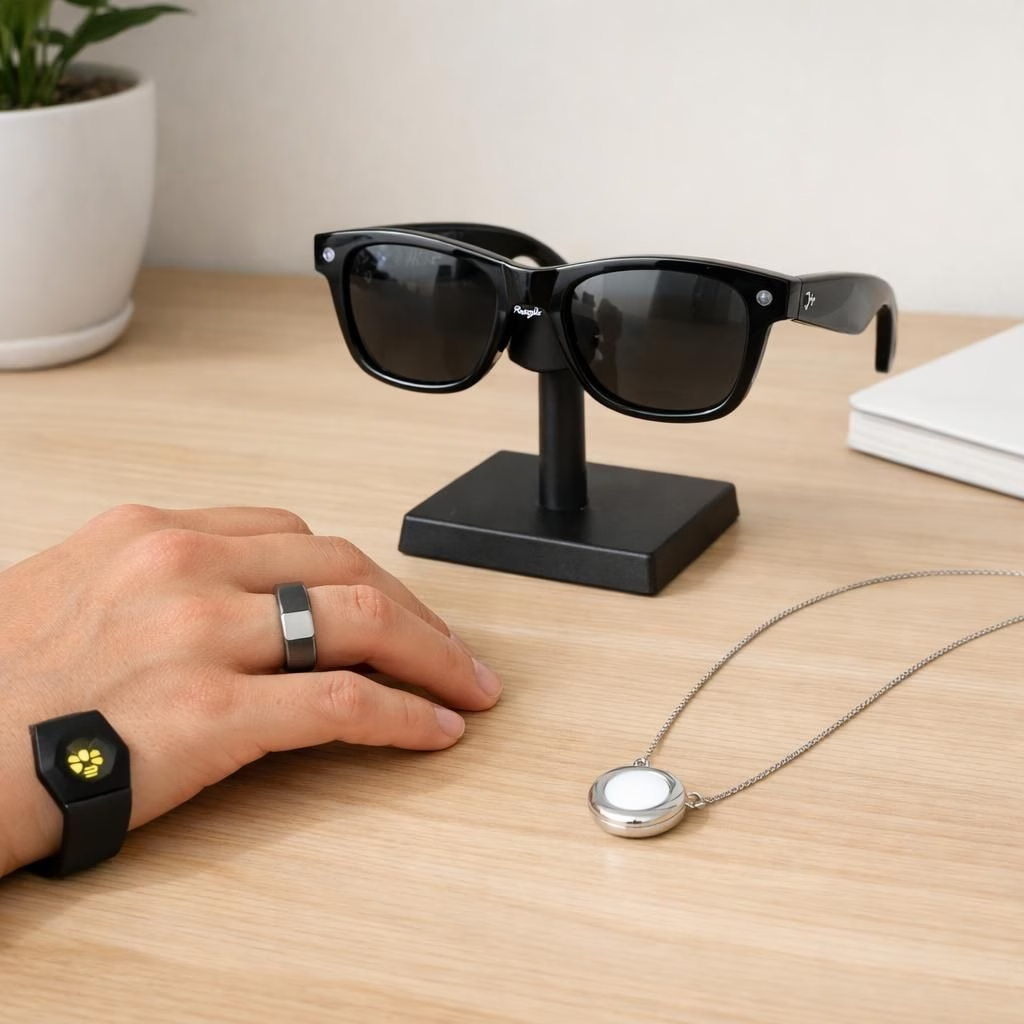
In 2026 I decided to put wearable AI to the test across four devices, asking a simple question: can smart wearables genuinely simplify work and life without turning privacy into daily cosplay?
Wearable AI and Privacy in 2026: A Pragmatic Look
We tested four devices: Amazon Bee bracelet, Ray-Ban Meta Gen 2 glasses, Oura Ring, and Omi necklace. Each promised productivity perks, yet the overlap in features meant fewer wins and more gadget clutter. I borrowed the Oura Ring, and the other three devices were provided by their makers for testing. The verdict: marginal gains, noticeable privacy frictions, and a wear habit that feels more burdensome than liberating.
The Oura Ring stood out as the most discreet option, a tiny sensor orchestra tucked on a finger. It requires near-constant wear for its sleep and activity insights, yet it stays out of sight enough to avoid turning your wrists into a billboard. Through a chatbot in the app, the so-called Oura Advisor helped me plan workouts and interpret the day’s activity. The ring has no physical buttons; interactions happen through the app, which summarizes life and sleep in friendly dashboards. The sleep score was the star, translating heart-rate patterns and blood oxygen vibes into a narrative of rest. Even without pointing a camera at anything, the Oura Ring felt like a quiet productivity assistant—subtle, polite, and mostly helpful.
As a wearable AI, I strapped on the Bee bracelet and the Omi necklace before my first coffee of the morning. The Bee is a compact black module on a rubber strap, with a single button to toggle a listening mode that can transcribe and summarize meetings and conversations across the day. In practice it offered valuable transcripts, but it also raised the privacy question: do I want a microphone strapped to my wrist all day, even if the company insists conversations are processed in real time and not stored? The Omi necklace sits against the chest in a simple, silver pendant. It is a bit louder visually than the Bee, signaling utilitarian intent more than fashion. Like the Bee, the Omi records and summarizes in-app, and it’s always listening unless you actively power it down. The result is redundancy—two microphones on different parts of the body—yet the user experience remains distinct enough to justify a closer look, at least for the curious and the brave.
The Meta Ray-Ban Gen 2 glasses, however, took the conversation to a more dramatic stage. Five microphones, a 12-megapixel camera, and two speakers are packed into Ray-Ban frames that look stylish enough to blend into a normal day. Meta claims eight hours of mixed-use battery life, with a chic charging case that feeds the device as you glide through the city. The glasses are genuinely cool, letting you wake the AI with a casual “Hey Meta” and then ask for lunch calorie estimates or plant identifications. The glasses carry a visible recording light, and the potential to capture people around you is real, prompting privacy concerns in everyday scenes.
All of this begs a broader question: when do these devices stop being helpful and start being a burden? The hardware could be powerful individually, but the real impact hides in the overlap. The Bee bracelet and the Omi necklace can both transcribe conversations, the Ray-Ban glasses capture moments you may or may not want shared, and the Oura Ring quietly watches your sleep and activity patterns. It’s easy to see a future where you own one or two essential wearables, not a dozen. Still, the promise of a hands-free assistant is seductive, even if the daily reality includes more charging cables than actual breakthroughs, and privacy trade-offs.
Practical Lessons: Wearable AI and Privacy Trade-offs
The trials highlighted several practical lessons about wearable AI and privacy trade-offs. First, the marginal productivity gains are real but modest. A well-timed transcription here and a helpful insight there can shave seconds off tasks, but the cumulative effect across a workday tends to plateau once you’ve captured the obvious items on your calendar or in your notes. Second, overlapping functionality creates clutter. When two devices can perform similar tasks, you’ll naturally question which one is the most reliable, which fails less often, and which design best fits your day. The result is a cognitive tax that can negate the convenience these gadgets promise. Third, privacy concerns are not distant. They show up in daylight moments and quiet corners alike. The indicator lights are helpful in theory, but in practice, they can’t guarantee that conversations won’t drift into the wrong ears, or that data won’t be reviewed by contractors or third parties under the guise of product improvement.
For a structured approach to managing these issues, see the privacy framework from NIST.
- Start with one device that replaces a few key tasks, then extend carefully as needed.
- Check consent and data-sharing controls before you buy.
- Evaluate battery life, charging needs, and interoperability with your main tools.
- Keep a simple data-retention plan; know how long data stays in apps and who can access it.
The core takeaway remains practical: you can pick one or two devices that truly solve a pain point, then rely on your existing tools for the rest. You don’t need a gadget chorus to stay productive. And yes, you can still feel a bit like a modern James Bond—just with one or two well-chosen wearables and honest trade-offs.
Final Thoughts: A selective approach to wearable AI
If you’re curious about the promise of wearable AI, you’re not alone. The tech has real potential to reduce busywork when used thoughtfully. The trick is to choose one device that replaces a few key tasks, then couple it with your regular tools rather than piling on every new gadget. That approach keeps your pockets lighter, your brain less crowded, and privacy a touch more protected. And yes, you can still feel a bit like a modern James Bond while doing so—just with fewer gadgets and more honest trade-offs.
Curious to hear how you balance privacy in daily life. Share your thoughts in the comments below.