

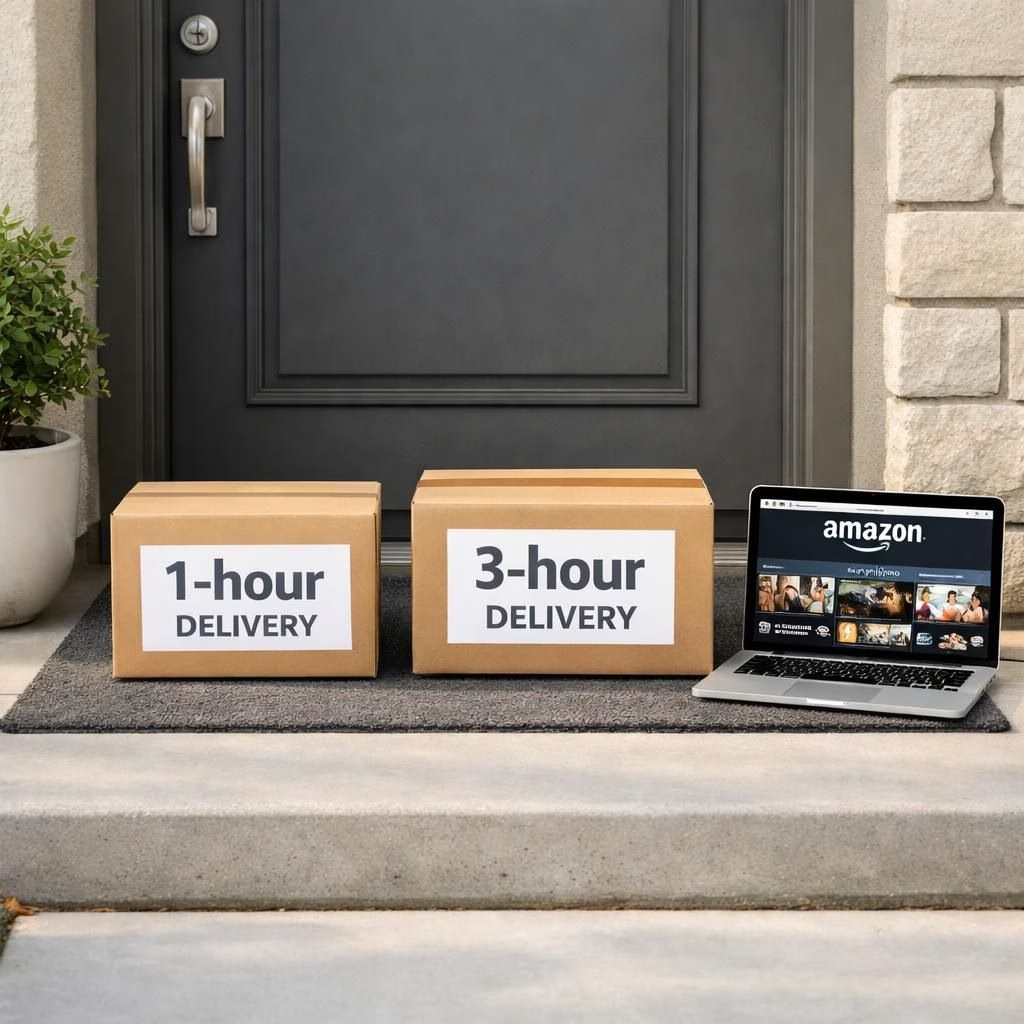
Delivery and Amazon have quietly become twin engines of modern shopping, turning speed and reliability into daily expectations. In 2026, Amazon rolls out 1-hour and 3-hour delivery to bring the aisles closer to your door, without the theater of garage lineups. You place the order, you vibe with the clock, and you wait for the knock that says you were right about conveniences becoming habits. The plan preserves the vast selection and everyday low prices Amazon is known for, while giving busy households a fresh rhythm for errands and impulse purchases alike.
delivery acceleration: 1-hour and 3-hour delivery explained
These new options extend the Prime universe with practical speed. The 1-hour service targets major urban cores such as Los Angeles, Chicago, and Washington, D.C., plus smaller cities like Des Moines, Boise, and American Fork. The 3-hour option now covers more than 2,000 cities and towns, including surrounding suburbs like Cornwall, Harrah, and Arabi. Availability runs seven days a week, and Amazon plans to expand to even more areas in the months ahead.
What does this mean for everyday life? It means fewer late-night runs to rush stores and more time for the things you actually enjoy. Pantry staples, cleaning supplies, health and beauty items, OTC medications, electronics, toys, clothing, and home and garden gear are all within a couple of taps from your doorstep. The goal is simple: save you time while preserving the familiar combination of vast selection and reliable pricing you expect from Prime.
Behind the scenes, this is not magic trickery. It is a carefully choreographed extension of Amazon‘s delivery network, built on decades of operational know-how. The company promotes speed without sacrificing reliability, leveraging its existing fleet, fulfillment centers, and data-driven routing to shave minutes off the delivery window. The result is a smoother shopping tempo that can adapt to your weekly rhythm instead of demanding you rearrange your life around a rigid schedule.
Amazon delivery magic in 2026: speed, value, and choice
Prime members gain tangible value from the new options. The current pricing structure announced by Amazon includes a discounted delivery fee of $9.99 for 1-hour delivery and $4.99 for 3-hour delivery for Prime members. Non-Prime customers face higher fees: $19.99 for 1-hour delivery and $14.99 for 3-hour delivery. It’s a straightforward calculation: Prime members trade a smaller fee for speed, while non-members can still access the service with a higher price tag. Prime members can continue to take advantage of Amazon’s standard Same-Day Delivery option, which remains free on qualifying orders.
In practice, this sits within a broader Prime delivery portfolio that already includes two-day shipping, Next-Day Delivery, and Same-Day Delivery. The new options sit alongside these established services, giving households a menu of speed and cost choices. For shoppers, it’s less about “which service is fastest” and more about “which service makes sense today.” If you’re hosting a last-minute party, you may opt for 1-hour delivery. If you’re stocking up for the week, 3-hour delivery could be the smarter move. The key is that speed is a choice, not a guess.
From a consumer perspective, the pricing strategy aligns with a trend toward greater transparency. Prime members get a discount that makes the 1-hour option appealing for urgent orders, while the 3-hour delivery provides a middle ground between speed and value. The non-Prime pricing acknowledges that some shoppers will prefer to access the service without committing to Prime, while still enjoying a faster option than traditional delivery windows. And yes, the same-day option remains a familiar, cost-free perk for qualifying orders, reinforcing the long-standing appeal of Prime.
How delivery works in practice
In practical terms, customers can check eligibility for 1-hour or 3-hour delivery by visiting the official site. The company’s press materials emphasize the expansive reach of the network, noting that many customers will soon see these new windows pop up in their locales. The real-world experience should feel like a well-timed concierge service—one that arrives fast, but with a human touch in the form of accurate ETA updates and dependable handoffs.
From a logistics standpoint, the push relies on the same networked infrastructure that powers Prime’s other options. Retailers synchronize with fulfillment centers, drivers, and last-mile partners to ensure inventory accuracy and on-time arrivals. The underlying message is consistent: speed is optimized, reliability is reinforced, and price remains predictable for Amazon Prime members while still accessible to non-members.
What this means for shoppers and households
For many households, the most tangible benefit is a more flexible daily routine. The ability to source essentials in 1 hour or 3 hours can shift shopping from a weekly chore to a respond-to-need activity. It also encourages smarter purchasing choices—think fewer urgent trips to the store and more thoughtful stays at home with the confidence that restocking is just a tap away.
Businesses and teams can also benefit indirectly. Family organizers can time orders to coincide with meal prep or cleaning cycles. Remote workers gain a reliable window for deliveries during the workday. Even the casual shopper gets a moment of delight when the delivery arrives as promised, turning what used to be a routine errand into a small, reliable win.
One practical tip: verify area coverage before planning your first big order. The 1-hour option is typically more limited in reach than the open-ended 3-hour service. If you live in a mid-size city or a suburban pocket, you’ll likely find coverage expanding in the coming months. And if you’re curious about how to optimize costs, keep an eye on Prime membership benefits and ongoing promotional offers tied to delivery windows.
For readers who care about the user experience, the interface remains straightforward. You can browse categories, add items to cart, and select preferred delivery windows during checkout. The process retains the familiar speed and simplicity that many shoppers already rely on. The goal is not to complicate your shopping but to help you tailor it to your own schedule and budget.
In short, these updates reflect a broader shift toward on-demand convenience. The 1-hour and 3-hour windows are not just speed boosts; they’re adapters for modern life, designed to fit into the cadence of a 2026 household that values time as a resource just as much as price and selection.
As with any big rollout, there are potential trade-offs to consider, including delivery footprint, packaging considerations, and the ongoing balance between speed and sustainability. The industry will likely keep refining balance points as it learns from real-world usage. But the core promise remains clear: faster delivery is here, and it’s designed to work in harmony with Amazon, not in opposition to it.
Two decades after Prime first launched, the program continues to evolve without losing sight of its core appeal: vast selection, everyday low prices, and a delivery network that keeps getting faster when we need it most.
References: Original source article from Times of India: Original article on Amazon’s delivery innovations.
External context and further reading
We’d love to hear your thoughts—please share in the comments below.