

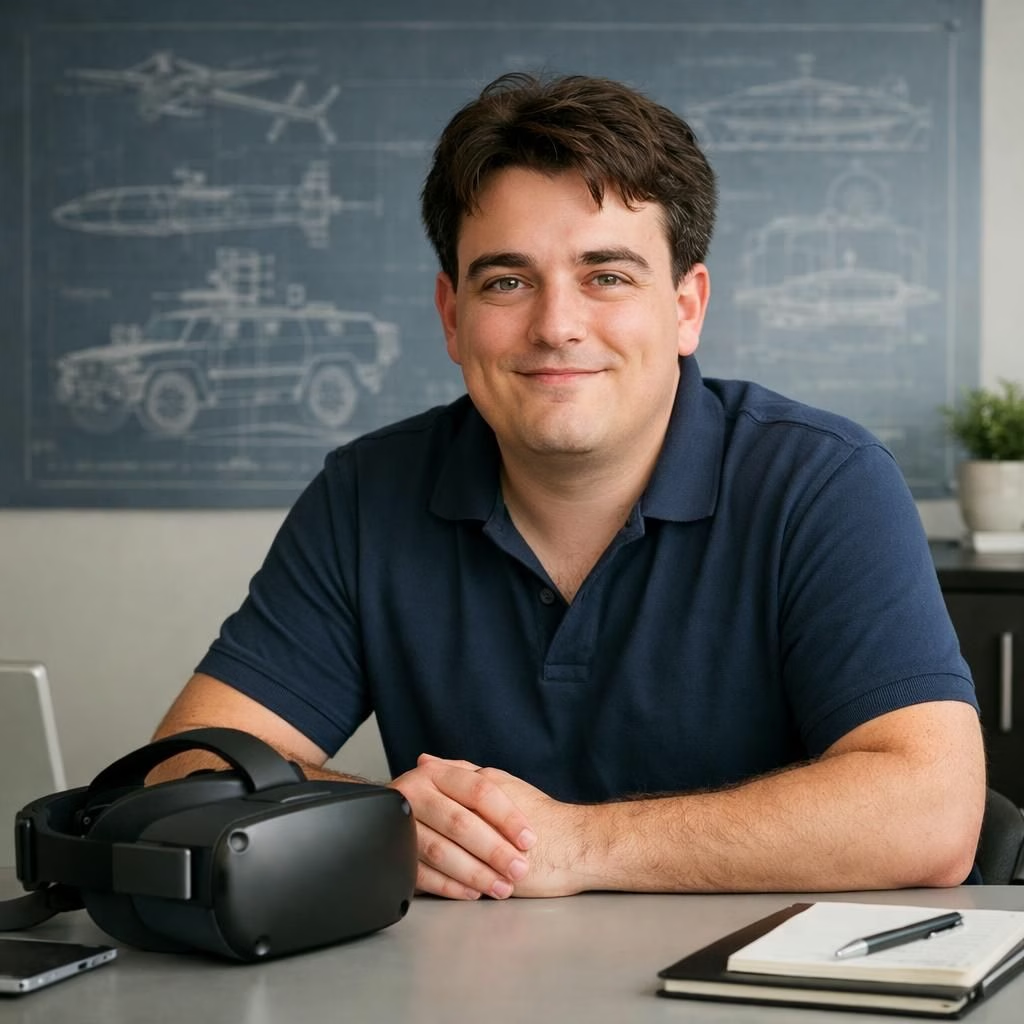
From a precocious 21-year-old at the dawn of consumer VR, to the founder steering a Defense-tech company, Palmer Luckey’s story reads like a parable about hype and discipline. Oculus VR sparked a blockbuster exit that changed a young founder’s value overnight. In March 2014, Meta bought the startup for about $2 billion, turning Luckey into one of the era’s youngest self-made billionaires. Meta’s then-CEO Mark Zuckerberg praised Oculus as a platform that could redefine how we work, play, and communicate.
Three years later, Luckey faced a reckoning: he was fired due to political contributions that stirred controversy on the fringes of the internet. He acknowledged the split as a mix of misinterpretation and timing, then pivoted with his usual efficiency. The moment reads like a cautionary tale about public perception, but the substance is richer: Luckey used the pause to reimagine his impact beyond branding.
Luckey launched Anduril Industries in 2017, a security and Defense-tech startup designed to tackle large, slow-moving government programs. The shift from consumer hardware to national-scale defense was real and deliberate. Anduril quickly won contracts with U.S. defense agencies, proving that lessons from a fast-moving consumer market—speed, iteration, and ruthless focus—could translate into procurement-ready, mission-oriented products. The pivot wasn’t about abandoning VR; it was about matching pace to purpose.
VR momentum, market reality, and a pivot toward Defense-tech
Meta’s praise was sincere and strategic. Zuckerberg described Luckey as a free-thinker with the ability to imagine new platforms, even as opinions about VR evolved.
The pivot to Defense-tech didn’t erase the VR dream. It reframed it as a broader effort to apply technology at scale while protecting national interests.
VR momentum matters for startups
Luckey’s arc shows that the momentum in VR can seed long-term opportunities, even when consumer dynamics change. The lesson for founders is clear: hype must be balanced with a practical plan that points to real-world impact.
Defense-tech outcomes and expectations
In public discourse, Luckey argues that cost discipline and patient pacing in Defense-tech projects are essential. The Defense-tech approach emphasizes reliability, security clearances, and long hardware lead times, which can clash with startup speed. The result is a calculation that rewards long-term resilience over quick wins.
Practical takeaways for founders
- Balance hype with a credible plan that scales beyond a single product.
- Design incentives that align speed with accountability.
- Prepare for long procurement cycles by building modular, upgradeable systems.
- Keep core technical progress visible to the broader ecosystem and independent developers.
FAQ
- What happened to Luckey after the Oculus sale? After the sale, he pursued new ventures and eventually founded Anduril, a defense-tech company focused on software-enabled defense systems.
- Why pivot to defense-tech? Luckey has argued that certain problems require government-scale capabilities and patient, standards-driven procurement cycles that differ from consumer markets.
- How does VR fit into the defense-tech pivot? The core technical competencies—human-computer interfaces, real-time rendering, and scalable hardware—translate to defense contexts when paired with rigorous security and procurement practices.
- Is Luckey still connected to Meta? He left Meta years ago and has since focused on his own ventures and public policy discussions around technology and national security.
Luckey’s ongoing work with Anduril demonstrates how a founder can honor the spirit of innovation while navigating government work. The company’s growing portfolio and defense contracts reflect a maturation of the VR impulse into a robust, real-world impact engine—one that keeps the “tech” in technology by solving consequential problems. The journey shows that bold bets can pay off in multiple forms: consumer delight, national security, and a healthier tech ecosystem.
For entrepreneurs, policymakers, and curious readers, Luckey’s narrative offers a blueprint: pursue ambitious visions, accept public scrutiny, and stay flexible enough to discover new venues where core capabilities can shine. The world of tech isn’t linear, but strong stories share a throughline: curiosity, resilience, and a readiness to redefine success. VR remains a vibrant chapter, while Defense-tech offers a meaningful way to apply that curiosity toward large-scale challenges in 2026.
Original article: Thank you to the original source for the material. If you’d like to explore the full context, you can read the original piece here: Times of India (technology) article.
We’d love to hear your perspective on Luckey’s pivot and the future of VR within Defense-tech. Share your thoughts in the comments and join the conversation.