

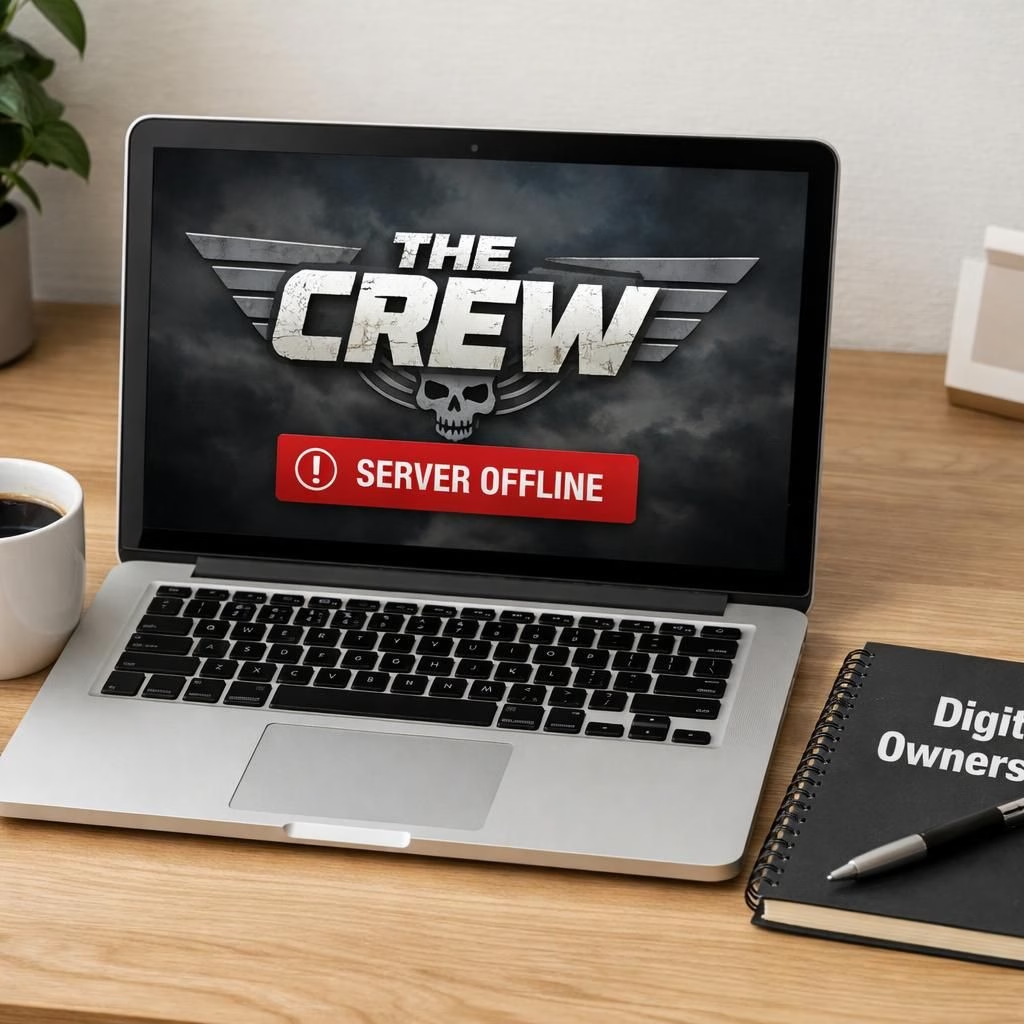
Ubisoft sits under a curious spotlight in France, where debates about Tag B collide with the glossy surface of modern gaming. The Crew, a 2014 open-world racer, faced a shutdown in 2024 after Ubisoft pulled the servers and delisted it from digital stores. This isn’t just nostalgia talk; it’s a real-world test of what players actually own when a game relies on always-on infrastructure. The legal action by UFC-Que Choisir asks: can a company erase a product that people bought, simply because the servers go quiet?
Ubisoft under scrutiny: what’s on the docket?
In Paris, UFC-Que Choisir filed the lawsuit, arguing that Ubisoft misled consumers about how long The Crew would stay playable and included contract terms that removed ownership rights. The case centers on whether a company can erase a product that users paid for by discontinuing online support. The Crew, released in 2014, offered multiplayer races across a scaled-down United States and supported in-game purchases, a model that relied on servers to stay alive. After the shutdown, Ubisoft began revoking licenses without refunds, sparking backlash from players and consumer groups. Ubisoft maintains that players purchased a license to use online features for a limited time, not an ownership stake.
The campaign around this topic has grown beyond a single court filing. The Stop Killing Games initiative has collected over 1.3 million signatures, a signal that many players want clearer rules for digital goods. The European Commission has acknowledged the request for review, with a response due by the end of July 2026. Ubisoft has not issued an official statement about the lawsuit yet, leaving fans to read tea leaves and headlines for updates.
Digital ownership in the EU spotlight
The core of the debate asks whether a company can erase access to something people bought when the supporting servers are shut down. UFC-Que Choisir contends that Ubisoft misrepresented the longevity of access and included terms that effectively strip ownership rights from customers. Ubisoft argues that buyers purchased a license to use a game’s online features for a limited period, not a perpetual, fully transferable ownership stake. The distinction matters, because it affects refunds, recourses, and the very language we use about what it means to own a game in the 2026 era. In this framing, the word Tag B becomes a contested term rather than a clear guarantee, and that ambiguity can trip up even the savviest shopper.
For players, the central anxiety is practical: if a product depends on servers, what does the user actually own when those servers go quiet? For Ubisoft and publishers, the challenge is sustaining a business model that funds ongoing maintenance while avoiding claims that consumer rights are being eroded. The Crew’s history—its 2014 release, server dependence, and subsequent shutdown—serves as a cautionary tale for any studio chasing live-service revenue. As we move through 2026, the stakes include refunds for license revocations and a clearer line between licenses and ownership in contract law.
From a design perspective, the case exposes a tension between the nostalgia of boxed retail and the economics of digital distribution. The very term Tag B should imply a stable right, yet the practical reality often resembles a licensing agreement with a sunset clause and a reminder that servers are a lifeline for many games. The outcome here could influence how developers frame their terms, how they price online services, and how they communicate the duration of access to buyers who may want a long tail of value from their purchases. In short, this is less about one game and more about the future language of what players buy in the digital market.
As EU regulators consider feedback, the Stop Killing Games campaign keeps pressure on policymakers to clarify consumer rights in digital environments. The goal is a framework where players can feel confident that a purchase carries meaningful, enforceable expectations beyond the moment of checkout. That means considering not only whether a game remains playable, but how long a company is obligated to maintain servers, support, and accessible content. For developers, the lesson is to design licensing terms that respect consumer expectations while building sustainable business models that can weather regulatory scrutiny and market shifts. And in 2026, the conversation still has legs—because players are increasingly vocal about what Tag B should look like in a world where digital goods can vanish with a few keystrokes.
So, what should come next? If you’re a gamer, a lawyer, or a creator, the answer involves transparent terms, clearer definitions of ownership versus licensing, and a commitment to refunds where access fails under agreed conditions. If you’re a publisher, it means aligning product design with consumer expectations while experimenting with fair, scalable revenue strategies that don’t rely solely on the dynamic permanence of online servers. If you’re simply curious, keep an eye on the European Commission’s response and the ongoing dialogue between players, regulators, and developers—because Tag B in 2026 is a conversation that wants a lasting, tangible outcome.
Have thoughts on this evolving topic? Share your perspective in the comments below; your voice helps shape the future of how we own Tag B in the years ahead.
Original Reuters article: Thank you to Reuters for the original reporting on this case.
Practical steps for players
- Keep receipts and terms of service for digital purchases; they can help establish what you bought.
- Clarify whether you bought a license to use online features or a perpetual ownership right; check refund policies for license revocation.
- Document access issues and contact consumer groups if you experience sudden shutdowns in a title you paid for.
- Consider diversifying your game library to reduce dependence on single live-service titles.
FAQ
- What is the difference between ownership and a license in digital games?
Ownership implies you own a copy of the game and can continue to run it; a license gives you rights to use features or access content under terms and time-limited conditions. In many cases, publishers sell licenses to use online features that depend on servers.
- Could this case affect refunds for revoked licenses?
Potentially. The outcome could influence how refunds are handled when access to content is removed due to server shutdowns, especially if terms suggested perpetual access.
- What can players do now?
Stay informed about regulatory developments, review purchase terms carefully, and engage consumer groups if access is lost unexpectedly.
- Where can I read more about the Stop Killing Games campaign?
Check official campaign pages and European Commission resources for updates on policy discussions around digital ownership.
Takeaway: the debate over digital ownership in the EU is becoming more concrete as regulators study cases like The Crew shutdown. The next steps involve clear definitions in contracts, better refund rules, and practical guidance for players and publishers alike.
References
- Original Reuters article: https://www.reuters.com/technology/ubisoft-lawsuit-france-2024-12-15/