

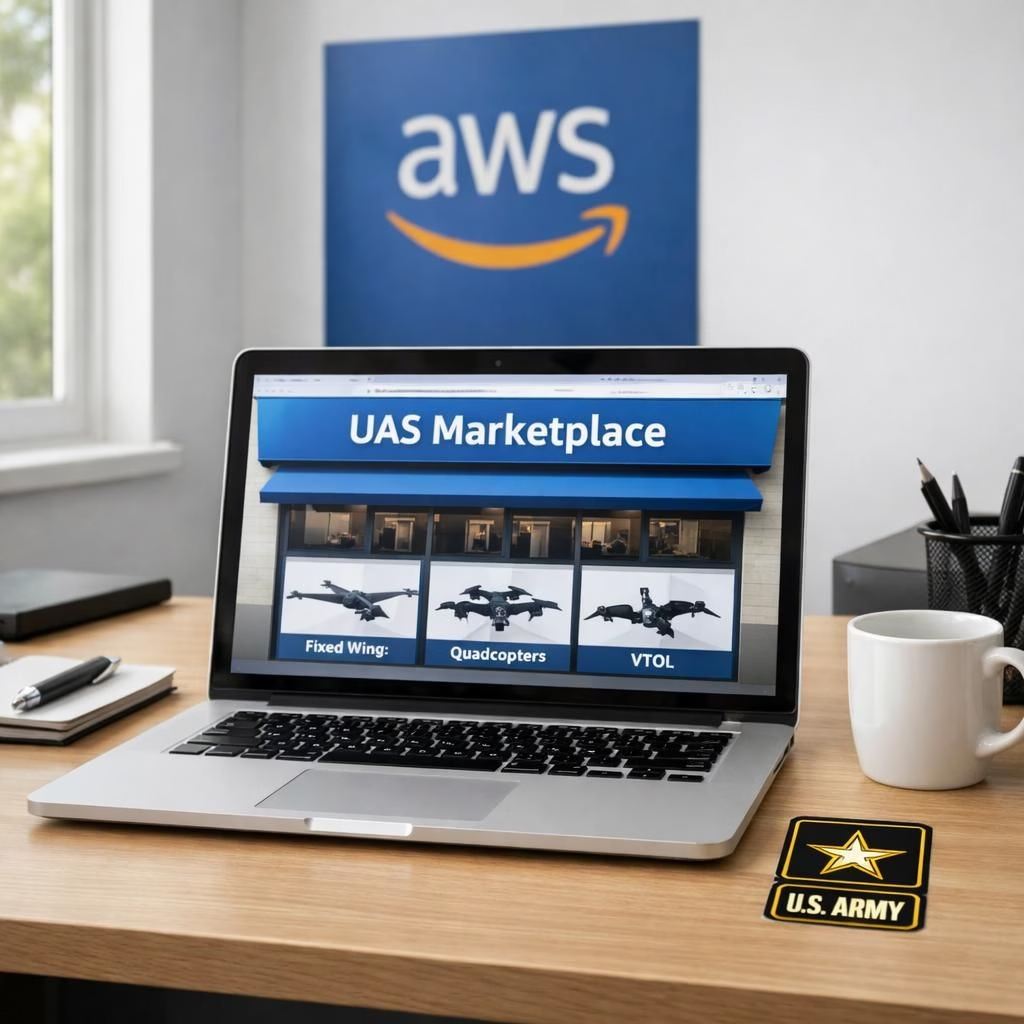
In 2026, Amazon’s AWS is helping the US Army and its allies build an online UAS Marketplace that makes drone procurement smoother and speedier. This is no dusty catalog; it’s a pragmatic upgrade designed to cut through red tape and widen the supplier base so soldiers can access the latest unmanned tech without a scavenger hunt through legacy contracts.
UAS Marketplace: Streamlining Drone Procurement for 2026
The project rests on a simple premise: speed, competition, and clarity.
UAS Marketplace consolidates vetted drone systems into one storefront, so US Army units, government partners, and allied nations can browse, compare, and buy with a few clicks.
The platform makes it easier to assess flight times, payloads, and interoperability with existing gear.
By feeding review data back to vendors, it nudges suppliers to improve performance, reduce costs, and deliver capability at scale. Fortune reports that the Army Enterprise Cloud Management Agency coordinates governance. AWS provides the secure, scalable cloud backbone.
The result is a marketplace that feels practical, and behaves like a modern e-commerce site rather than a maze of outdated procurement steps.
UAS Marketplace as a Catalyst for Change
The old weapons procurement path often invited delay, secrecy, and cost.
The new path leverages AWS to host data, securely share specifications, and enable collaborative evaluation across partners.
While the system promises transparency, it also acknowledges risks: cybersecurity, supplier vetting, and ensuring interoperability.
Still, the shift invites more players into the defense-industrial base and emphasizes speed without sacrificing oversight.
The Army notes that the marketplace does not replace traditional programs; it augments them by offering more options to accelerate decision cycles and highlight value for money.
2026 is evolving into a year where digital commerce meets national security, with the UAS Marketplace acting as a central bridge.
As a reminder, AWS remains the central cloud backbone for this initiative.
Special thanks to Fortune for coverage of this initiative; original article: Fortune article.
What do you think about a marketplace approach to defense procurement? Share your thoughts in the comments below.
How the UAS Marketplace Works in Practice
- Browse vetted drone systems in a single storefront and compare key specs such as flight time, payload, and interoperability.
- Submit feedback and read vendor responses to drive ongoing improvement and value for money.
- Place a purchase through the platform and track fulfillment under Army governance and the AWS cloud controls.
- Rely on transparent data sharing and standardized evaluation to shorten the procurement cycle.
Risks, oversight, and what’s next
While the marketplace promises speed and broader participation, it also raises concerns about cybersecurity, supplier vetting, and ensuring cross-platform compatibility. The Army emphasizes that this is augmentation, not a replacement for traditional programs. The risk-management approach includes ongoing audits, standardized data formats, and continuous monitoring over the AWS backbone.
FAQ
- What is the UAS Marketplace?
- The UAS Marketplace is a cloud-powered, single storefront that consolidates vetted drone systems for evaluation, comparison, and procurement by the Army, partners, and allied nations.
- What role does AWS play?
- It provides the secure, scalable cloud backbone that enables data sharing, interoperability checks, and collaboration with suppliers.
- Is this replacing existing programs?
- No. It augments traditional programs by expanding options, speeding decision cycles, and promoting competition while preserving oversight.
- What are the main risks?
- Key concerns include cybersecurity, vetting of suppliers, and ensuring interoperability across platforms.
Conclusion: a pragmatic bridge between digital commerce and defense
As procurement and national security increasingly intersect, the UAS Marketplace stands as a practical test bed for faster capability delivery and wider industry participation. For soldiers, allies, and partners, it offers a clearer path from concept to capability, with governance and cloud security built in from the start. The broader defense-industrial base benefits from greater visibility and competition, while the Army maintains oversight through established programs and funding channels.