

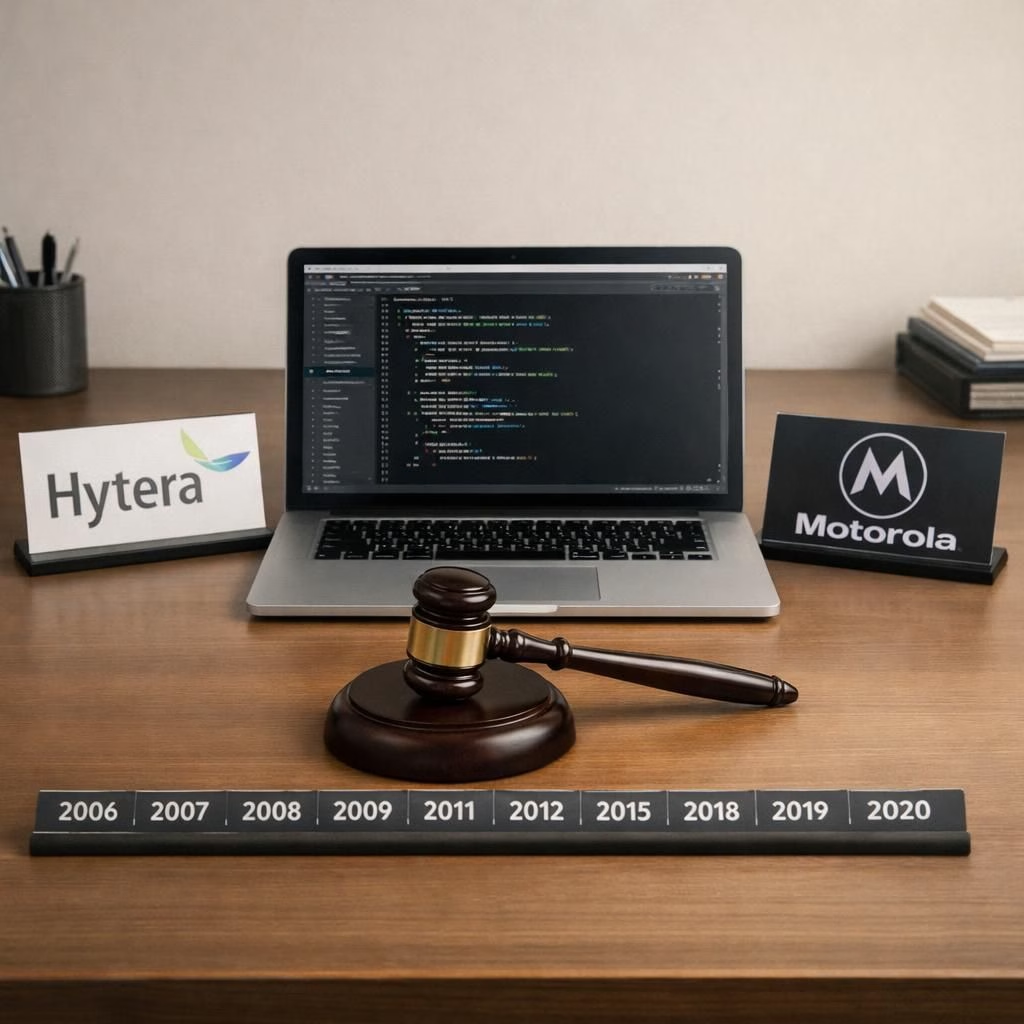
A sharp, slightly amused look at the Hytera–Motorola case offers more than courtroom drama. The core truth is simple: trade secrets and cybersecurity matter in the real world, not just on slides. The story begins in 2006 and extends to 2026 as we examine how organizations guard assets and avoid drama.
In a tightly run courtroom narrative, Hytera did more than bend a policy. It recruited Motorola engineers, coaxed them to share proprietary information, and used stolen source code to craft competing digital mobile radio products through 2020. A judge fined Hytera $50 million and sentenced the company to a five-year probation with an active compliance program. Motorola faced profits that dipped by about $214 million, though a civil judgment helped offset those losses. The takeaway is clear: the cost of misappropriating trade secrets is meaningful and lasting.
Hytera’s guilty plea in the Northern District of Illinois set the tone for enforcement. The U.S. Attorney, the FBI, and the DOJ’s National Security Division all helped unravel the scheme. Seven Hytera employees were indicted in 2021; one, Gee Siong Ko, pleaded guilty in 2022 and agreed to cooperate with investigators. That cooperation sharpened the focus on governance gaps and security lapses, including cybersecurity controls.
For readers seeking practical wisdom, the lesson is simple: robust compliance isn’t a paperwork exercise. It is a living program that must align with day-to-day security practices. The probation conditions require ongoing reporting and an effective compliance framework. In today’s security climate, that means regular risk assessments, clear controls, audit trails, and a culture that resists shortcuts. This is not about fear of punishment so much as confidence that a company can protect its IP and customer trust.
Trade Secrets: Compliance Takeaways for 2026
From a governance perspective, this case shows that trade secrets survive only when people, processes, and technology work in harmony. HR onboarding should include reminders that access to sensitive code is role-based and time-limited. Network controls must prevent lateral movement, and code repositories should enforce least privilege and rigorous code reviews. A reliable export-control regime helps stop sensitive material from drifting into the wrong hands. The Department of Justice and the FBI’s vigilance underscore the consequences when those controls fail.
On the technology side, the lesson is to design security that scales. Feature parity with a rival is not a license to copy. Invest in secure software development, robust code provenance, and proactive monitoring. The aim is a competitive edge that is lawful, sustainable, and not brittle—one that can resist backchannels and reverse engineering. This aligns with 2026 security best practices: threat modeling, secret management, and continuous improvement.
Cybersecurity Mindset for 2026
Stories like this remind security teams that culture is as important as tools. A strong security culture respects cybersecurity and data integrity. Training should stick, incidents should be simulated realistically, and clear escalation paths must exist when something looks off. Leadership should model good behavior, from limiting access to thoughtful code reviews. The goal is to prevent headlines and to protect customers who rely on dependable, safe technology.
The case also invites a practical mindset shift: treat confidentiality as a business advantage, not a burden. When teams log who accessed what and when, and where code originated, the organization gains a foundation that supports trust and accountability. It’s not paranoia; it’s resilience. By 2026, many firms are embracing this approach as standard practice, not a last-minute fix after a bad incident.
As you read, consider how your own organization guards trade secrets and assets. The Hytera–Motorola saga isn’t a distant corporate thriller; it’s a real-world reminder that protecting IP requires coordinated effort—across people, processes, and technology. And yes, it can be done with a sense of humor and a steady hand, avoiding headlines that wake up a board at 3 a.m.
Original article attribution: Thanks to the Northern District of Illinois U.S. Attorney’s Office, the FBI Chicago Field Office, and the DOJ’s National Security Division for the reporting and case materials that informed this article. Original reporting is gratefully acknowledged: https://www.justice.gov/usao-ndil
If you enjoyed this analysis, share your thoughts in the comments and join the discussion about protecting intellectual property in 2026. Special thanks to the original reporting team for the foundational material and insights. For related reading, see IMEC goes digital: AI and smart infrastructure, and Motorola RAM shortage and pricing in a global supply chain.
Practical steps for your organization
- Classify assets and enforce role-based access to trade secrets so sensitive code isn’t exposed to the wrong people.
- Adopt cybersecurity controls that prevent lateral movement and require least-privilege access to code repositories.
- Implement robust export controls to keep sensitive material from drifting outside the company.
- Maintain audit trails so who accessed what, when, and where the code originated is always visible to leadership.
- Build a culture that treats incident simulations as learning opportunities, not as a box-ticking exercise in compliance.
- Incorporate secure software development and continuous code provenance checks as standard practice.
Frequently asked questions
- What is the core takeaway from the Hytera–Motorola case? The essentials are strong governance around trade secrets and disciplined cybersecurity practices to protect IP and customer trust.
- How can organizations apply this in 2026? Build an integrated program blending people, process, and technology: role-based access, code provenance, export controls, and ongoing risk assessments.
- Why are compliance and culture linked? A living program defaults to daily habits—regular training, real incident simulations, and leadership that models good security behavior.
- Where can I read more on related infrastructure security? Check out the IMEC goes digital article and the Motorola RAM-availability discussion linked above for broader context.
References
- Original source: Times of India. https://timesofindia.indiatimes.com/technology/tech-news/chinese-telecom-company-fined-50-million-for-conspiring-to-steal-technology-from-american-company-by-hiring-its-engineers-to-steal-information/articleshow/129578264.cms
Additional external resources: NIST Cybersecurity Framework | CISA Cybersecurity Best Practices.