

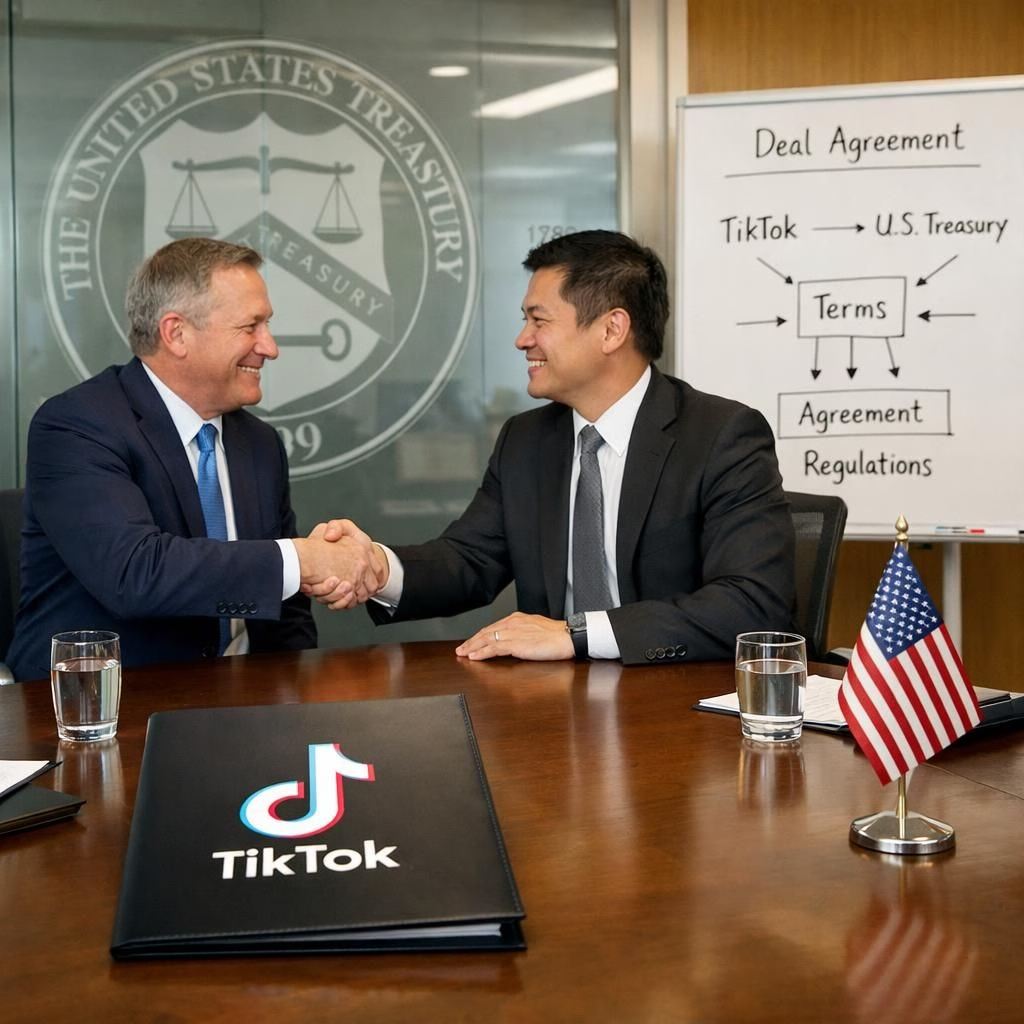
2026 opens with a headline that reads like a techno-thriller, yet the scene is real. TikTok and Security share the spotlight as the US government brokers a roughly $10 billion arrangement. The deal aims to keep the app available in the United States while nudging ByteDance toward reduced ownership and stronger American governance.
TikTok Security in 2026: A bright take on a $10B deal
On the ledger side, the arrangement features a sizeable fee paid to the US Treasury. Analysts describe the payment as unusual, but proponents say it blends incentives, national interest, and a signal of seriousness about Security. Investors aligned with the Trump administration will take control of TikTok’s US unit. ByteDance will retain a minority stake and license to the algorithm for American users. The arrangement keeps TikTok operating in the US while tightening governance and oversight to address concerns about data flows and privacy.
There’s more texture to the deal. The new US entity will share profits with ByteDance, which licensed its algorithm to the venture and retains nearly 20% ownership. Some insiders value the venture around $14 billion, though analysts debate whether that figure reflects regulatory risk, consumer sentiment, or licensing terms.
From a fee perspective, advisory bills for deals of this size aren’t typical. Bankers typically take less than 1% of deal value, and the WSJ comparisons highlight how public policy and national security axes can alter the math. The practical upshot is a governance framework that seeks to balance profitability with public accountability, a combination policymakers want to see in high-stakes tech deals.
Payments have already begun at deal close, with more expected as the framework unfolds. In short, this is a staged arrangement designed to evolve with regulatory expectations and market realities.
In public statements, officials framed the fee as justified by the government’s role in keeping TikTok operational and in handling negotiations with China. While some lawmakers raised concerns about security risks tied to a Chinese parent company, the framework is pitched as a middle path that preserves access while strengthening governance.
Beyond this deal, the administration has signaled a broader playbook: Security considerations can be addressed through equity stakes, licensing arrangements, and governance enhancements that align incentives with public interests.
Security governance: A modern governance fable
Viewed from the numbers and narratives, the TikTok deal looks like a governance fable where policy, business, and technology meet. The government acts as facilitator; investors provide capital and discipline; ByteDance offers continuity via the licensed algorithm and a minority stake.
TikTok ownership and licensing: A practical lens
For users and investors, the arrangement offers continuity with stronger guardrails. It suggests a path for other cross-border platforms: licensing, staged investment, and governance tweaks that reassure regulators without stifling innovation.
Practical takeaways for users and startups
- Users can expect continued access with enhanced data controls and oversight.
- Startups may view licensing and governance as viable alternatives to full acquisitions.
- Investors may weigh governance terms as part of deal value, not just equity stakes.
- Regulators may pursue similar safeguards in high-stakes tech deals.
FAQ
- What is the main purpose of this deal? To keep TikTok available in the US while addressing security and data concerns through ownership reshaping and enhanced licensing.
- Who benefits most from the framework? Investors, the government, and TikTok users gain continuity and oversight, while ByteDance retains a minority stake and licensing rights.
- Will this set a template for other tech deals? It could, demonstrating a blended approach of equity, licensing, and governance rather than a straight sale.
In practice, the framework aims to be pragmatic and scalable, not a fleeting policy experiment. If successful, it could inform how other cross-border platforms handle data, ownership, and national security concerns.
Original article attribution and gratitude: Acknowledging the Wall Street Journal for the original reporting and insights on the TikTok deal framework. Original article: Wall Street Journal – TikTok deal coverage. Thank you for the foundational reporting that informed this rewrite.
Have thoughts or questions about this TikTok Security framework? I’d love to hear your perspective in the comments below.
Thank you for engaging with this analysis. If you found it helpful, feel free to share with friends and colleagues who enjoy policy-minded tech discussions.
References
External sources: Wall Street Journal coverage, Reuters coverage.