

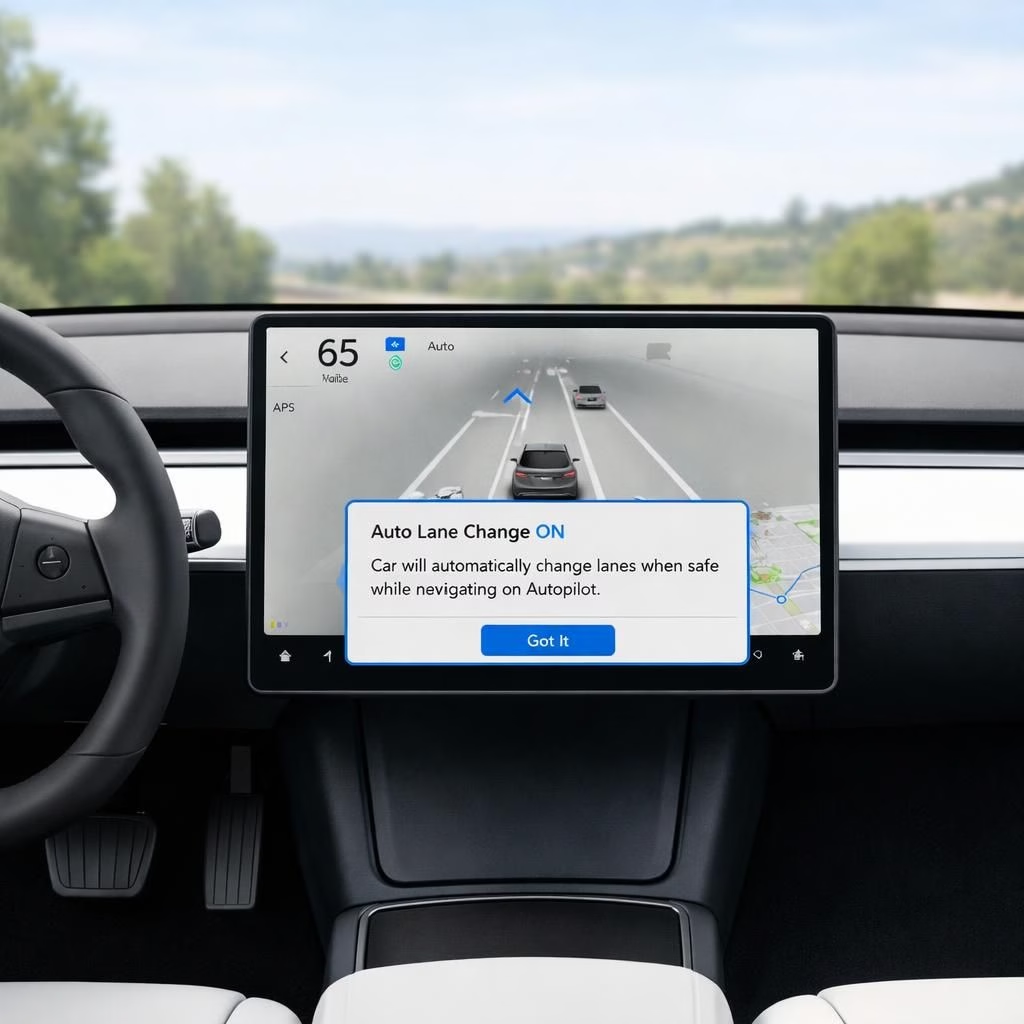
In the latest OTA push, Model Y is gaining a brilliant new driving feature from the automaker, and yes, the headline is as enthusiastic as the feature deserves. The automaker has blended safety, efficiency, and a touch of whimsy into a package that aims to be your calm co pilot. If you own a Model Y, you may notice the new driving feature arrive as a software toggle, with a gentle ping that signals the car is thinking ahead rather than just thinking at you. In short, this is the kind of upgrade that makes the morning commute feel like a small victory lap, especially for enthusiasts who like to argue about software updates with their coffee.
The feature enhances adaptive cruise control with smoother acceleration and deceleration curves for Model Y and similar vehicles, reducing abrupt changes that annoy the back seat or the dog. The car analyzes lane markings, road curvature, and traffic patterns in real time, using radar, cameras, and the computer’s neural net to decide when to nudge the steering wheel or hold a steady path. You still have full control; the system is designed to assist, not override. In practice that means fewer micro corrections from the driver and fewer white knuckles on a long highway run.
One practical improvement is the way the Model Y negotiates curves. Rather than waiting for you to press the turn signal, the feature anticipates a bend and preloads the steering responsiveness. If the road gets slick, the system reduces aggressiveness slightly while keeping the car in its lane. The result is a softer, more confident cornering feel that does not surprise your passenger. It also reduces tire scrub and energy use, which is a nice bonus for daily range consciousness. Tesla does not claim magic; they claim a smarter routine that makes the physics of driving a little less dramatic.
Why the Tesla Model Y Driving Feature Shines
From the software side, the update improves reliability and user experience. It uses redundant sensors so a single camera glitch does not derail benefits. The driving feature can switch modes depending on speed and weather; in rain it reduces sensitivity to avoid sudden lane edits. At higher speeds the system stays conservative yet still feels responsive, giving you the sense of a cooperative partner rather than a passive robot. The interface on the center touchscreen is clean, with clear indicators that tell you when the feature is actively assisting and when the driver takes over. The UX design team deserves a nod for keeping things intuitive rather than adding needless toggles and jargon.
From a safety angle, the update aligns with the broader Tesla ethos of proactive protection. The system uses predictive braking to mitigate tailgating pressure and maintains safe distance using data from nearby vehicles. It can intervene subtly if a vehicle ahead brakes unexpectedly, and it warns you if your attention drifts toward a device or a distraction. The technology is impressive, but the car still invites responsible use. It will not replace your vigilance; it just helps you practice it with more grace.
Model Y Owners Celebrate This Tesla Update
Owners report a noticeable shift in comfort during daily commutes. The Model Y feels more confident in mixed traffic, and the feature tends to damp the anxiety many drivers feel when approaching busy interchanges. Some drivers relate the experience to a well rehearsed autopilot routine that stays in the lane when the road gets busy, while remaining easy to override. Critics note a learning curve as the system adapts to your personal pacing, but the curve is gentle. The car encourages you to fine tune the settings while offering sensible defaults that protect you and others on the road. The net effect is a ride that feels more polished, more predictable, and a little more human.
In practice, you will notice the biggest gains on routine trips: the morning drive, a weekend errand run, or a dash to the grocery. The feature reduces the need for constant steering input without letting the car disappear behind an all seeing autopilot. It can stay precise over long stretches of road, and it can gracefully handle pass throughs when traffic merges. Best of all, a Model Y with this upgrade feels like a tool, not an obstacle; a partner that helps you arrive with energy left and a smile on your face.
For enthusiasts who crave the tech details, here is a quick cheat sheet. The feature uses a fusion of radar, cameras, and ultrasonics to gauge speed, distance, and lane position. It maintains a dynamic following distance and adjusts torque to optimize energy efficiency. It switches off gracefully when the driver takes back control and reengages when safe. Updates arrive over the air, so you do not need to visit a service center; the car simply learns and improves with time. If you want to experiment, you can tweak sensitivity and ambition levels in the settings menu, though most users will prefer the default personality for everyday driving.
As with any Tesla software improvement, a few caveats apply. The system works best on well marked roads with clear lane lines. In construction zones or unusual layouts the car may momentarily misread the situation. In those cases, you can rely on your own hands to guide the wheel and return to normal operation. The goal is not to remove driver involvement but to reduce routine drudgery and to offer an extra layer of safety and comfort. In other words, your Model Y becomes a more capable partner, and you still stay in the driver seat, ready to steer when necessary.
On the business side, Tesla has positioned this as a long-term strategy for software as a service. It highlights the automaker’s willingness to iterate quickly based on real world data, not just lab tests. It also demonstrates that a car can be both a premium vehicle and a platform for ongoing improvement. Customers enjoy the convenience, and the broader ecosystem benefits from improved feedback loops. If you want to see this feature in action, follow the news cycle and check the OTA notes when your car downloads the latest version in 2026. The update is not a gimmick; it’s a careful, well executed enhancement that fits naturally into daily life.
Original article and coverage from Teslarati offer additional context and examples. Thank you to Teslarati for the original report and inspiration. If you want to read the source, you can visit the original article at https://www.teslarati.com/tesla-adds-awesome-new-driving-feature-model-y/.
We invite you to share your thoughts about this driving feature in the comments below and tell us how you would use it on your daily drives. Your experiences help others understand how these tools fit into real world life. Together, we can discuss the practical and entertaining side of owning a Model Y in 2026. Share your stories and questions with the community.
Practical steps to try the feature
- Confirm the OTA update is installed on your Model Y and toggle the Driving feature in Settings.
- Set a conservative following distance and experiment with the sensitivity level to find a comfortable balance.
- Test on well-marked roads first, then gradually try mild highway and urban scenarios while keeping hands ready on the wheel.
FAQ
- How does the new driving feature work?
- It combines radar, cameras, and ultrasonics with a neural-net model to adjust steering, acceleration, and braking for smoother driving while you retain control.
- Is it safe to use in rain or poor visibility?
- It moderates responsiveness in adverse weather to reduce abrupt lane changes, but driver supervision remains essential.
- Can I customize the feature?
- Yes. Users can adjust sensitivity and ambition levels in the settings, though defaults are designed for everyday driving.
- Will it affect range?
- The feature aims for efficiency by smoothing torque, which can subtly improve energy use on longer trips.